
Image: Shutterstock
Investigating Threats to Democracy and the Rise in Authoritarianism: IJ WEEK Sessions Focus
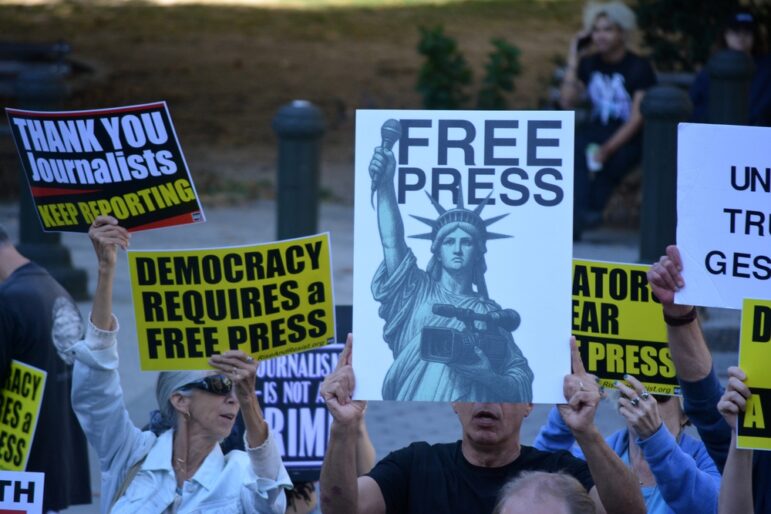
Independent journalism continues to serve as one of the last lines of defense for democratic principles like public transparency, accountability, and human rights, as the world commemorates the International Day of Democracy — and reflects on the threats posed by rising authoritarianism.
In recognition of the need for new techniques and collaborations to counter these threats, the Global Investigative Journalism Network has tailored several major panels around the topic of democracy and the growing threat of authoritarianism at its upcoming IJ WEEK online event, which will be held online from October 26 – 30.
In addition, many of the nearly 50 sessions and online workshops — featuring more than 130 expert speakers — will showcase investigative techniques on topics closely bound up with the health of democracies, from climate change to corruption and Big Tech. The program will also include three separate sessions with winners of the 2026 Sigma Awards, where innovative methods for obtaining and analyzing public data and records will be shared, with deep relevance to reporting on governance everywhere.
Taking place on the 25th anniversary of the first Global Investigative Journalism Conference in 2001, IJ WEEK will be organized around 13 tracks, from crime and tech reporting to data journalism, the environment, and nonprofit newsroom models.
Below are just some of the key IJ Week sessions that could sharpen investigative projects about bad actors and trends that threaten democracy:
Investigative Journalism in Authoritarian Contexts
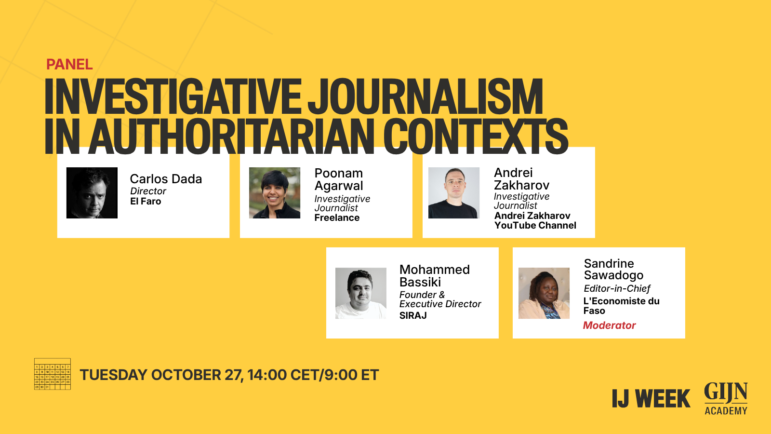
Investigative journalists need their own updated playbooks and toolkits to understand and dig into the “autocrats’ playbook” — the strategies authoritarians increasingly employ to take and retain power under the guise of elections and legality, from attacks on the press and minorities to the erosion of judicial independence and the rule of law. This powerhouse panel features courageous journalists from Russia, El Salvador, India, and Burkina Faso, who will share how they continue reporting and investigating despite increasing limitations. Learn strategies for maintaining investigative work under authoritarian pressure while protecting sources and preserving democratic accountability.
(Reporters can also learn more about tools and techniques for combating the autocratic playbook and foreign interference in the political messaging and disinformation chapter of the GIJN Elections Guide for Investigative Reporters.)
In Conversation with András Pethő

This discussion, moderated by Sheila Coronel, will focus on his investigative strategy in perhaps the most iconic recent example of a country running the “autocrats’ playbook,” Hungary.
For a decade, András Pethő has been at the center of Hungary’s fight to keep independent journalism alive under Viktor Orbán. In 2015, after Origo — the news site he served — came under political pressure and turned into a pro-government mouthpiece, Pethő co-founded Direkt36, which went on to face legal threats and state surveillance, including spyware deployed against his own colleagues.
In 2025, he helped pioneer a new way to reach audiences: “The Dynasty,” a documentary on Orbán’s family wealth that drew millions of views in a country of under 10 million people.
In this session, Pethő will reflect on building an independent newsroom under an authoritarian government, Direkt36’s turn to documentary filmmaking, and what Hungary’s political transition means for investigative journalism’s future.
Azerbaijan, Belarus, and Kyrgyzstan — Challenges and Journalistic Investigations

Across Central Asia and the former Soviet regions, independent journalists face a common playbook of repression: politically motivated lawsuits, surveillance, cyberattacks, exile, and sometimes violence. This session brings together investigative reporters and editors working in and around Azerbaijan, Belarus, and Kyrgyzstan to compare notes on operating under authoritarian pressure, and to ask what it takes to keep publishing when the state itself is often the subject of the investigation.
Panelists will discuss how they’ve adapted their newsrooms to survive government crackdowns and forced exile, the specific risks of reporting on corruption and human rights in closed political systems, and the digital security tactics that have become as essential to their work as reporting itself.
In Conversation with Sherry Lee

This discussion will cover investigative journalism and the personal demands of the craft, centered on Taiwan, hosted by moderator Hui Yu
A blazing global spotlight is currently trained on Taiwan: one of the very few nations in the world to have recently recorded an increase in its democratic health, yet it is a nation at growing risk of threats from China, weakening allies, and within.
Sherry Lee Hsueh-li is COO and deputy CEO of The Reporter, Taiwan’s first nonprofit newsroom and a pioneer of reader-funded investigative journalism in the Chinese-speaking world. Since co-founding The Reporter in 2015, she has led investigations with real-world consequences; Slaves of the Far-Sea Fishing helped drive new legislation and a near-doubling of migrant fishermen’s wages, while Youth in the Ruins forced a national reckoning on Taiwan’s social safety net. Under her leadership, The Reporter has grown from four monthly donors to nearly 8,000, all without ads or a paywall.
The discussion will explore what it takes to sustain investigative journalism in a climate of media distrust and chronic burnout. Lee will also share what keeps her going after a decade of demanding work.
(Learn how journalists in Taiwan resisted a wave of election disinformation in this piece.)
Holding Power to Account from Exile Through Investigative Journalism

Geographic barriers, restricted access, and transnational repression are just some of the challenges faced by investigative journalists who are forced to live in exile when their home countries radically turn away from democratic principles and press freedom. How to continue reporting and accessing sources from a distance is one part of the story; how to figure out the basics of everyday life in a new country while continuing to do this journalism is perhaps less discussed. In this panel, seasoned reporters from Myanmar, Russia, Mali, and Venezuela will discuss strategies for this increasingly topical important approach, as well as the difficulties they face and how they overcome them.
(Reporters can also see a GIJN tipsheet on techniques to avoid “propaganda creep,” and accidentally amplifying disinformation narratives.)
Investigating Migration and People on the Move

Immigration is one of the central topics when it comes to the health of democracies and the state of human rights. Massive movements of people and restrictive immigration policies create urgent stories requiring specialized reporting approaches. This panel features veteran investigative journalists from Egypt, Costa Rica, India, and Bolivia, who will share techniques for investigating migrant trafficking, border enforcement, detention facilities, and policy. The speakers will share experiences on how to safely and ethically work with migrants as sources, establish secure communication protocols, and maintain appropriate journalist-source boundaries when covering displacement, asylum processes, and human trafficking networks.
(Reporters can also watch a video of a key panel on the topic from the Global Investigative Journalism Conference in Kuala Lumpur, 2025.)
 Rowan Philp is GIJN’s global reporter and impact editor. He was formerly chief reporter for South Africa’s Sunday Times. As a foreign correspondent, he has reported on news, politics, corruption, and conflict from more than two dozen countries around the world.
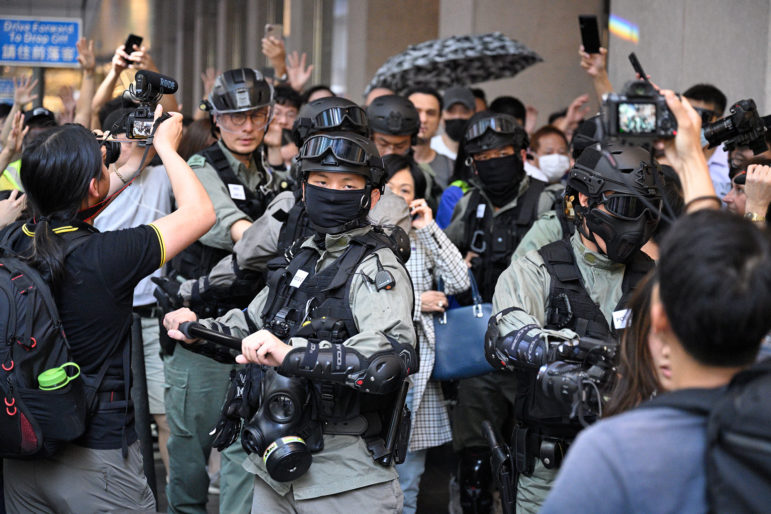
Resources for Tackling Authoritarian Threats on International Day of Democracy
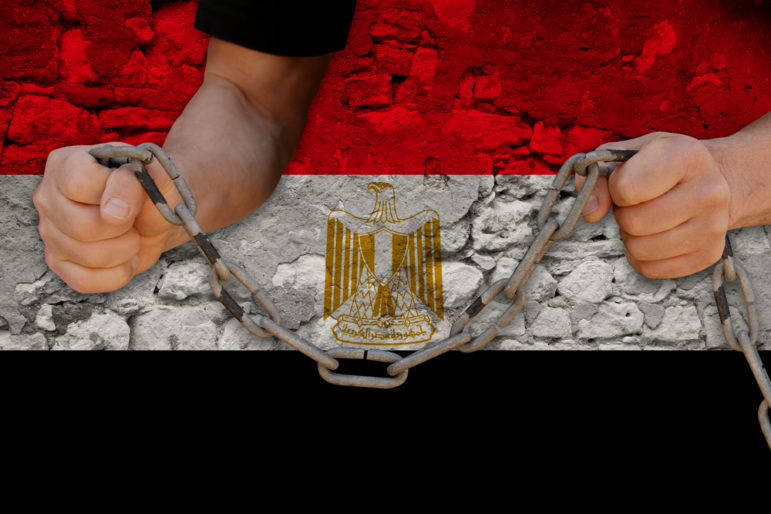
Why Journalists in Autocracies Should Report as If They’re in a Democracy

GIJC23 – Investigations to Save Democracy

On Power, Truth, and Journalism
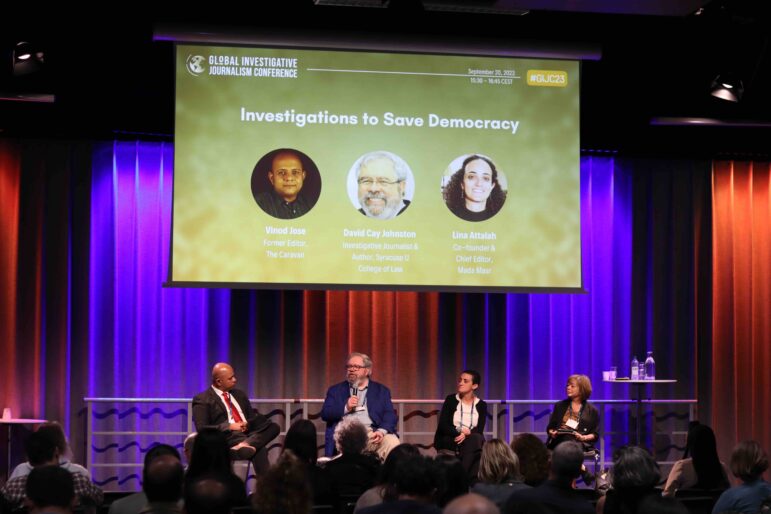
Why Investigative Reporters Should Look for the ‘Termites’ Eroding Democracy

The Vital Connection Between Philanthropy and Independent Media in Preserving Democracy

5 Looming Threats to Democracy — and Tips for Exposing Them
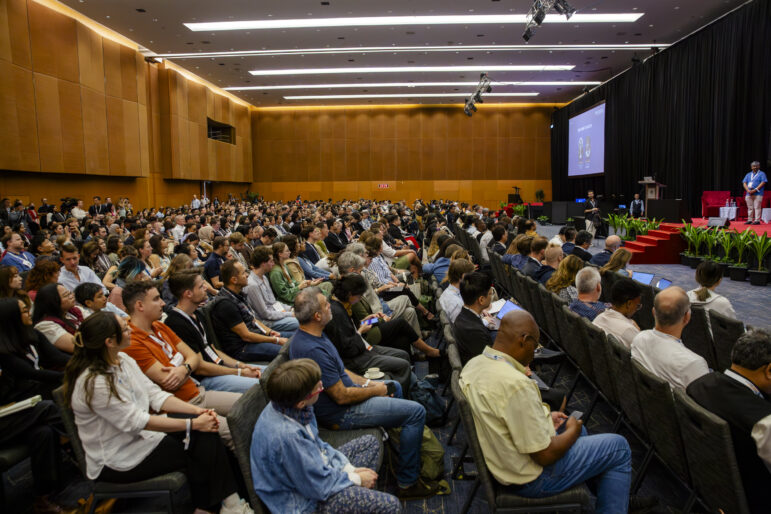
Changing the Journalism Community and Beyond, Part I: How GIJN’s Global Conferences Have Made an Impact Around the World

This work is licensed under a Creative Commons Attribution-NoDerivatives 4.0 International License
Republish our articles for free, online or in print, under a Creative Commons license.
Republish this article
This work is licensed under a Creative Commons Attribution-NoDerivatives 4.0 International License
Read Next
GIJC23 Reporting Tools & Tips
Why Investigative Reporters Should Look for the ‘Termites’ Eroding Democracy
Four editors — and veterans of the global push-back against autocracy — discussed effective methods for holding the enemies of democracy accountable.
Fundraising Sustainability
The Vital Connection Between Philanthropy and Independent Media in Preserving Democracy
In a world where the pillars of democracy face unprecedented challenges, the relationship between philanthropy and independent journalism is mutually beneficial.
GIJC23 Reporting Tools & Tips
5 Looming Threats to Democracy — and Tips for Exposing Them
Three reporters from across the globe discussed the numerous looming threats to democracy — and shared tips for exposing the bad actors behind election disinformation and authoritarian attacks.
GIJN Impact
Changing the Journalism Community and Beyond, Part I: How GIJN’s Global Conferences Have Made an Impact Around the World
GIJN followed up on the detailed testimonies of five reporters who have come to past Global Conferences to better understand and hear, in their own words, how these events have furthered their journalism.