
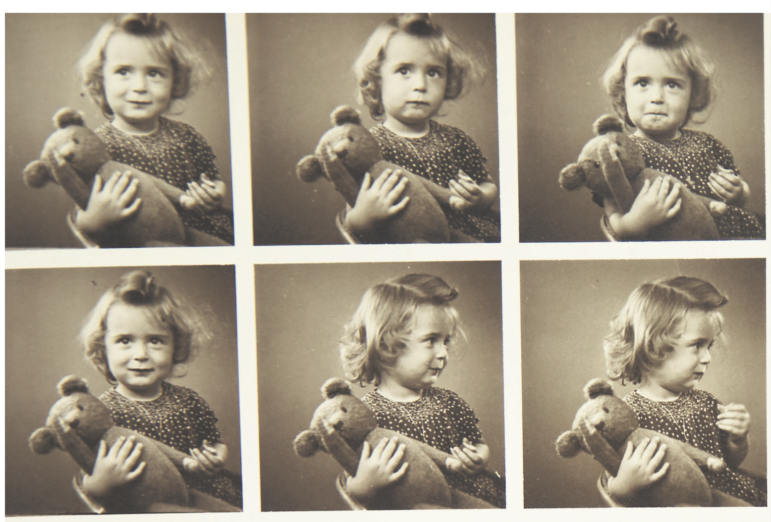
Marianne Vaaben as a young child. Her adoption during the Second World War became a deeply buried family secret. Image: Courtesy of Line Vaaben
‘A Very Uncomfortable Truth’: Investigating Personal Stories
Using Archives in Investigative Reporting

‘The Cost of Free Land’: Investigating a Personal and National Legacy of Indigenous Land Theft
Tracking Far-Right Suspects Across Continents: A 10-Year Hunt for Spanish Fugitives

GIJC23 – Rewriting History: Investigations that Change Our Understanding of the Past
In 2004, the Dutch reporter Line Vaaben learned that her mother had been adopted as a baby. Vaaben was in her early 30s, and her mother Marianne was 60; the family secret had been buried for decades.
At first, Vaaben’s mother asked her not to investigate until she passed away. But eventually, she allowed Vaaben to follow the only clue she had: the two names of her biological parents. Since the adoption dated back to World War II, it was difficult to trace, but Vaaben kept searching.
“I found out that my mom was the result of a married man who had a relationship with a married woman,” Vaaben explained. “I found out our biological grandmother was a member of the Nazi Party, which is a very uncomfortable truth,” she said. The grandmother’s husband was also a Nazi, and a member of the Army.
As Vaaben peeled back the layers of this dark personal history, she was looking for answers about her ancestry. As she started talking to others around her, sharing what she was uncovering, she learned that many people had been navigating similar family histories. They encouraged her to write about it, but she hesitated.
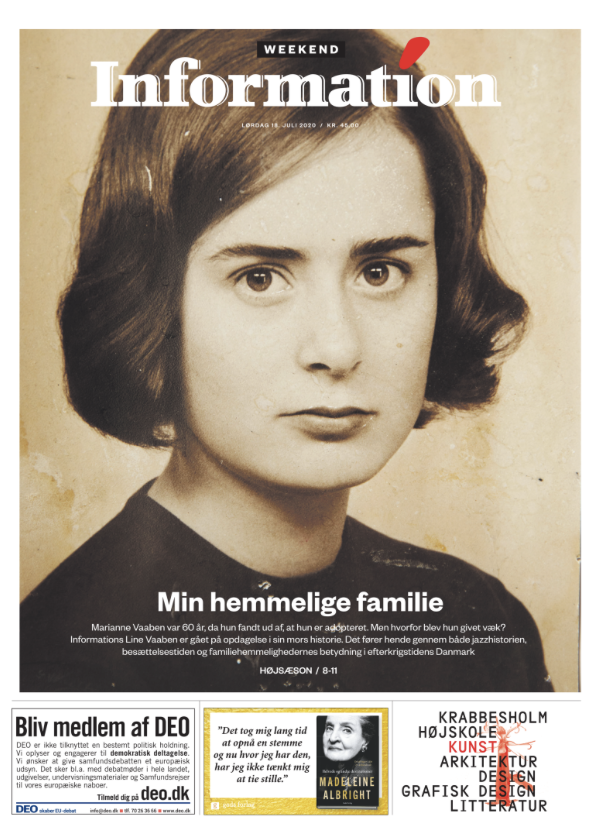
One of the published stories, featuring a photograph of Vaaben’s mother as a 15-year-old girl. Image: Screenshot, Dagbladet
“This was during the Second World War, an investigation into ties to the Nazi Party, about the silence after the war. It was stirring a lot of emotions. I had to ask myself, why is this interesting to other people? Are you telling a bigger story about Nazism or about being a woman in the 1940s?” she said. “Unless you think you can add these layers, it’s a private story.”
But after carefully weighing the stakes with her editor at Dagbladet Informatíon, colleagues, and family, she felt there was a public interest in the story, and decided to transform her personal journey into a journalistic investigation.
One of the biggest ethical challenges she confronted was that her grandparents had long since passed away, so she could not present her findings to them. She did track down one living relative — her mother’s half-brother — to whom she sent a letter. “He was so angry, he thought this was terrible and doubted the story. He said his father was a man of honor, and to leave the dead to rest.”
While continuously asking herself whether she had a right to stir up other people’s lives, she published a four-part story in 2020, recounting her family’s past. She also decided to include excerpts from the letter. “Not everyone is open to these uncomfortable truths,” she said. “We decided on telling this side of the story and wanted people to understand that real life is not a Hollywood movie.”
Vaaben, who edits first-person investigations and teaches journalism, says she often asks people who want to write a memoir or delve into family history whether their story falls into the category of private or public. She uses one metric to decipher: is this a “key-carrier story, where only you have the key to the story?”
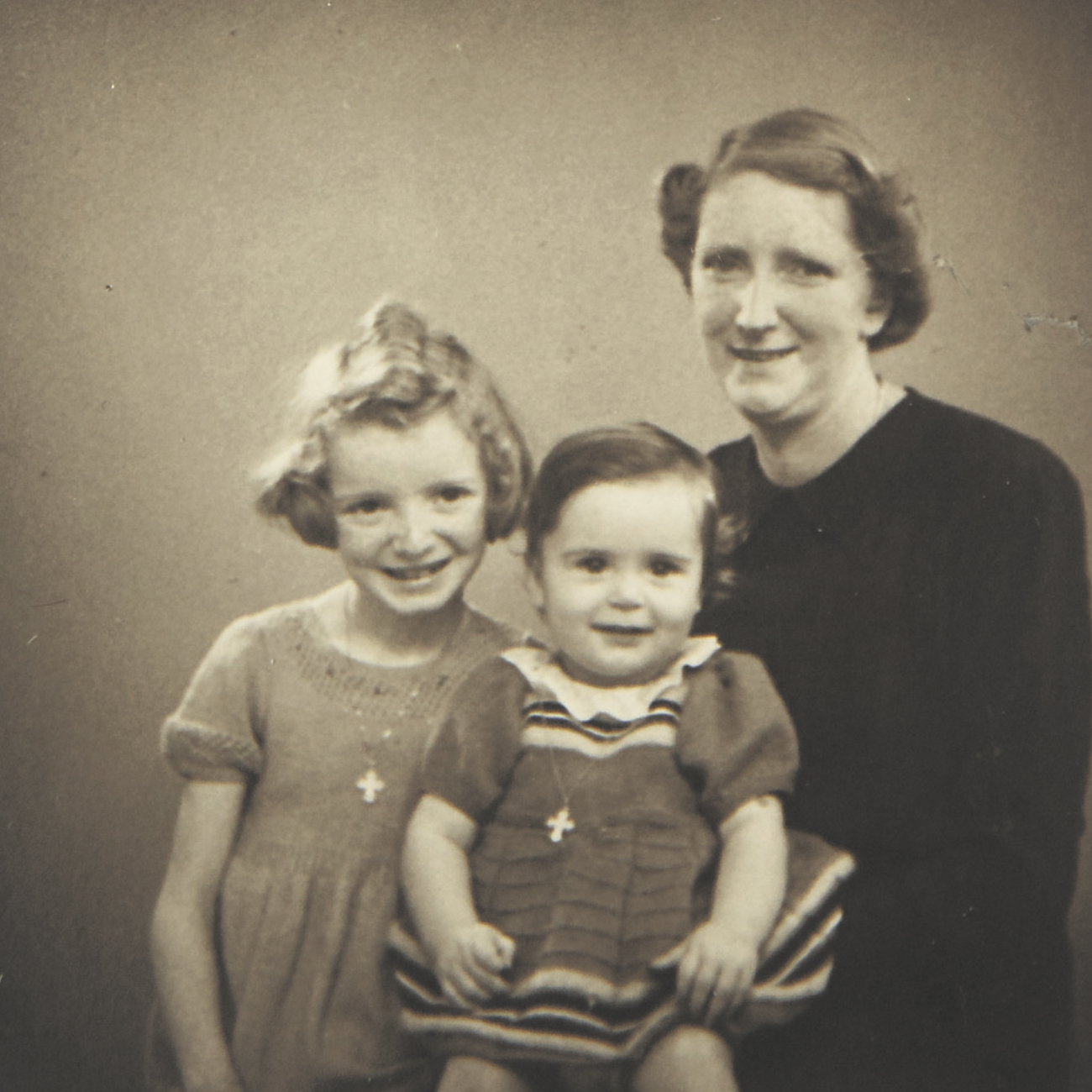
Marianne Vaaben as a baby with her adopted mother, Inger, and sister, Birgit. Image: Courtesy of Line Vaaben
Over the last decade or so, first-person criminal and family history stories have proliferated across the podcast and investigative journalism space. M. Gessen’s The Idiot, which turned an investigative journalism, true crime, and personal family story into an acclaimed New York Times and Serial Productions podcast, was told through the lens of Gessen investigating a cousin who was arrested in a murder-for-hire plot. (In April 2024, he was sentenced to 10 years in federal prison.)
Gessen admitted to disliking their cousin, and in many ways, The Idiot centered on Gessen attempting to “overcome their personal biases and excavate the story behind the story,” a podcast review noted. In a similar vein, Susan Rico’s podcast, The Man Who Calculated Death, chronicles the author and her sister’s reckoning with the long-held family secret that their grandfather was a Nazi scientist who was involved in building the V-1 flying bomb.
These types of stories must be held to a higher standard than other forms of investigative journalism, Vaaben explained. The ethical quandaries, which blur the lines of informed consent, risk relationships fracturing, challenge bias and proximity, and may take a toll on a reporter’s mental health. “I tell people only to do these if it’s impossible not to do them. It has to be important to you and other people,” she said. “We live in a time where everyone is sharing everything about themselves… we have to raise the stakes a bit. If it’s journalism, it has to be relevant to people. The hard question is: why should anybody care?”
In cases of historical accountability, the ethical dilemmas involve reviving buried secrets, often relating to the dead. How does one hold space for the complexity of atrocities and personal grief to produce accurate reporting?
Journalism groups like the Global Center for Journalism and Trauma provide resources on how to interview perpetrators while maintaining nuance and a common sense of humanity — even among those who have committed terrible crimes. Håkon F. Høydal, a Norwegian investigative journalist, argues that a trauma-informed interviewing approach should apply to both victims and perpetrators. This approach is an even harder task when the main protagonist is a close family member.
Finding Clues in the Wardrobe to Delve into the Paraguayan Dictatorship
Even when a journalist investigates another person’s family history, the ethical lines can be blurry. When the journalist Cecilia Diwan first met Olinda Ruiz, a Paraguayan documentary filmmaker who had learned at 18 that her grandfather was a perpetrator during the country’s dictatorship, she weighed whether she could take the story on journalistically. “I did preliminary research to document everything Olinda Ruiz was denouncing. It was a much deeper pre-production than with other stories,” she explained.
Before pitching the project to Radio Ambulante, a Spanish-language narrative podcast covering Latin America, to which Diwan frequently contributes, she collaborated with a colleague, Aneris Casassus, to build empathy and trust with Ruiz. They independently verified every factual detail to meet Radio Ambulante’s meticulous fact-checking process. Then they pitched what became El Ropero de mis Abuelos (in English: My Grandparents’ Wardrobe).
Ruiz’s grandfather’s participation in the Alfredo Stroessner regime as a torturer was well documented, Diwan explained, but Ruiz’s grandmother was also implicated; she had been the secretary and right-hand of Pastor Coronel, one of the key figures responsible for the dictatorship’s repression.
On the day of her grandmother’s funeral, in 2019, Ruiz was digging through her grandmother’s wooden wardrobe with two glass doors. She found typical items, like sheets, medical records, and jewelry. But then she uncovered a trove of documents, identification, and a confessional letter that revealed her grandparents’ roles in the dictatorship. Personal artifacts, diaries, and documents like those she found can become a rich source of archival material for such stories; they help to build a chronology and serve as first-hand evidence.
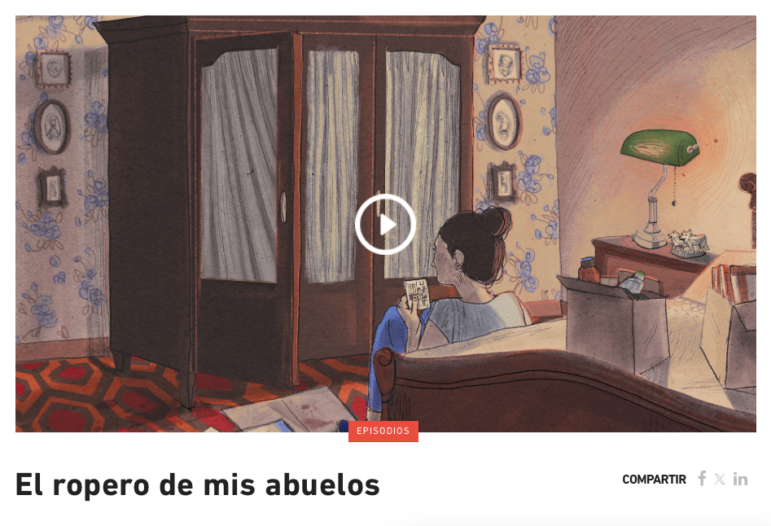
Radio Ambulante’s podcast. Image: Screenshot / Original art by Julia Tovar
In the case of Ruiz’s grandmother, the extent of her participation also needed to be reconstructed through testimony. The reporting process led to many ethical considerations that the team had to carefully consider.
The first was proximity to Ruiz herself, to whom Diwan and Casassus became very close, and the other victims of the dictatorship’s atrocities. “For me, it is very important to make clear to every interviewee, from the start, that I am a journalist, that this is an interview, and that what they tell me is meant for publication. But also, that if they feel they said too much or regret something, it won’t be published,” Diwan explained.
There were limits to what Ruiz wanted to tell; some of her family did not condemn her grandfather’s participation, which led to a family conflict. “Sometimes she would say, ‘This is going to upset my aunts and uncles, I’d rather it not be in there,’” Diwan said of Ruiz. “Aneris and I were completely clear from the beginning: anything she told us that she didn’t want published would not be published,” Diwan said. Those boundaries were clearly negotiated from the start.
Still, Diwan said, it’s imperative to separate the central story from the family conflicts. “When you work with families, a lot comes up, and not everything that is revealed belongs in the story. You have to know what to leave out,” she explained. “Respect family members who don’t want to talk. Sometimes you can find indirect ways, as we did with Olinda’s mother and brother. Other times, it’s best not to involve them at all,” she said, adding that any allegations that haven’t been independently verified should not be published.
One lesson that Diwan said she learned in large part thanks to Daniel Alarcón, the co-founder of Radio Ambulante, is not to work on this type of story alone. “At Radio Ambulante, we write in constant dialogue with our editor, and then there is an editorial meeting where the script is read aloud in front of the whole team. Valuable input always comes out of it, enriching the story and helping to catch blind spots. For sensitive stories, that collective perspective is essential,” she said.
From Diwan’s experience, when crimes are involved, it’s important not to take sides. “Listen to every party, including those accused of the crimes, tell the facts as they happened, and let listeners draw their own conclusions.”
Lastly, she said, the protagonists and participants must understand the stakes involved. “For me, as a journalist, it was a very important story, one of the most powerful I’ve done,” Diwan said. “I had never worked on such a sensitive subject: someone whose life is transformed by a discovery. Olinda had to redefine her identity, change friends, even partners. She had to rebuild her life.”
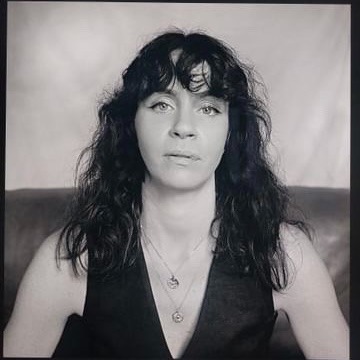 Annie Hylton is an award-winning investigative journalist and magazine writer from Canada. Known for her long-form narrative storytelling, her writing covers a range of topics, including war crimes, gender, migration, and human rights. She has reported from the Middle East, Central America, and across Africa, contributing to leading publications like The New Yorker, Harper’s, The New Republic, London Review of Books, Esquire UK, and The Walrus.
Using Archives in Investigative Reporting
‘The Cost of Free Land’: Investigating a Personal and National Legacy of Indigenous Land Theft
Tracking Far-Right Suspects Across Continents: A 10-Year Hunt for Spanish Fugitives
GIJC23 – Rewriting History: Investigations that Change Our Understanding of the Past
‘Too Close to Home’: Handling the Challenges of Investigations with a Personal Connection
One Name at a Time: How Die Zeit Built a Searchable Database of Nazi Party Members
‘Giving Sources Power’: Reporting on Indigenous Communities and Creating Compelling Investigative Podcasts

How a Global South-Led Reporting Collective Broke the ‘Inside Deutsche Bank’ Mega-Leak

This work is licensed under a Creative Commons Attribution-NoDerivatives 4.0 International License
Republish our articles for free, online or in print, under a Creative Commons license.
Republish this article
This work is licensed under a Creative Commons Attribution-NoDerivatives 4.0 International License
Read Next
Reporting Tools & Tips
‘Too Close to Home’: Handling the Challenges of Investigations with a Personal Connection
Watchdog reporters at AIJC offered tips for navigating the professional, emotional, and ethical complications of reporting stories that intersect with your personal life.
Data Journalism
One Name at a Time: How Die Zeit Built a Searchable Database of Nazi Party Members
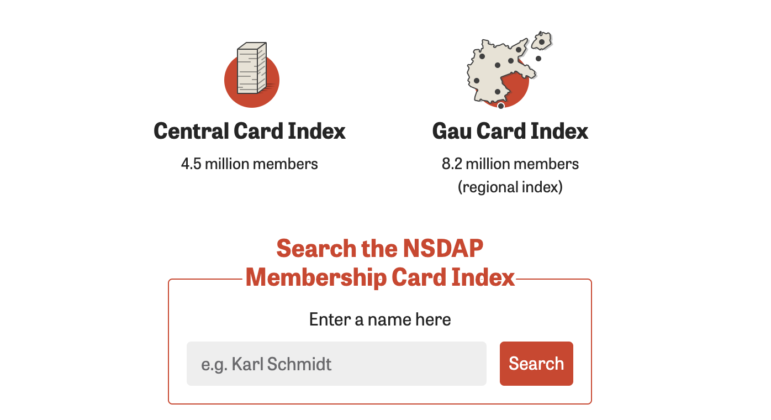
An online tool set up by the German newspaper Die Zeit, in cooperation with archives in Germany and in the United States, allows people to search several million Nazi Party membership cards.
10 Questions
‘Giving Sources Power’: Reporting on Indigenous Communities and Creating Compelling Investigative Podcasts
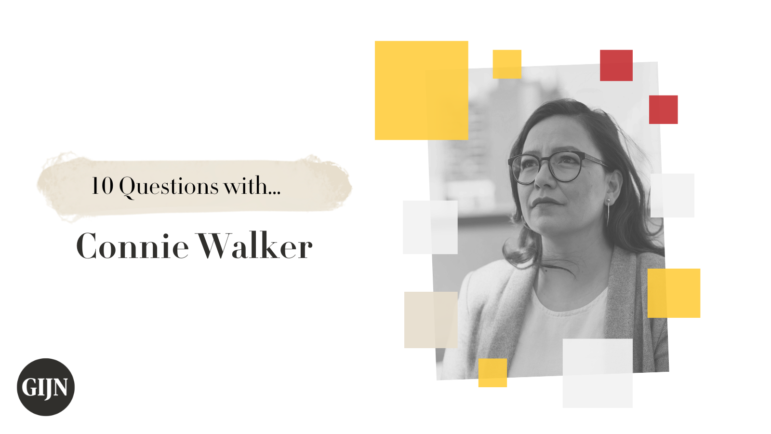
Pulitzer Prize-winning reporter Connie Walker discusses her favorite podcast tools, the ‘radical transformation’ of how Indigenous issues are covered, and building trust with sources.
How They Did It
How a Global South-Led Reporting Collective Broke the ‘Inside Deutsche Bank’ Mega-Leak
GIJN goes behind the scenes to learn how the blockbuster global collaboration investigating suspicious high-level financial activity at Deutsche Bank came about.