
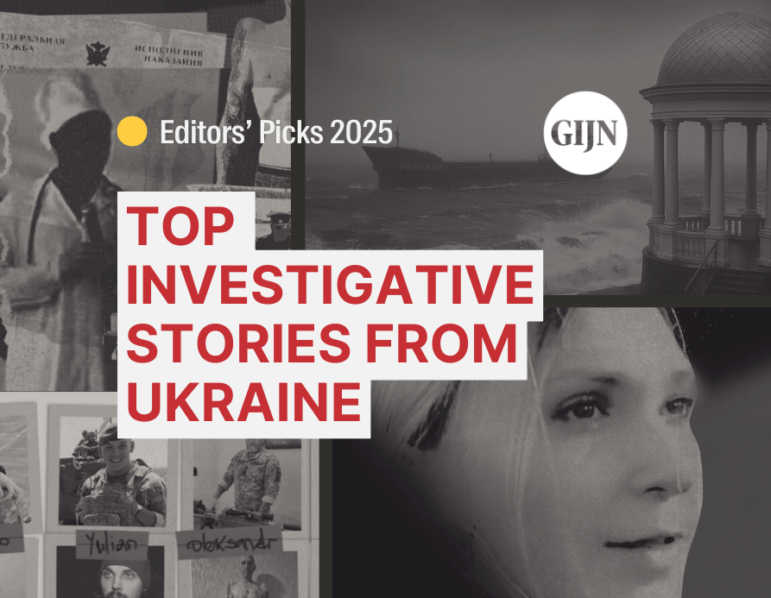
‘Ghost’ Prisoners, Missing Children, Anti-Corruption Wiretaps: 2025’s Best Investigative Stories from Ukraine
Read this article in
At least 142 Ukrainian journalists and media workers have lost their lives since the beginning of Russia’s invasion in February 2022. In 2025, Russian strikes on Ukraine damaged the offices of four media outlets: Ukrainska Pravda and Radio Svoboda (the Ukrainian service of Radio Free Europe/Radio Liberty) in Kyiv, and Suspilne Dnipro and Ukrayinske Radio in Dnipro.
Besides deadly threats, financial hardship, and staff shortages caused by the war, the past year in Ukraine was also marked by attacks against democracy and freedom of speech. There were online campaigns against regional reporters and representatives of NGO staff; pressure campaigns against anti-corruption activists; the surveillance of journalists revealed thanks to wiretap recordings of conversations between corrupt officials — released by the Specialized Anti-Corruption Prosecutor’s Office (SAPO) and the National Anti-Corruption Bureau of Ukraine (NABU) after their operations. Ukrainska Pravda journalist Mykhailo Tkach documented in a video report that he was followed in Lviv while investigating the undeclared assets of an employee of the Economic Security Bureau — a story we include on this list.
Мedia outlets played a vital role in explaining to their audiences why legislative efforts to restrict the independence of anti-corruption bodies are dangerous for society. Only unprecedented mass protests compelled the Verkhovna Rada, Ukraine’s parliament, and President Zelensky to reverse course. But freedom of speech in Ukraine is further threatened by a bill submitted to the Ukrainian Parliament in September 2025 that journalists warn is a step toward censorship and a threat to investigative journalism, because it essentially declares any information not proven in court to be unreliable.
Despite threats to press freedom and constant power cuts and sleepless nights due to Russian attacks, Ukrainian independent journalists and newsrooms continue their work with depth and skill.
Vika’s Last Assignment
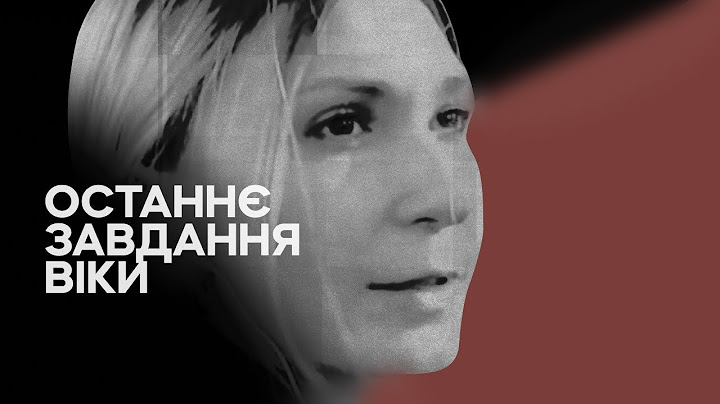
Image: Screenshot, Slidstvo.Info, YouTube
Slidstvo.Info, in collaboration with the outlets Graty, Suspilne, and Reporters Without Borders, produced an investigative documentary (with English subtitles) that describes what happened to Ukrainian journalist Viktoria Roshchina in Russian captivity.
The authors traced the reporter’s route through Poland, Latvia, and Russia to the occupied territories, where, according to witnesses, Roshchina wanted to collect information about Ukrainians tortured under Russian occupation in Zaporizhzhia Oblast. Shortly after she crossed the border in July 2023, her father lost contact with her. A year later, in September 2024, he received an email from the Russian Ministry of Defense informing him of the death of his 27-year-old daughter.
The Slidstvo.Info team interviewed prosecutors investigating the circumstances of Roshchina’s disappearance and death, her acquaintances from the occupied territories, her cellmate, and former war prisoners who were held in the same prison as Victoria. According to witnesses, she suffered knife wounds and electric shocks, her weight dropped to just 30 kilograms (66 pounds), and she was unable to get out of bed on her own. Russia returned her body to Ukraine in February 2025; it showed marks of torture and was reportedly returned without some organs, labeled as an “unidentified man,” but was identified with genetic testing.
An international team of journalists coordinated by the French publication Forbidden Stories conducted their own in-depth investigation about Roshchina and other ghost detainees in Russian prisons, and continued her work in the Viktoriia Project; Ukrainska Pravda worked on a Ukrainian version of the Viktoriia Project, detailing the detention and torture experienced by Roshchina and thousands of Ukrainians imprisoned by Russia.
Pirates of the Sea of Azov
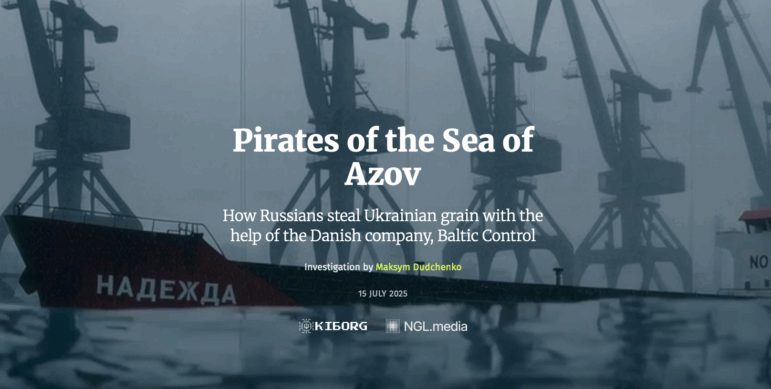
Image: Screenshot, KibOrg & NGL.media
KibOrg, NGL.media, OCCRP, and Slidstvo.Info obtained and analyzed leaked internal port documents from the occupied city of Berdyansk, in Zaporizhzhia Oblast, and identified approximately 20 ships that allegedly participated in the export of Ukrainian grain from the occupied territories.
According to their reporting, over 18 months, Russian companies operating in occupied territories exported more than 400,000 tons of Ukrainian grain and other agricultural products from Berdyansk by sea, at an estimated cost of 4 billion Ukrainian hryvnias (US$2.6 million). To falsify the grain’s origin, it is registered as Russian at the ports of Temryuk and Kavkaz in the Krasnodar region. According to the leaked documents, Russia also exports this grain to Turkey, Egypt, Libya, Lebanon, Saudi Arabia, Syria, and Bangladesh.
By locating ships, identifying captains’ names, and mapping ship routes, the cross-border team was able to name the entities behind the smuggling — such as individuals holding Ukrainian passports and a Russia-based affiliate of a Danish shipping cargo inspection company that received payments for participating in the illegal exports, allegedly by inspecting and certifying the grain. The company’s website no longer lists the Russian branch in question. However, an employee told a reporter — who was undercover posing as a grain importer — that the office was still functioning. Representatives of the company and its parent did not respond to a request for comment.
‘Conversations No One Was Supposed to Hear’

Image: Screenshot, Bihus.info, YouTube
A series of corruption scandals broke in 2025, in part thanks to wiretap recordings released by Ukraine’s anti-corruption agencies after they investigated illegal enrichment in the land allocation process in Kyiv and corruption in energy sector that implicated high-level officials in Ukraine’s government. For months, journalists from various media outlets analyzed the released audio recordings to flesh out their previous investigations into corruption and abuses of power. The released wiretaps resulted in three major corruption cases that were covered — and expanded upon — by investigative journalists.
Operation ‘Clean City’: Bihus.Info journalists analyzed declassified audio recordings of wiretapped conversations between officials in the Kyiv city administration and the Kyiv City Council (part of a large-scale anti-corruption operation dubbed ‘Clean City’) involved in an illegal scheme to carve up land in the capital — a plan that Bihus.Info revealed was more sophisticated than previously known.
Luxury Cottages: In July, when a high-level government minister appeared in court on charges of abuse of office and receiving undue benefits, Bihus.Info was able to identify the owners behind a string of luxury cottage developments in Kozyn, near Kyiv. The team analyzed court video footage and court records, found public and open source data, pored through ownership structures and building permits, and examined satellite images and cadastral maps. They also sailed on a boat to get footage showing the full scale of the construction project — four luxury estates on eight hectares (20 acres) on the banks of the Dnipro River. (Ukrainska Pravda, which dug further into the case involving the government minister, dubbed the cottage development “Dynasty.”)
Operation ‘Midas’: By analyzing declassified audio conversations as part of the anti-corruption agencies’ Operation ‘Midas,’ which exposed a large-scale bribery scheme in Ukraine’s energy sector, Bihus.Info was able to expand the investigation to link funds obtained from this scheme — perpetrated by officials and businessmen close to the Ukrainian president — to the luxury cottage development in Kozyn.
Later, Ukrainska Pravda investigative reporter Mykhailo Tkach tracked down in Israel, and interviewed one of the alleged main actors of the Midas case, who neither confirmed nor denied the conclusions of the anti-corruption authorities and journalists, stating that his lawyers would deal with the matter.
Unmasking ‘Dr. Evil’
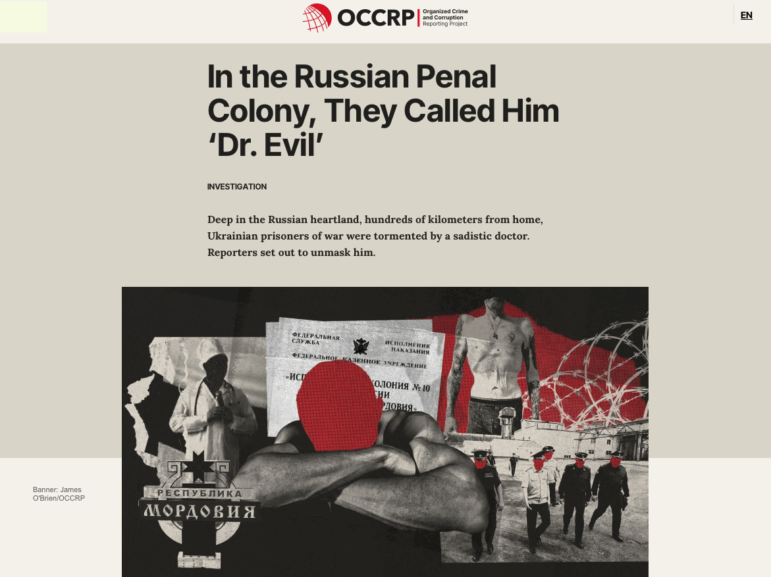
Image: Screenshot, OCCRP
Schemes, the investigative program of RFE/RL’s Ukrainian service, and OCCRP investigated torture, denial of medical care, sexual violence, and the deaths of Ukrainian prisoners of war in one of Russia’s most notorious penal colonies in Mordovia, a region in central Russia.
In the resulting documentary, the journalists named some prison staff who were allegedly involved in mistreating the prisoners of war — a violation of the Geneva Convention. They also claimed to identify a notorious and “sadistic” prison medic that inmates nicknamed “Dr. Shocker” or “Dr. Evil” for his particular cruelty and his use of a stun gun on prisoners.
Journalists interviewed about 150 former prisoners of war who survived captivity and returned to Ukraine in a prisoner exchange, analyzed open source information — including online video footage that helped survivors recognize the doctor’s voice even though he wore a mask in their encounters — and compared prisoners’ testimonies with satellite imagery to reconstruct the colony’s layout and the events that occurred there.
Five months after the investigation was published, Ukraine charged the medic with war crimes in absentia. When one of the journalists called the alleged doctor during the investigation, he told her he did not work at the colony and ended the call.
How the Family of a Top Economic Security Bureau Official Became Millionaires
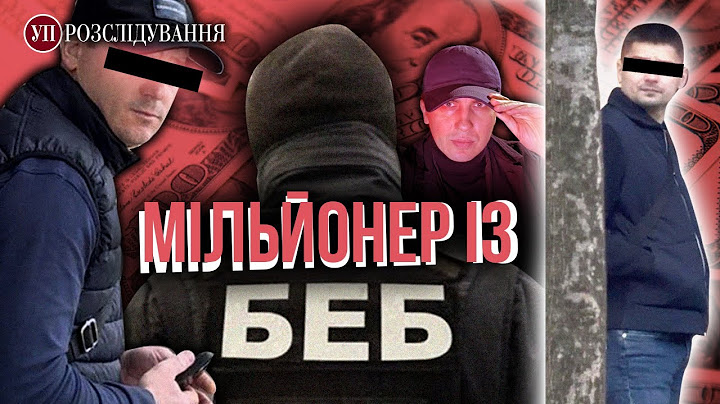
Image: Screenshot, Ukrainska Pravda, YouTube
Journalists from Ukrainska Pravda observed that, since the Economic Security Bureau of Ukraine (ESBU) was founded in 2021 to combat economic crimes, official investigations into corruption within the ESBU have been rare, and decided to take a closer look.
Based on information from human sources, their own reporting, and an interview with the subject of the investigation — a top ESB official in the Lviv region — UP exposed the official’s undeclared assets and conflicts of interest, including his links to a controversial tobacco magnate. Based on an analysis of social media, tax returns, and other sources, they also point out that the official’s recent divorce — along with his former wife’s rapid enrichment — matches an increasingly common pattern of officials getting divorced in an apparent attempt to avoid asset disclosure.
UP journalist Mykhailo Tkach noted that during five months of their work on this investigation, he documented several incidents of spying on his team in Lviv. The ESB official voluntarily resigned before the investigation was published.
(Other investigative outlets have reported on a spate of divorces among officials, in particular in Ukraine’s cyber police force, such as Bihus.Info’s: Cyber Police Tops’ Successful Ex-Wives, Cyber Cop and the Treasures of his ‘Ex,’ and Police Style Divorce.
Russian independent investigative media outlet The Insider investigated similar trends of suspicious divorces to avoid asset declarations in the Russian parliament.)
Inside Russia’s military camp system for children
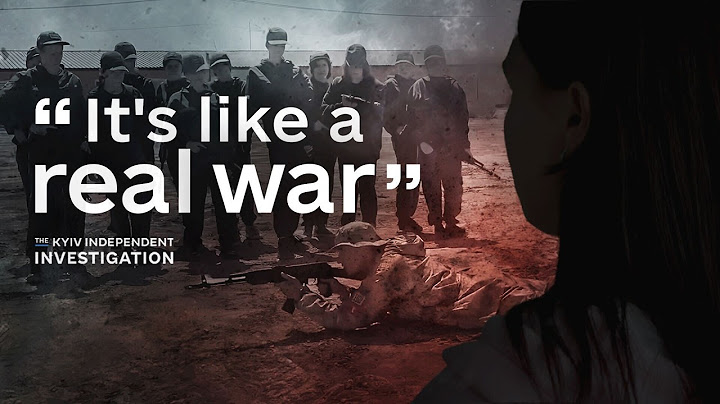
Image: Screenshot, The Kyiv Independent, YouTube
In an investigative documentary, the Kyiv Independent reported on the methods Russia employs to erase the national identity of Ukrainian children, educate them according to Russian educational standards, and militarize them — starting with Crimea and Donbas, occupied in 2014, and extending to territories seized during the full-scale invasion. According to human rights organizations, these actions violate humanitarian law and could be potential war crimes or crimes against humanity.
The journalists found families and teenagers who had fled to territory controlled by Ukraine. Parents told journalists how they were forced to send their children to school under the Russian curriculum. Schoolchildren shared their stories on how they were recruited into “military-patriotic” organizations. Using open source methods, particularly publications and videos from Russian propaganda media outlets, journalists spent months analyzing the activities of numerous youth movements and organizations in both the occupied territories and Russia — and tried to identify the Russians and collaborators who run the system of militarization of children and train them in military camps.
‘State Children’ Abused in Turkish Hotels
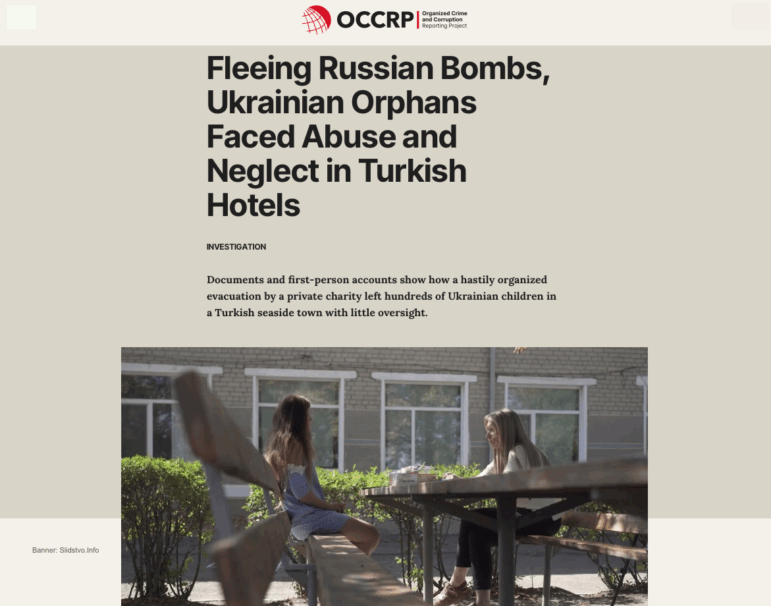
Image: Screenshot, OCCRP
The investigative documentary produced by Slidstvo.Info in collaboration with OCCRP and Investigace.cz recounted the story of 510 Ukrainian orphans evacuated from Dnipropetrovsk to Turkey by a charitable foundation at the onset of Russia’s full-scale invasion. It shed light on shortcomings in the state system of care for orphaned children.
Slidstvo obtained a report from Investigace.cz colleagues that was based on a monitoring mission by the Ukrainian Ombudsman’s Office, assessing the conditions at a Turkish hotel where Ukrainian children were staying in March 2024.
To verify the report’s findings, journalists analyzed the charitable foundation’s promotional video, reviewed video recordings from private smartphones, interviewed the teenagers, their caregivers, and other witnesses, and questioned the head of the charitable foundation responsible for the evacuation and subsequent care in Turkey. Interviewees said children had limited access to medical care and online education, suffered from physical abuse, humiliation, and exploitation, and two underage girls became pregnant by hotel staff. (An important outcome of the investigation is that one of the girls, a 17-year-old, was reunited with her young daughter after being separated.)
In the documentary, the founder of the charity denied forcing the children into participating in fundraising activities and said that his foundation staff had not failed in their responsibility to properly safeguard the teen girls who were impregnated.
Seeking Turkish partners on the story, Slidstvo editor Anna Babynets attended a networking session at the 14th Global Investigative Journalism Conference in Malaysia in November 2025, where she met Turkish journalist Burcu Karakaş. Karakaş sent FOI requests to Turkish authorities and in early December published the story of Ukrainian orphans in the Turkish outlet Agos and on X, which sparked considerable public discourse in Turkey — representatives of civil society demanded an official investigation, and politicians proposed discussing the issue in parliament.
Tracing Ukraine’s Missing Children
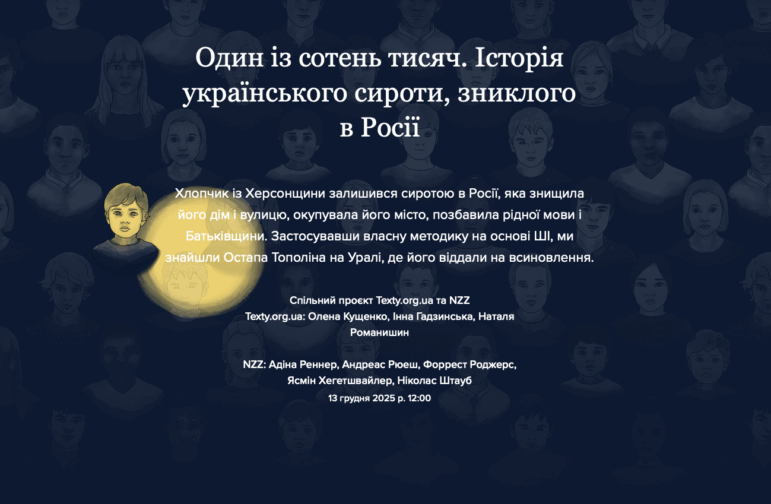
Image: Screenshot, Texty.org.ua
For more than a year, Ukrainian data newsroom Texty.org.ua and Swiss outlet NZZ worked together on a project tracing Ukrainian children taken to Russia.
Journalists developed their own AI-based technology to compare photos and employed both open source tools and conventional reporting — interviewing people, searching for and verifying data — to piece together scattered fragments of information into a complete picture.
With a method developed specifically for this investigation that combined facial recognition algorithms with multi-level manual verification, journalists compared 951 photos of missing Ukrainian children with 41,039 images from Russian and Belarusian adoption databases. This painstaking work enabled them to tell the story of one orphan from Oleshky in the Kherson region. The war drove him to the Urals, where he lost his father, ended up in an orphanage, and was put up for adoption without any mention of his Ukrainian origin.
In July of 2023, the Russian president’s commissioner for children’s rights, Maria Lvova-Belova — after the International Criminal Court in The Hague had issued an arrest warrant for her — reported that Russia had “accepted” more than 700,000 children from Ukraine. According to childrenofwar.gov.ua, Ukraine has documented 19,546 cases in detail.
 Olga Simanovych, a native of Ukraine, has more than 13 years of television experience as a journalist, screenwriter, and managing editor. Seven of those years were spent as a TV news reporter for the Vikna-Novyny program on STB, where she specialized in politics, environment, human rights ,and medicine. From 2011 to 2016, she was a media trainer with different nonprofit organizations and participated in SCOOP‘s international investigations. A graduate of Taras Shevchenko National University, Ukraine, she is bilingual in Ukrainian and Russian, and fluent in English and Greek.

Investigating War Crimes: Collecting and Archiving Evidence and Information

Investigating War Crimes: Interviewing Victims and Survivors

Investigating War Crimes: Open Source Research

Investigating War Crimes: Genocide and Crimes Against Humanity

Reporting on War Crimes in Ukraine’s Occupied Territories

Fighting a War with Data Journalism: Ukraine’s Texty and the Battle for Truth

Investigating Russia’s Proliferating Use — And Supply — Of Attack Drones Against Ukraine

War Impacts, Illicit Sanctions-Busting Trade, Black Sea Damage: 2024’s Best Investigations in Ukrainian

This work is licensed under a Creative Commons Attribution-NoDerivatives 4.0 International License
Republish our articles for free, online or in print, under a Creative Commons license.
Republish this article
This work is licensed under a Creative Commons Attribution-NoDerivatives 4.0 International License
Read Next
GIJC25
Reporting on War Crimes in Ukraine’s Occupied Territories
Ukrainian newsrooms combine OSINT, satellite imagery, and intercepted conversations to report on frontline regions that are off limits due to the war.
Member Profiles
Fighting a War with Data Journalism: Ukraine’s Texty and the Battle for Truth
The team at the award-winning data journalism outlet suspected that Russia would invade — they could see clues in the data. We profile the team and their work combating false conflict narratives.
Investigative Techniques Methodology
Investigating Russia’s Proliferating Use — And Supply — Of Attack Drones Against Ukraine
A cross-border investigation into Russia’s use of drones in Ukraine includes how drones are assembled despite sanctions, and cooperation with Tehran to produce UAVs on Russian soil.
Editor's Picks News & Analysis
War Impacts, Illicit Sanctions-Busting Trade, Black Sea Damage: 2024’s Best Investigations in Ukrainian
Despite the challenges of reporting in wartime, Ukrainian journalists continue to uncover corruption — even while under attack from disinformation campaigns.