
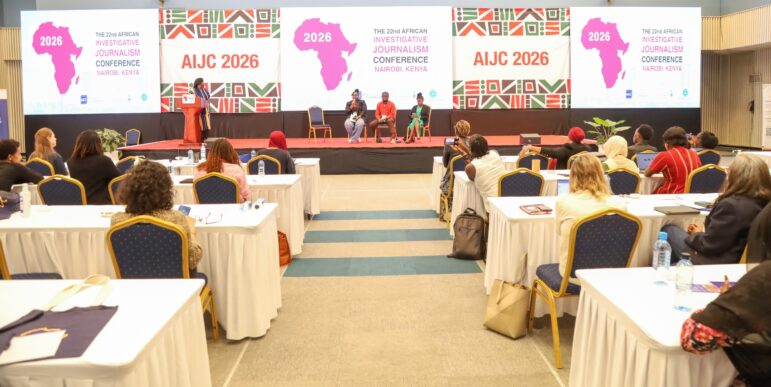
Image: Courtesy of AIJC2026
AIJC2026 Fronts AI, Tech-led Investigations and Collaborations Beyond Continents to Boost Watchdog Journalism Impact Across Africa
What Every Fixer Should Know Before Supporting an Investigative Reporting Assignment
Investigating Inside Conflict Zones and Areas Controlled by Armed Groups: Lessons from Africa
Inside an East African Investigative Newsroom That Has Defied a Decade of Pressure

Analyzing Job Posting Data to Investigate the African Labor Behind AGI Hype
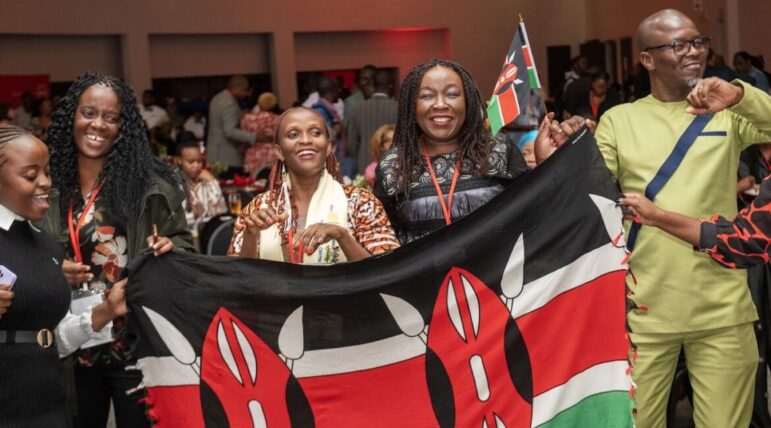
After the closing ceremony for the 2026 African Investigative Journalism Conference (#AIJC2026), held for the first time outside of South Africa, the Director of the Wits Centre for Journalism, Dinesh Balliah, was asked what it felt like to successfully organize the 22nd edition of the annual gathering of the continent’s top watchdog journalists.
“Puff!!” she exclaimed in response at the Edge Convention Centre on the outskirts of Kenya’s capital, Nairobi. No words followed, prompting one of the journalists present to say, “You can stop there [because] that sums it all up.”
When the laughter her reaction elicited eventually died down, and Balliah collected her thoughts on an event with more than 300 first-time attendees, she picked two phrases — “breathtaking” and “mind-blowing” — to describe its participant turnout, programming, and resourcefulness.
Indeed, going by the total participant number of 534 from 69 countries, higher on both counts than last year’s event, the nearly 70 conference sessions featuring at least 150 speakers, and the quality of the entries that featured in the African Journalist of the Year competition this year, Balliah’s assessment was not overstated.
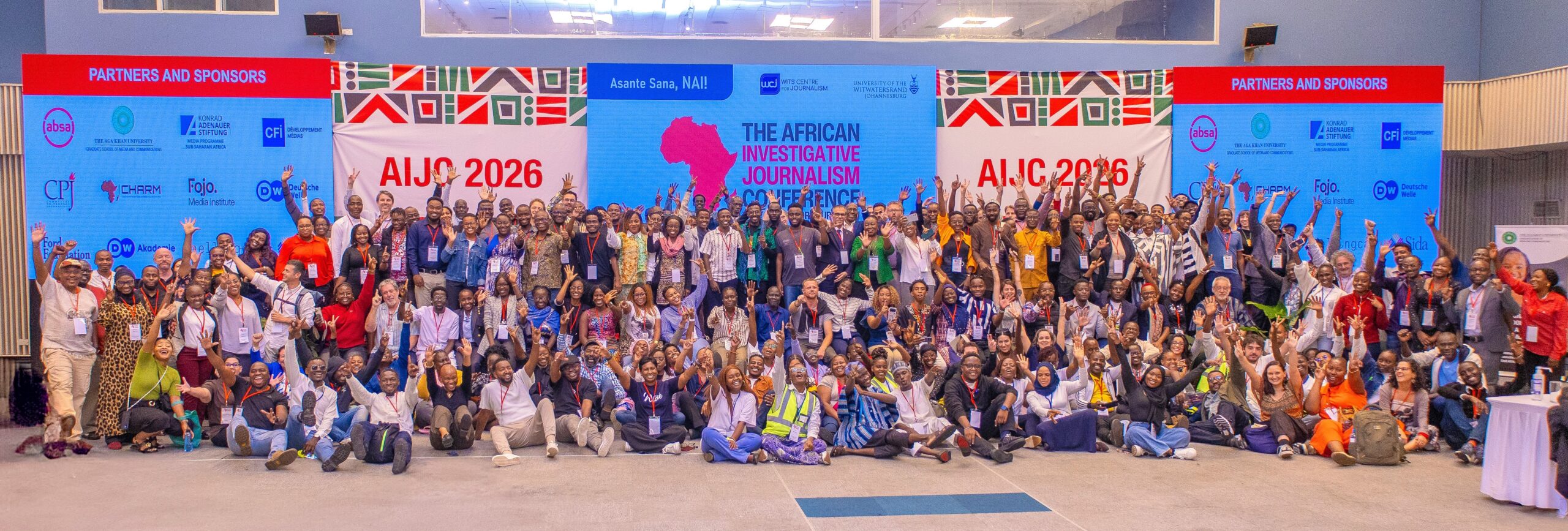
Image: Courtesy of AIJC2026
“This year’s edition… really reflects the high standard of investigative journalism on this continent,” she said. “It reflects some of the newer methods which are responding to the context in which journalism is practiced, and some of the challenges that people are managing to find unique solutions to. So, I think the gathering does reflect what’s happening and what it is that the world can learn from African investigative journalists.”
Focus of AIJC2026
The 2016 African Investigative Journalism Conference featured two keynote speeches on days one and two, along with a third during the annual Carlos Cardoso Memorial lecture and a fourth during the awards gala night.
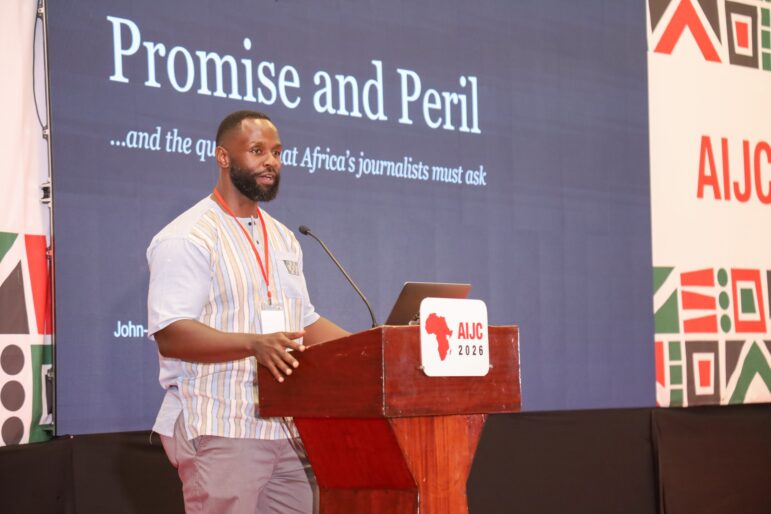
Africa Uncensored’s John-Allan Namu giving the opening plenary keynote speech at AIJC2026. Image: Courtesy of AIJC
- Opening Plenary Keynote on AI: Power, Promise and Peril by John-Allan Namu, Publisher, Africa Uncensored.
- Day Two Keynote: The World Has Never Been in Greater Danger. This Is How We Save It by Kumi Naidoo, President, Fossil Fuel Treaty Initiative.
- Carlos Cardoso Memorial Lecture on the Eritrea 16, a group of journalists detained without trial for the past 25 years, by Eritrean journalist and former political prisoner Yirgalem Fisseha.
- Gala dinner keynote speech on the current state of journalism by South African journalist, editor and media innovator Khadija Patel.
By subject, the conference featured 21 sessions on new tools and techniques, including open source intelligence (OSINT) tips, tricks, and tradecraft; using sonic investigations to expand the domain of “investigability”; turning photojournalism into investigative evidence; and doing more than geolocation by using satellite imagery and Geographical Information Systems (GIS) to document environmental harm.
And, in what can be interpreted as a sign of the times, there were 12 sessions featuring AI-related topics, including how to harness machine learning to identify missing forests and the illicit crops that have taken their place, AI-driven satellite analysis for environmental journalism, supercharging investigative journalism with Google AI tools, and how to report on AI when you are not an AI expert.
Other prominent themes in the program included human rights violations (featured in 12 sessions), data (12), collaborative journalism (10), environment/climate (11), open source intelligence or OSINT (9), exposing corruption (8), and media viability (6).
Malagasy investigative journalist Cynthia Rahelindisa, who also attended AIJC2025, noted that the breadth and depth of the AIJC2026 sessions showed her “how African journalism continues to evolve and how important collaboration is to producing quality journalism that serves our communities.” And her major takeaway? “Stronger connections, shared knowledge and cross-border collaboration are essential to building a stronger African journalism landscape.”
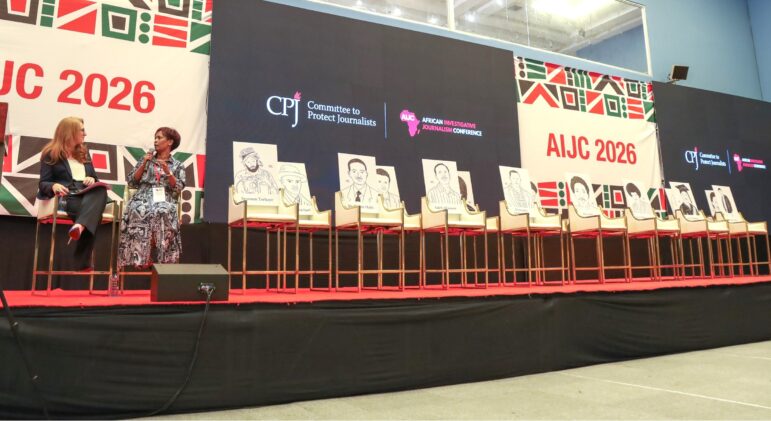
AIJC2026 included a panel featuring empty chairs with the likenesses of each of the 16 Eritrean journalists who have been detained without trial for the past 25 years. Image: Courtesy of AIJ2026
Collaborations Beyond Continents
AIJC is increasingly becoming a platform for growing transcontinental collaborations that benefit African investigative journalists. In Nairobi, the US-based Pulitzer Center launched the Africa Mining Watch platform, a product of its collaboration with Earth Genome and Code for Africa.
The Center for Collaborative Investigative Journalism (CCIJ), another US-based group and a GIJN member, showcased how its investigation into Nigeria’s 2023 election evolved into the development of “an AI-powered tool designed to support journalists in tracking and analyzing disinformation.”
While participants from the United States and Europe have become a common feature at AIJCs, this year’s conference particularly drew inspiration from the participation of the director general of Arab Reporters for Investigative Journalism (ARIJ), Rawan Damen, and the president of the Brazilian Association of Investigative Journalism (Abraji), Ana Carolina.
Carolina, who said she saw many similarities in the problems and potential solutions that watchdog journalists in Brazil and Africa face, noted that she was happy to learn and draw inspiration from the many initiatives she encountered at the African conference.
“There are countless possibilities to strengthen the bridge between our regions, and investigative journalism is among the most powerful ones,” she stated.
The conference was capped by the annual recognition of the African Journalist of the Year, which went to investigative reporter Jeff Wicks, who published a detailed, multi-part series with News24 on how a healthcare businessman exerted undue influence on South Africa’s policing system.
Following this year’s successful continental test run in Kenya, AIJC will return to South Africa for the 2027 edition. Thereafter, it will take another sojourn in 2028, either to Kenya or another African country to be named later.
 Benon Herbert Oluka is GIJN’s Africa editor and a Ugandan multimedia journalist. He was a mentor for the 2023/2024 cohort of the African Union Media Fellowship. His work has been recognized three times on the African continent at the 2008 Akintola Fatoyinbo Africa Education Journalism Award, a 2011 CNN-MultiChoice African Journalist of the Year Award, and the Thomson Reuters’ 2011 Niall FitzGerald Prize for Young African Journalists.
Maxime Domegni is GIJN’s Francophone Africa editor and an award-winning journalist with years of experience in investigative journalism. He has worked, among others, as editor-in-chief of the Togolese investigative newspaper L’Alternative. He has also collaborated with different media organizations, notably with the Swiss-based Fondation Hirondelle as West African Correspondent for the justiceinfo.net website.
 Aïssatou Fofana is an Ivorian journalist and media entrepreneur based in Côte d’Ivoire. Communication specialist, and blogger for over a decade with a background in environmental journalism, she co-founded L’écologiste, an online media set to amplify environmental information. She is also an alumni of the African Union Media Fellowship.
What Every Fixer Should Know Before Supporting an Investigative Reporting Assignment
Investigating Inside Conflict Zones and Areas Controlled by Armed Groups: Lessons from Africa
Inside an East African Investigative Newsroom That Has Defied a Decade of Pressure
Analyzing Job Posting Data to Investigate the African Labor Behind AGI Hype
After 21 Years, AIJC Signs Off from South Africa in Style. Next Stop: Kenya
The African Investigative Journalist of the Year on Deep Dives, Funding, and ‘Paying Your Dues’
‘Too Close to Home’: Handling the Challenges of Investigations with a Personal Connection
Journalists in Africa and South America Are Mapping the Mines Devouring the World’s Rainforests

This work is licensed under a Creative Commons Attribution-NoDerivatives 4.0 International License
Republish our articles for free, online or in print, under a Creative Commons license.
Republish this article
This work is licensed under a Creative Commons Attribution-NoDerivatives 4.0 International License
Read Next
News & Analysis
After 21 Years, AIJC Signs Off from South Africa in Style. Next Stop: Kenya
More than 455 attendees representing 45 countries, 37 of them in Africa, attended Africa’s premier investigative journalism conference at Wits University.
10 Questions
The African Investigative Journalist of the Year on Deep Dives, Funding, and ‘Paying Your Dues’
The award-winning South African investigative journalist says he spent years ‘in the wilderness’ digging into spreadsheets and paperwork to find his niche.
Reporting Tools & Tips
‘Too Close to Home’: Handling the Challenges of Investigations with a Personal Connection
Watchdog reporters at AIJC offered tips for navigating the professional, emotional, and ethical complications of reporting stories that intersect with your personal life.
Data Journalism
Journalists in Africa and South America Are Mapping the Mines Devouring the World’s Rainforests
Two journalism and technology projects are sharing tools and methods across continents to map where mining is devastating the Amazon and Congo basins.