
GIJN Masterclass Round-Up: Data Journalism

GIJN’s Global Academy is your gateway to investigative journalism training. Through masterclass videos, training programs (in person or online), webinars or mentorship programs, the Academy helps journalists at every stage strengthen their investigative skills, connect with peers, and continue learning. In this post, we’ve gathered some of our recent expert masterclass videos that tackle different aspects of using data in your investigations.
Data Journalism Basics
In this masterclass video, Fabiola Torres, founder and director of Salud con Lupa, shares a practical approach to data journalism, starting not with tools, but with documents.
She explains how investigations often begin with access to information requests, and how journalists must build their own datasets from messy, fragmented sources like PDFs. Using simple tools like spreadsheets and keyword searches, she shows how to organize, analyze, and extract insights from large volumes of information.
This grounded, hands-on guide cuts through the hype to help: master the basics, trust your reporting instincts, and turn raw data into impactful investigations.
Credits:
- Interview: Sarah Ulrich
- Video Editing: Quentin Egloff
- Music: Lionel Marçal
- Filming: Ron Lopez, Reynald Ramirez, Hashim Hakeem
- Supervision and Coordination: Sandrine Rigaud
- Special Thanks: Glenn Chong
- With the support of The Konrad-Adenauer-Stiftung
Spreadsheets for Investigative Journalists
In this masterclass video, Helena Bengtsson, the data journalism editor at Gota Media and Bonnier News Local (two regional publishing companies in Sweden with 55 local titles), shares essential spreadsheet skills every journalist needs to tell impactful stories.
She explains how spreadsheets serve two core purposes in the newsroom: putting individual tips into context to produce better-reported stories and structuring information in a way that reveals the story itself.
Bengtsson walks through the five key techniques journalists should master: sorting to find the biggest numbers, filtering to isolate relevant data, performing simple calculations, building pivot tables to summarize large datasets and surface errors, and connecting multiple spreadsheets to compare data across sources. She also shows how combining two datasets (such as a list of politicians and a list of companies holding government contracts) can be a powerful method for detecting corruption.
Credits:
- Interview: Sarah Ulrich
- Video Editing: Quentin Egloff
- Music: Lionel Marçal
- Filming: Ron Lopez, Reynald Ramirez, Hashim Hakeem
- Supervision and Coordination: Sandrine Rigaud
- Special Thanks: Glenn Chong
- With the support of the Konrad-Adenauer-Stiftung
Investigating with Satellite Images
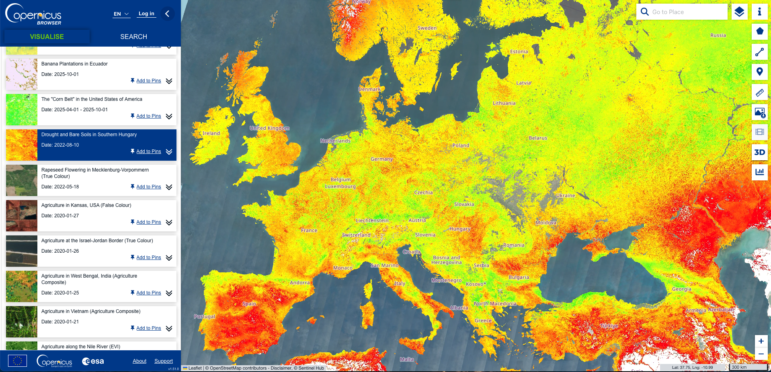
In this masterclass video, Laura Kurtzberg, training director at IRE and freelance data journalist, explains everything you need to know about using satellite images in your investigations.
Kurtzberg shares her knowledge on why satellite images can help with many different story types far beyond environmental stories. The teacher and journalist shows various free tools and how you can use them. You’ll also learn how you can leverage satellite images to not only analyze, but also to visualize your investigation and to paint an understandable picture for your audience.
Resources / tools mentioned in this video:
- Copernicus: https://browser.dataspace.copernicus.eu/
- QGIS: https://qgis.org/
- GIJN: https://gijn.org/resource/how-to-acqu…
- Data visualization: https://flourish.studio/
Credits:
- Interview: Sarah Ulrich
- Video Editing: Quentin Egloff
- Music: Lionel Marçal
- Filming: Ron Lopez, Reynald Ramirez, Hashim Hakeem
- Supervision and Coordination: Sandrine Rigaud
- Special Thanks: Glenn Chong
- With the support of The Konrad-Adenauer-Stiftung

This work is licensed under a Creative Commons Attribution-NoDerivatives 4.0 International License
Republish our articles for free, online or in print, under a Creative Commons license.
Republish this article
This work is licensed under a Creative Commons Attribution-NoDerivatives 4.0 International License
Read Next
Guides Data Journalism Reporting Tools & Tips
Step-By-Step Guide for Journalists on the Basics of Google Sheets
Knowing how to use spreadsheets is a crucial skill, as it allows you to find potential stories in large amounts of data and to think critically about how to use it.

Data Journalism News & Analysis
From Space to Story in Data Journalism
Over the past 10 years satellite imagery has become an important component of data journalism. In the next decade, it will likely evolve further.
Data Journalism Data Journalism Top 10
Data Journalism Top 10: Turkey-Syria Earthquake, Russian Censorship, Missing Snow, Energy Saving Tips
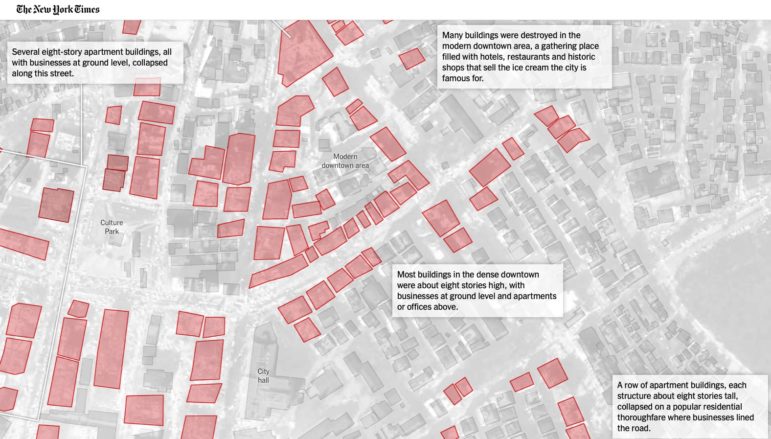
Our weekly round-up of the most popular data journalism stories on Twitter looks at mapping of the destruction in the Turkey-Syria earthquake, insight into Russia’s digital censorship apparatus, an alarming lack of snow on Swiss ski slopes, and a tool to help you save energy.
Data Journalism Reporting Tools & Tips
Video Resources for Data Investigations
To share best practices and other lessons learned from our most recent global conference, GIJC21, we are releasing a series of videos from the event’s many seminars, panels, and workshops. The second installment focuses on how investigative reporters can better utilize data tools and visualization techniques.