
‘Life or Death’: Inside ICIJ’s Cancer Calculus Investigation
Read this article in
There is one treatment so successful at helping the body fight cancer cells that it was the world’s top-selling drug in 2024 and 2025. It might even become one of the best-selling drugs of all time, according to ICIJ chief reporter Sydney P. Freedberg.
Since it was first approved in 2014, Keytruda, produced by the pharmaceutical giant Merck, has become a lifeline for millions of cancer patients, but it’s expensive, and costs are not the same all over the world.
“In Brazil, most cancer patients can’t afford Keytruda, and thousands turn to the courts to get it. In India, a month of Keytruda treatment can cost more than a year’s salary, forcing families into impossible choices between medical care and basic subsistence,” according to The Bureau of Investigative Journalism, one of 47 media partners involved in ICIJ’s Cancer Calculus investigation. The yearlong project featuring the work of 124 journalists across 37 countries reports that Merck’s Keytruda drug pricing and patent strategies drive up costs and limit patient access to the life-saving treatment.
ICIJ digital producer Carmen Molina Acosta recently led a live discussion about the investigation’s findings and methodology with chief reporter Freedberg and Bill Pajerowski, a health economist and senior director of analytics at the San Francisco-based data company Serif Health.
According to an ICIJ analysis, Merck has made around US$163 billion in Keytruda sales since 2014 — or, as TBIJ put it, “more money than McDonald’s” through “aggressive but legal” strategies to keep the price of the cancer drug high while stifling competition.
Keytruda (known generically as pembrolizumab) is an immunotherapy, usually taken intravenously, that restores the body’s ability to fight cancer cells by preventing tumor cells from inhibiting T‑cell activity. Unlike chemotherapy, which attacks rapidly dividing cells, “Keytruda uses a person’s own immune system to attack cancer cells,” said Freedberg. “What makes it so special is that it works across many different types of cancers, not just one. It’s approved for conditions including lung cancer, melanoma, which is the most serious form of skin cancer, kidney cancer, triple-negative breast cancer, and several other kinds of cancers.”
Looming Patent Cliff
How Keytruda is bought, sold, and distributed matters because Merck’s patent protections will start to expire soon, which will determine whether more affordable versions will become available to patients around the world.
“Wall Street competitors, doctors, policymakers, they’re all watching to see what happens with this drug when the patents begin expiring in 2028,” says Freedberg. “When a blockbuster drug like Keytruda loses exclusivity, other companies can launch lower-cost versions. Historically, that can cause massive revenue declines — what analysts call a patent cliff.”
However, one of the investigation’s key findings is that Merck has applied for more than 1,200 patents — a strategy known as “evergreening” — worldwide, which could delay potential competitors from entering the market and therefore keep prices high. The additional patents protect different formulations, manufacturing processes, and treatment methods, such as patenting Keytruda in combination with other treatments.
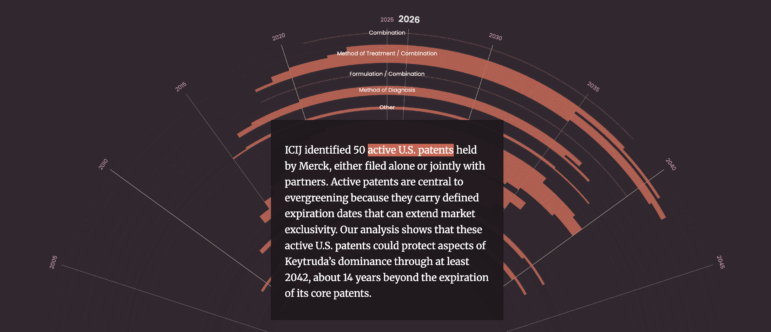
One of the investigation’s articles focused on how Merck uses patents to help maintain Keytruda’s high prices. Image: Screenshot, ICIJ
The drug also has a big impact on healthcare systems around the world. Cancer researchers consulted by the ICIJ accused Merck of promoting a higher dose of the drug than necessary. When costs run high, it “forces public health systems and patients worldwide into financial and legal battles for access that are not sustainable,” adds Freedberg. High drug costs have also resulted in counterfeit production and black markets.
Cost Disparities
ICIJ’s findings show that annual treatment costs of Keytruda vary widely, with so-called “list prices” for a typical treatment ranging from about US$80,000 a year in Germany to $208,000 in the US, US$93,000 in Lebanon, to about US$130,000 in Colombia. In South Africa, the same course of treatment would cost US$65,000, while in Croatia it’s US$116,000
“Keytruda is more expensive for median income earners in the US and poorer Eastern European countries, like Bulgaria and Hungary, than in some wealthy Western European countries,” the ICIJ report noted.
Health economist Bill Pajerowski, explained that there is no single price for Keytruda, which drives a lot of the price variation in the US, where different healthcare providers have different negotiating leverage and where federal pricing programs might incentivize administering the drug at markups while providers get discounts from manufacturers. “There are millions, if not billions, of distinct prices for Keytruda, and it depends on who is buying and who is selling,” he said.
Freedberg explained some of the drivers of cost disparities internationally. “Oncology markets tolerate high prices because therapies can be life-extending. So buyers usually don’t act like normal consumers, because insurers and governments foot most of the bill,” she said.
ICIJ’s reporting revealed that Merck and other cancer-related businesses often deployed the following strategies to keep prices up. While none of these practices is illegal, reporters said these tactics are designed to “build a fortress” around the drug to keep its price high.
- ICIJ’s investigation found more than 1,200 Keytruda-related patent applications across 53 countries, filed by Merck and other cancer research businesses.
- Lack of pricing transparency.
- Distributed tens of millions of dollars in the US in consulting fees, travel costs, and other Keytruda-related payments to doctors and healthcare professionals.
- Gave nearly US$75 billion in dividends to shareholders and US$43 billion into share buybacks.
- Reduced its US taxes by recording profits in lower-tax jurisdictions, such as Switzerland.
Methodology
The investigation was based on large amounts of data from a wide range of sources, which ICIJ and its partners gathered, analyzed, cross-checked, and explained in several articles, videos, and interactive graphics.
- ICIJ analyzed 180 US patent applications related to Keytruda. The data was provided by the Initiative for Medicines, Access & Knowledge. Readers can explore the patents interactively here
- ICIJ and its reporting partners filed 1,018 public record requests in 27 countries to obtain public health records, meeting minutes, pricing and reimbursement data, and other documents
- ICIJ obtained pricing information from Merck’s website, government sources, and Knowledge Ecology International’s drugdatabase.info.
- The US government’s Open Payments database tracks Keytruda-related payments to US doctors and health care professionals; ICIJ cross-checked that data with the list of advocacy organizations gathered by KFF, a US health policy researcher
- Belgian newspaper De Tijd gathered data from betransparent.be to identify payments made by Merck in Belgium to patients and healthcare organizations; ICIJ cross-checked this information with LobbyFacts.
- For ICIJ and its partners, the Swiss organization Public Eye analyzed Keytruda’s research and development costs, relying on clinicaltrials.gov data.
- The Healthcare Cost Institute and Serif Health shared data about treatment costs in the US
- ICIJ reviewed 163 judicial requests from patients seeking access to Keytruda from government health systems in Guatemala, Mexico, and Chile. Brazilian data was sourced from a public dashboard.
- ICIJ analyzed 27 decisions related to Keytruda access from the California Department of Managed Healthcare’s public search engine.
Impact and Response
Merck is not an outlier. The investigation looks at the practices of one pharmaceutical giant, but also explains common industry strategies and systemic issues that feed global health inequity. Freedberg called it a “broken system” that creates a global pattern for blockbuster medicines.
“Drug markets reward blockbuster monopoly economics beyond the original scientific breakthrough,” says Freedberg. “With Keytruda, what we see is that essentially one breakthrough has become dozens of monopolies, and some Keytruda treatments work far better than other treatments.”
The patent system allows companies to continually extend their exclusivity by obtaining new patents on additional cancer types, dosing schedules, and combination therapies. “Instead of one finite monopoly period tied to the original invention, a drug can accumulate a wall of patents that makes competition extremely difficult,” she adds.
ICIJ writes that the reporting has sparked widespread reaction from politicians across Europe and the US, health and financial experts, and government agencies.
Merck’s senior vice president Johanna Herrmann defended Keytruda pricing in a letter to ICIJ. “We have a long history of responsibly pricing our medicines to reflect their value to patients, payers, and society,” she wrote, adding that the firm “rejects any assertions that suggest we have fallen short of the high standards of transparency and integrity that govern how we deliver care to patients.”
She also pointed out how the company spends billions of dollars on research and manufacturing, and that the organization has been behind “one of the largest and costliest pharmaceutical R&D [research and development] programs ever undertaken.”

Alexa van Sickle is a journalist and editor with experience across digital and print journalism, publishing, and think tanks and nonprofits. Before joining GIJN, she was senior editor and podcast producer for the foreign correspondence and travel magazine, Roads & Kingdoms

Guide to Investigating Tech and AI in Modern Warfare
Turning Copernicus Satellite Data Into Public-Interest Climate Stories
10 Practical Tips for Verifying Scientific Claims

Reporter’s Guide to Investigating Cryptocurrency
Behind the Scenes: How Four Journalism Teams Pulled Off Their Blockbuster Climate Investigations

Reporter’s Notebook: How to Track Down People Who Don’t Want to Be Found
Call for Ideas: Send Us Your Panel and Workshop Recommendations for GIJC27
‘To Convince Someone to Speak, Explain How Their Responses Will Improve the World’: Investigating Power and Influence from Moldova

This work is licensed under a Creative Commons Attribution-NoDerivatives 4.0 International License
Republish our articles for free, online or in print, under a Creative Commons license.
Republish this article
This work is licensed under a Creative Commons Attribution-NoDerivatives 4.0 International License
Read Next
Climate
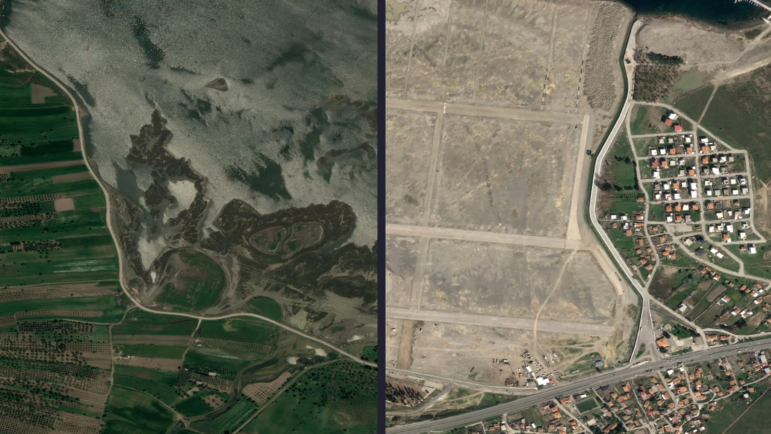
Behind the Scenes: How Four Journalism Teams Pulled Off Their Blockbuster Climate Investigations
These exposés from Europe, South America, the Philippines, and the United States combined innovative data analysis with on-the-ground reporting to uncover critical environmental issues.
Reporter’s Notebook: How to Track Down People Who Don’t Want to Be Found
OCCRP’s research director offers up a series of tips and techniques to help reporters safely and effectively build a profile of whoever they are looking for.
GIJC27
Call for Ideas: Send Us Your Panel and Workshop Recommendations for GIJC27
To create the most inclusive and impactful global conference for investigative journalists, we are now soliciting great ideas for sessions for GIJC27. Send us your proposals!
10 Questions
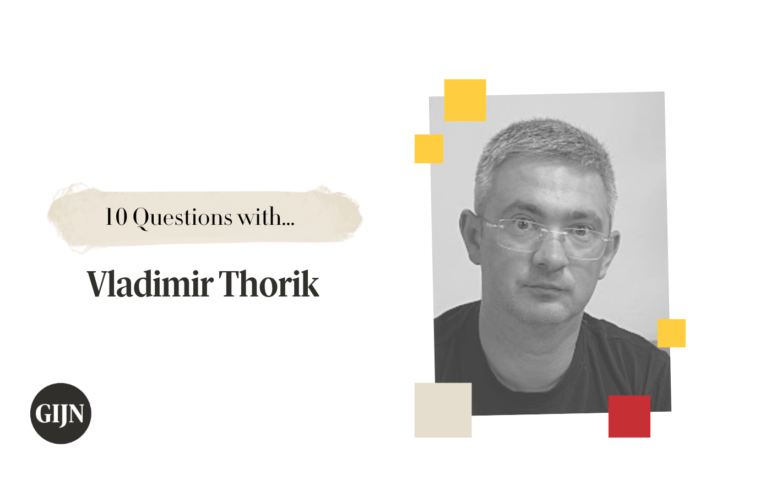
‘To Convince Someone to Speak, Explain How Their Responses Will Improve the World’: Investigating Power and Influence from Moldova
Award-winning journalist Vladimir Thorik discusses reporting in an oft-overlooked part of Europe and how he approaches exposing the long reach of Russia on his native country and its neighbors.