

Gina Chua, executive director of the CUNY Tow-Knight Center for Journalism, warned that there is not going to be a quick fix for the media funding crisis. Image: Suzanne Lee, Alt Studio for GIJN
‘No Cavalry Is Coming’: How Investigative Journalism Must Rethink Money, Metrics and Survival

How Independent Journalism Is Filling Gaps in the European Media Landscape

How Nonprofit News Ventures Seek Sustainability: A Knight Study
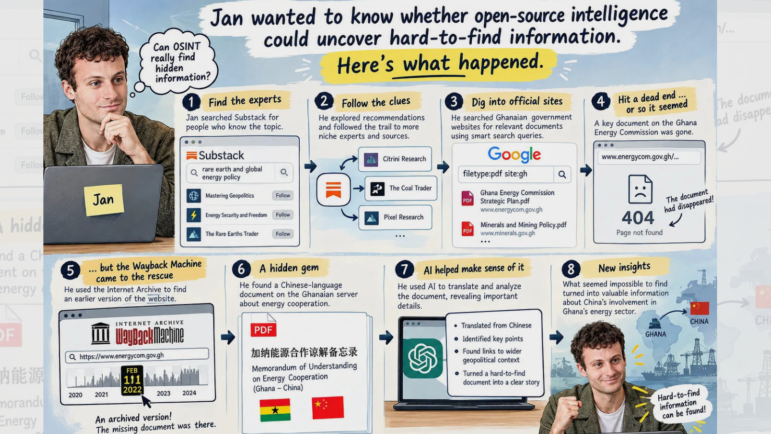
International Research Guide: How to Find Experts and Hidden Documents on Any Topic

Guide to Investigating Tech and AI in Modern Warfare
Money is leaving journalism faster than new models can replace it — and “no cavalry is coming.” That warning, delivered without euphemism, cast a somber tone on the “Exploring Traditional and New Business Models” session at the 14th Global Investigative Journalism Conference (GIJC25) in Malaysia.
In the wide ranging discussion, panelists Christoph Plate, Gina Chua, Martha M. Steffens, Ryan Powell, and moderator Brant Houston pushed back against the idea that sustainability will emerge from the next shiny revenue fix. Instead, they argued that survival now depends on discipline: understanding audiences beyond clicks, measuring impact in ways funders and communities can recognize, managing costs with the same rigor applied to reporting, and treating journalism not only as a public service but also as a business.
The conversation reflected a broader shift now playing out across investigative newsrooms worldwide. As philanthropic funding tightens, legal and security costs climb, and new technologies reshape how audiences encounter information, long-held assumptions about independence, scale, and impact are being reassessed. Rather than offering a single solution, this GIJC25 panel discussion surfaced a set of unresolved questions about what investigative journalism can sustainably support — and what it may need to leave behind.
Measuring Impact Beyond Clicks
For Steffens, metrics are no longer a bureaucratic afterthought but a central pillar of investigative sustainability. A former newspaper editor and now an endowed chair in business and financial Journalism at the University of Missouri, Steffens said journalists must understand how their work translates into demonstrable impact — especially when seeking funding.
“In order to get funds, whether you are being funded by philanthropies or particular nonprofit foundations or individualized, you need to be able to measure your impact,” Steffens said.
She pointed to practical examples from US newsrooms that have redefined how impact is shown. The Post and Courier, in South Carolina, uses a heat map to display the geographic reach of its investigations, allowing readers to click on specific locations and see related reporting. The visual tool, she said, has not only fueled tip lines but also attracted financial support tied directly to those tips.
The Seattle Times has taken a different approach, successfully raising more than US$1.2 million from individual donors, as per Steffens, while anonymizing contributors so investigative reporters do not know who funds their work. “How they show impact there is how they’ve changed things within the city of Seattle and the state of Washington as well,” Steffens explained.
Nonprofit outlets are also experimenting with civic engagement as a metric. The Texas Tribune, for instance, uses a civic action survey to track how readers move from interest to activities such as contacting officials or voting. Steffens said the outlet’s goal is to push impact “towards that direction.”
For collaborative journalism, measuring reach can be more complex. The 19th, a nonprofit newsroom focused on gender equity, developed its own internal metrics to track not only readership but also sharing and social media engagement. “It’s not just viewing, but taking some sort of action,” Steffens noted.
She also highlighted how repurposing investigations can open new revenue streams. Reveal, a California-based investigative organization, doubled podcast sponsorships by adapting its reporting for audio.
Emotional connection, Steffens argued, remains one of the most powerful drivers of engagement and funding. She cited ProPublica’s Lost Mothers Project, which asked readers to submit cases of maternal deaths in childbirth. The initiative generated thousands of tips, deepened reader attachment, and later evolved into the Pulitzer Prize-winning Life of the Mother project.
“It’s not only an attachment to this idea, but it was an incredibly powerful metric for individual donations,” she said.
Rethinking Arrogance, Money and the Newsroom Economy
Christoph Plate, director of the media program South East Europe at the Konrad Adenauer Foundation, urged journalists to confront a different obstacle: professional arrogance.
Reflecting on his career as a correspondent and editor, Plate said journalists once kept a deliberate distance from advertising and business departments because they didn’t see the connection between their work and the newsroom. “This arrogance was extremely, extremely unhealthy,” he said
Plate challenged the idea that investigative journalism can exist independently of the broader newsroom ecosystem. Large-scale investigations such as the Panama Papers and Paradise Papers, he noted, were financed by established, profitable media houses capable of sustaining months of research and data mining.
“Investigative journalism by itself, in itself, cannot survive on its own,” he emphasized.
He also warned against an overreliance on philanthropy and donor-funded investigations. “Investigations that are entirely financed by philanthropy are not necessarily independent,” Plate said, adding that journalists must think seriously about economics.
For freelancers and early-career reporters, Plate recommended spending time in newsrooms to understand editorial and financial decision-making. He also encouraged media organizations to diversify income through training programs, public events, book publishing, and other services.
“Don’t be too dependent on one source of income,” he said. “It is the economy.”
Plate emphasized humility toward audiences as well. Journalism, he said, is not about vanity but service — and service must also be financially viable. “Shed your ego, shed your vanity and work on the journalism that serves the communities,” he said.
AI, Audiences and the Uncomfortable Math of the Future
Ryan Powell, head of innovation and media business at the International Press Institute, approached sustainability from a systems perspective, focusing on revenue experiments and audience strategy. Powell described IPI’s recent survey work conducted with the Organized Crime and Corruption Reporting Project (OCCRP), which examined revenue experiments across 30 newsrooms.
Among the most common approaches were newsletters, memberships, crowdsourcing, consulting, paid content, and selling databases. But Powell cautioned against adopting popular solutions without assessing whether they fit a newsroom’s specific market.
“It’s really important to take a step back before you jump in headfirst to a particularly often prescribed solution,” he said.
Powell proposed viewing investigative journalism as a value chain made up of distinct units — from managing whistleblowers and filing freedom of information requests to verification and narrative construction. Understanding those units, he said, helps identify where monetization might be possible.
First-party data emerged as a critical asset. Newsletter signups, email lists, donation records, and event registrations, Powell said, give newsrooms control in an era dominated by third-party platforms and volatile algorithms. He cited work with Recorder, a Romania-based investigative video outlet that generates about €1.3 million (US$1 million) annually, largely through small donations enabled by a tax allocation system.
What made the model sustainable, Powell said, was not just donations but data. Building a customer relationship management system allowed the newsroom to understand donor behavior and respond when payments failed or lapsed.
“Any newsroom around the world … is able to put together this whole project and ultimately reach and build a sustainable model,” he explained.
If Powell emphasized structure, Gina Chua brought urgency. Executive director of the Tow-Knight Center for Journalism Futures and executive editor at large at Semafor, Chua told the room that investigative journalism faces a stark financial reality.
“There is not enough money,” she said. “The cavalry is not coming.”
Costs, she noted, are rising due to security needs, lawsuits, inflation, and technology, while major sources of philanthropic funding — including USAID — have declined. Simply doing good work, she said, will not fill the gap.
“We have to spend more time thinking about efficiency, thinking about consolidation, thinking about what we stop doing,” Chua said.
She also warned that journalism is on the brink of a major technological shift driven by generative AI. While large language models struggle with factual accuracy, she said, their ability to handle language is already transforming how people consume information.
“People are coming regardless of how accurate it is or not, because it is a better UI,” Chua said.
Her advice to investigative outlets was pragmatic: compete on product, not nostalgia. “We can’t simply tell people… you should eat our broccoli,” she said.
Chua argued that journalists must stop seeing themselves solely as content creators and instead as service providers who deeply understand their audiences. That cultural shift, she said, may determine whether investigative journalism remains relevant — even if it increasingly becomes, as she put it, a “luxury good.”
You can watch the full GIJC25 panel below.
 Hanan Zaffar is a media practitioner, multimedia storyteller, and documentary filmmaker based in India. His work primarily focuses on South Asian politics, minorities, human rights, and the environment. His reporting has appeared in TIME Magazine, the Guardian, VICE, Al Jazeera, Business Insider, and other places. He has also had reporting stints in Southeast Asia, Africa, and Europe, and is the UN Foundation’s 2025 Polio Press Fellow.
How Independent Journalism Is Filling Gaps in the European Media Landscape
How Nonprofit News Ventures Seek Sustainability: A Knight Study
International Research Guide: How to Find Experts and Hidden Documents on Any Topic
Guide to Investigating Tech and AI in Modern Warfare

At GIJC25, Nobel Prize Laureate Maria Ressa Calls for ‘Radical Collaboration’ to Combat Disinformation and Preserve Press Freedom

Building and Nurturing Communities That Value and Pay for Investigative Journalism
Tips for Identifying New Funding Sources for Investigative Journalism

Nobel Laureate Urges Journalists to Investigate the Systems and Enablers that Foster Corruption Worldwide

This work is licensed under a Creative Commons Attribution-NoDerivatives 4.0 International License
Republish our articles for free, online or in print, under a Creative Commons license.
Republish this article
This work is licensed under a Creative Commons Attribution-NoDerivatives 4.0 International License
Read Next
GIJC25
At GIJC25, Nobel Prize Laureate Maria Ressa Calls for ‘Radical Collaboration’ to Combat Disinformation and Preserve Press Freedom
In her keynote address, the Rappler CEO issued an urgent call for the investigative reporting community to embrace creative solutions in pursuit of the facts and a sustainable future.
GIJC25
Building and Nurturing Communities That Value and Pay for Investigative Journalism
From combining investigative stories with theater events to livestreaming editorial meetings, these newsrooms have adapted to dwindling revenue streams in novel ways.
GIJC25
Tips for Identifying New Funding Sources for Investigative Journalism
Nonprofit news outlets must put extra emphasis on audience engagement, out-of-the-box solutions, and communicating to potential donors their unique value to democracy.
Nobel Laureate Urges Journalists to Investigate the Systems and Enablers that Foster Corruption Worldwide
In a keynote conversation, the economist said reporters have a key role to play in probing Western financial institutions and the rules that lead to wealth being laundered from the Global South.