
Image: GIJN
GIJN Resource Center’s Top Guides for 2025
Read this article in
This year, GIJN’s Resource Center team produced a wide variety of guides on everything from investigating climate change to reporting on AI, from digging into Chinese companies to probing evidence of war crimes, and from covering food insecurity to looking at land conflict. The Resource Center is full of material relevant for investigative reporters. The archive now holds more than 2,000 items in 14 languages — from tipsheets and guides to instructional videos. Here are our top selections for this year.
Guide to Investigating Fossil Fuels by Geoff Dembicki, Lawrence Carter, Amy Westervelt, Megan Darby, Josephine Moulds, and Fermín Koop

Illustration: Nodjadong Boonprasert for GIJN
With fossil fuels accounting for more than 75% of global greenhouse gas emissions and nearly 90% of all carbon dioxide emissions, GIJN recruited five top climate journalists to share their knowledge and expertise on how to enable better investigations of private and state-owned fossil fuel companies, how to uncover lobbying efforts that influence climate policies, and how to expose greenwashing and disinformation within the industry. The guide also touched on how to analyze government regulations and policies affecting the fossil fuel sector, and how to report on the climate solutions proposed by the fossil fuel industry.
Reporting Guide for Landfill Methane Emissions and Solutions by Toby McIntosh
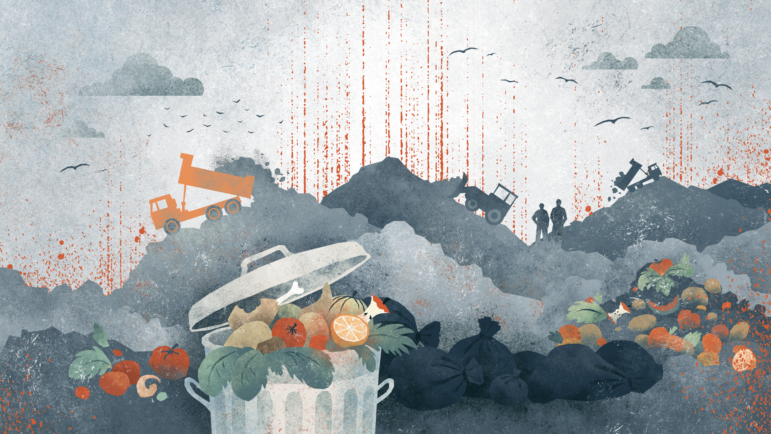
Illustration: Louiza Karageorgiou for GIJN
Continuing a cutting-edge series of climate guides, GIJN advisor Toby McIntosh focused on the importance of investigating methane emissions from waste sites. This guide equips reporters who want to cover the climate and health impacts of methane from landfills, a major but overlooked source of greenhouse gas. It explains how to detect emissions using satellite data and on-the-ground reporting, offers key questions to evaluate mitigation measures, and highlights practical solutions — from biogas capture to composting — and real-world case studies. This resource helps journalists hold waste management systems accountable and elevate local reporting.
Guide to Investigating Food Insecurity by Thin Lei Win and Deborah Nelson
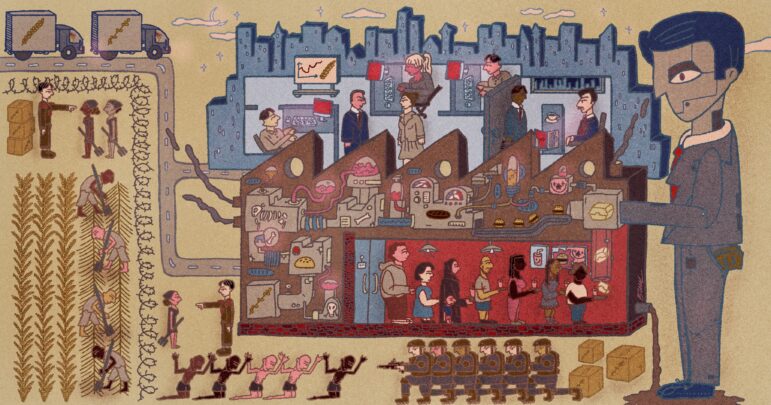
Illustration: Emil Hasnain for GIJN
The number of people facing acute, life-threatening hunger nearly tripled in the last decade to 295 million across 53 countries, according to the 2025 Global Report on Food Crises. Conflict was the leading driver, followed by economic shocks and weather extremes. Yet food insecurity remains a challenging issue for journalists to investigate.
With their combined experience, award-winning journalists Thin Lei Win and Deborah Nelson put together a reporting guide to help journalists understand the causes of food inequity, famine, and starvation. They also break down technical terms and classification for journalists, pointing them to resources where they can find data and identifying areas that journalists can investigate further.
Guide to Investigating Land Conflicts in South Asia by Kumar Sambhav Shrivastava
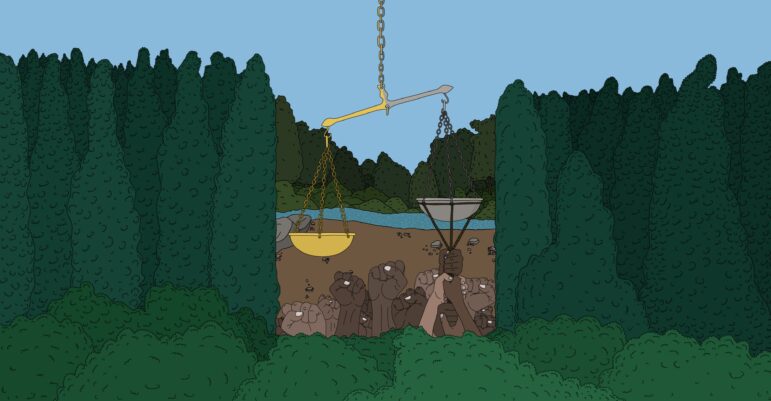
Illustration: Siddhesh Gautam for GIJN
Scarcity of land in South Asian countries naturally leads to domestic conflicts between local communities, businesses, the political class, and the government when it comes to the use and ownership of land and its natural resources. These often escalate into conflicts that specifically affect marginalized communities, clog courts, and freeze big investments.
This guide helps journalists answer basic questions, such as: What is causing land resource conflicts? What is the scale of its impact? Who is impacted? Who are the actors involved and how do their motivations shape these conflicts? It also equips journalists with the tools and resources they need to report on land conflicts in a region that hosts nearly a quarter of the global population.
Guide to Investigating Foreign Lobbying by Andrew Lehren and Nikolia Apostolou
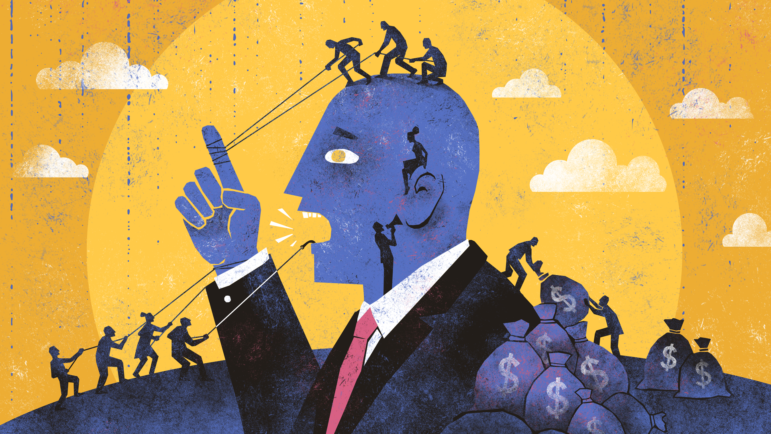
Illustration: Louiza Karageorgiou for GIJN
This GIJN guide empowers journalists globally to uncover and report on efforts by foreign entities to influence policy. It surveys international lobbying laws and databases — from the US to Latin America and beyond — and offers practical instructions on how to find disclosures, map actors, analyze influence strategies, and use public records. The guide features recent cases such as Azerbaijan’s “caviar diplomacy,” and secret lobbying on behalf of Qatar, and equips reporters with tools to expose hidden lobbying networks and hold power to account.
Guide to Investigating Caste by Sagar Choudhary
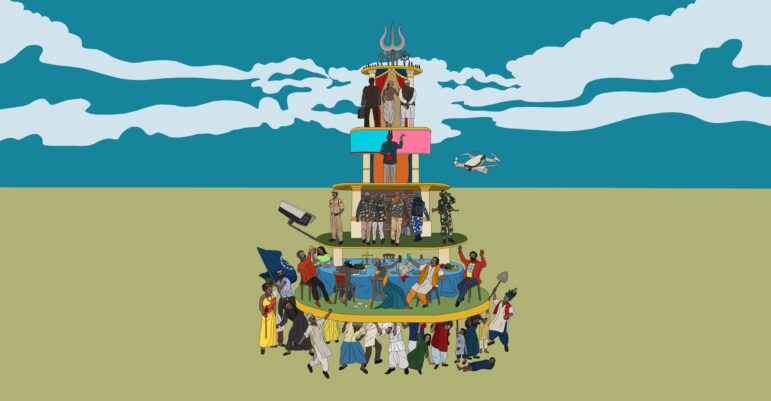
Illustration: Siddhesh Gautam for GIJN
Caste can be a taboo issue in India and other South Asian countries — but this guide provides insight into the caste system’s complexities and offers practical advice on reporting caste-related stories effectively. It provides background information on how caste shapes social, political, andfifani economic inequalities, especially in India. In addition, it outlines methods for gathering documentation, conducting interviews, and identifying systemic bias. With practical advice on sourcing data and navigating ethical risks, this guide empowers journalists to produce informed, impactful coverage of caste dynamics and marginalized communities.
Guide to Investigating Social Media Algorithms by Lam Thuy Vo

Illustration: Nodjadong Boonprasert for GIJN
Covering social media algorithms can take many forms. Not only are algorithms on social media deeply complex, but the companies that produce them rarely disclose how they work. This guide helps journalists examine how opaque platform rules can shape misinformation, hate speech, and user experiences. It explains algorithm basics and media ecosystem dynamics, plus offers practical approaches — such as reverse engineering, content tracing, and experiments — to uncover harms. Featuring global case examples, the guide empowers reporters to hold social media companies accountable and reveal the impact of unseen algorithmic influence.
Reporter’s Guide to Detecting AI-Generated Content by Henk van Ess

Illustration: Nodjadong Boonprasert for GIJN
We’re approaching a point where the signal-to-noise ratio is getting close to one, meaning that as the pace of misinformation approaches that of factual information, it’s becoming nearly impossible to tell what’s real. In this guide, renowned trainer Henk Van Ess guides journalists through the process of identifying probable AI-generated content under deadline pressure, offering seven advanced detection categories that every online reporter needs to master. This was GIJN’s most popular guide for 2025.
Open Source Guide to Investigating Chinese Companies by Chu Yang
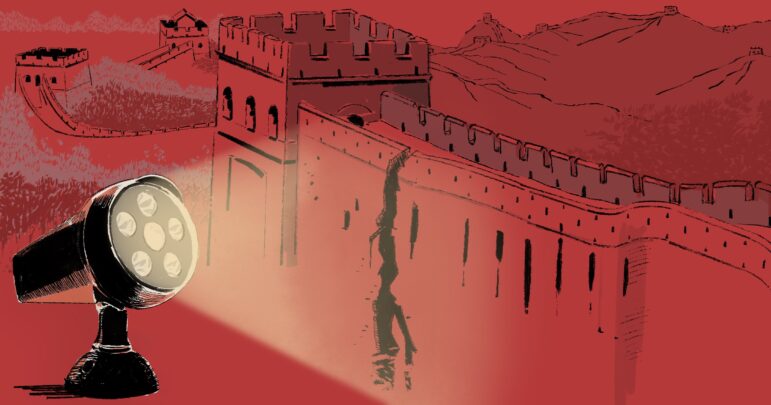
Illustration: GIJN
As China emerges as a global superpower, with a population of 1.4 billion people and the world’s second-largest economy, Chinese corporate activities, government policies, and international investments directly impact stories across every beat. Despite a demand for reliable information, the landscape for international reporting from China has dramatically deteriorated in recent years.
This guide introduces journalists to open data needed for any China-related investigations, from public databases to government resources and corporate self-disclosures and legal and judicial documents. The guide provides insight into navigating the information ecosystem within China.
War Crimes Reporting Guide, three additional chapters by Vivian Ng, Iain Overton, and Maggie Michael
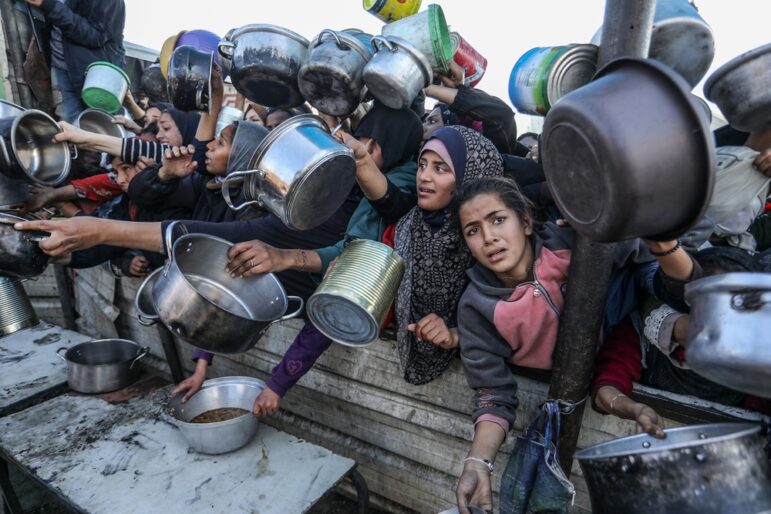
Palestinians facing famine gather to receive meals from the nonprofit organization Rafah Charitable Kitchen, in Khan Yunis, in the southern Gaza Strip, on January 2025. Image: Shutterstock
GIJN’s war crimes guide, originally published in 2023, now has three new chapters on prescient topics: the arms trade, forced displacement, and starvation. These chapters will assist journalists in investigating when an arms-exporting country is complicit in war crimes and crimes against humanity, when forced displacement can be prosecuted as an international crime, and when food is used as a weapon of war. The guide is also available as an e-book in multiple online bookstores.
Academic and Training Scholarships for Investigative Journalism by Emily O’Sullivan

Image: Shutterstock
With the help of GIJN’s network of 14 regional editors, resource center researcher Emily O’Sullivan put together a list of scholarships from universities and training organizations around the world. The list of funding opportunities applies to courses focused on investigative or data journalism, as well as journalism degrees with an investigative or data module.
 Amel Ghani is a journalist based in Pakistan, and GIJN’s Resource Center researcher and Urdu editor. She has reported on various issues, from writing about the rise of religious political parties, the environment, labor rights, to covering tech and digital rights. She is a Fulbright Fellow and holds a Master’s degree in journalism from Columbia University, where she specialized in investigative journalism.
 Nikolia Apostolou is GIJN’s Resource Center director. She has been writing and producing documentaries from Greece, Cyprus, and Turkey for more than 18 years, working with outlets including the BBC, The Associated Press, AJ+, and The New York Times, among others. She covered Greece’s economic crisis, reported on the European migrant crisis, and her documentaries have been screened in festivals across the world. She is a graduate of Columbia University and Panteion University, in Athens, Greece.
Reporter’s Guide to Detecting AI-Generated Content
Guide to Investigating Fossil Fuels
GIJN Guide to Investigating Foreign Lobbying

Guide to Investigating Social Media Algorithms
GIJN’s Top Investigative Tools of 2025
Clandestine Airstrips, a Mexican Mega Leak, and a Crisis of Unidentified Missing People: 2025’s Best Investigative Stories in Spanish
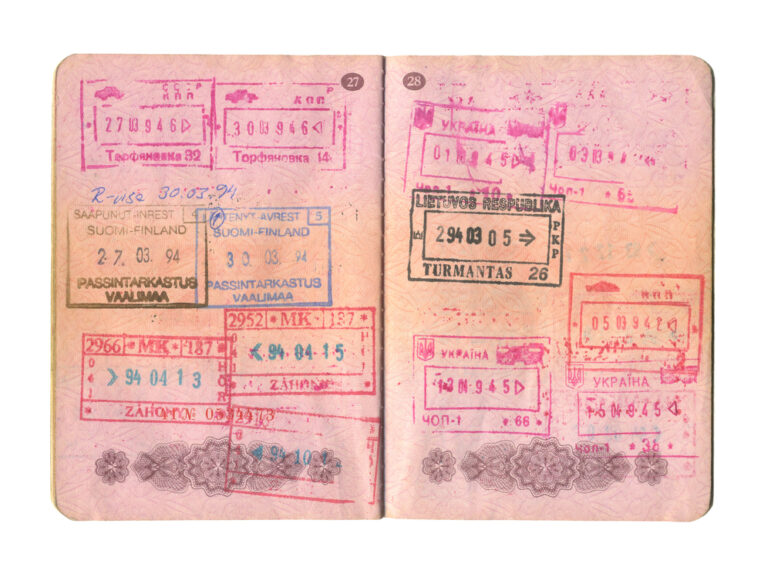
Passports Are Key to Uncovering Offshore Secrecy — We Use Machine Learning to Find Them Efficiently
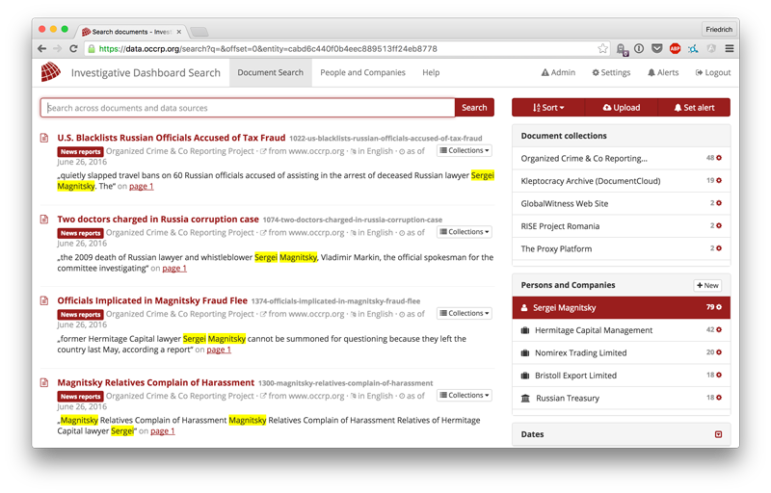
A Tour Of Aleph, A Data Search Tool For Reporters

This work is licensed under a Creative Commons Attribution-NoDerivatives 4.0 International License
Republish our articles for free, online or in print, under a Creative Commons license.
Republish this article
This work is licensed under a Creative Commons Attribution-NoDerivatives 4.0 International License
Read Next
Editor's Picks Reporting Tools & Tips
GIJN’s Top Investigative Tools of 2025
In a year that kleptocracy and attacks on independent media spiked, investigative reporters harnessed a mix of new databases and innovative tools to hold bad actors accountable.
Editor's Picks News & Analysis
Clandestine Airstrips, a Mexican Mega Leak, and a Crisis of Unidentified Missing People: 2025’s Best Investigative Stories in Spanish
The investigative stories produced in the Spanish-speaking world this year show a vibrant journalistic landscape, despite the many challenges reporters now face in many places.
Methodology Reporting Tools & Tips
Passports Are Key to Uncovering Offshore Secrecy — We Use Machine Learning to Find Them Efficiently
Passports can help unlock secret ownership of offshore companies, but finding them is often challenging. At ICIJ, we decided to build a new detection tool to speed up this process.
Data Journalism Reporting Tools & Tips
A Tour Of Aleph, A Data Search Tool For Reporters
In a short story by Jorge Luis Borges, the Aleph is a point in space that contains all others. To those who see it, it presents the entire universe at once — an investigative reporter’s dream. Over the past six months, I’ve been working for OCCRP to produce a tool named after this mythical object. It’s based on a prototype I hacked up as part of my 2014 Knight International Journalism Fellowship, and it has now grown into a data research tool as part of the Investigative Dashboard.