

Resource Video
GIJC23 – FOIA/RTI Investigations
More than half of the world’s countries have laws that require officials to supply public documents on request, offering valuable windows for reporters.
More than half of the world’s countries have laws that require officials to supply public documents on request, offering valuable windows for reporters.
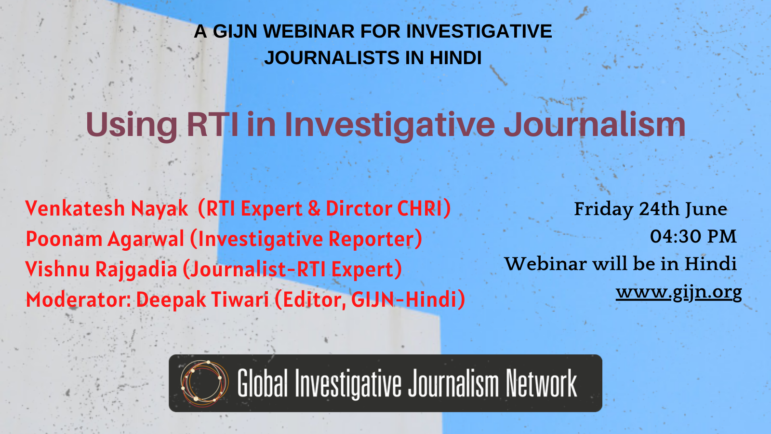
In this GIJN Webinar, exclusively in Hindi, we bring together journalists and experts who will share their experiences and suggest various ways to innovatively use the RTI Act for investigative journalism. Apart from suggesting ways to sniff out wrongdoings in government spendings, they will also offer tips on how to extract information by framing RTI queries in a creative manner.

The power of the pen — writers are so dangerous that the US Federal Bureau of Investigation deemed it necessary to start surveillance on many of them, including Hannah Arendt, Allen Ginsberg, Ernest Hemingway, Susan Sontag, and Hunter S Thompson. The book “Writers Under Surveillance” gathers some of these investigation files that were obtained with Freedom of Information Act requests by MuckRock.

How can a journalist request Federal Bureau of Investigation’s files on an individual? MuckRock’s JPat Brown prepared a useful step-by-step flowchart guide for all scenarios to help you make sure you’ve gathered all the materials you need before you file that FOIA.
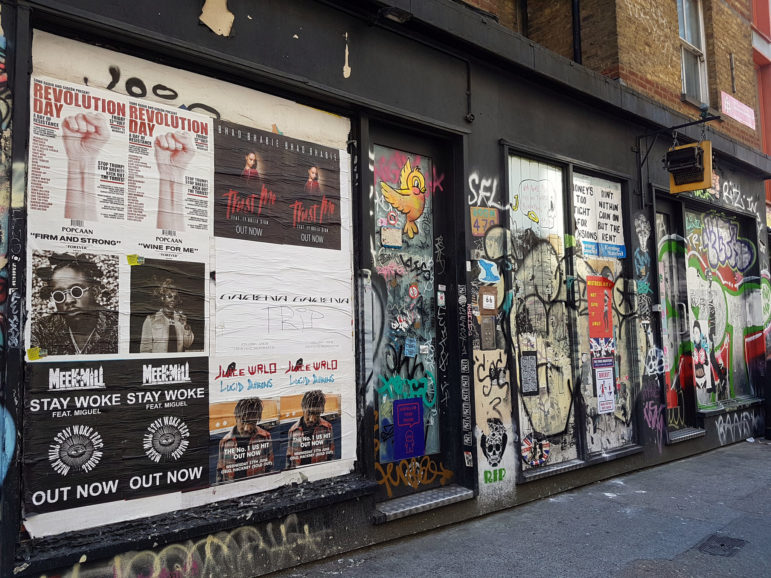
For the last three years Gavin Chait has been fighting — and winning — multiple freedom of information cases to unlock data on vacant properties. Here are the lengths he took to disprove the City of London’s excuse for not publishing information on unoccupied commercial properties.
There are hundreds of stories in business registries and court documents around the world just waiting for a journalist to uncover them. Emmanuel Freudenthal shares his five tips on finding open-source secrets in Africa with GIJN — helpful guidelines which can be used around the world.

Freedom of information requests have fueled recent environmental stories around the world. GIJN’s Resource Center director, Toby McIntosh, put together a round-up of a few that might stimulate your investigative thinking.

A team of Reuters reporters, editors and data analysts reviewed the results of hundreds of autopsies and filed hundreds of public records requests involving deaths by Taser in the US. The result? Not only did the investigation catalogue 1,005 deaths, but it ended up building the most comprehensive database ever on Taser-related deaths.

Data on government workforces might not sound that exciting — that is until you consider the trove of information it can help uncover. Here’s how journalists worldwide are using FOI requests to dig into great stories.

Tracking down local government expenses is a recurrent theme for many successful freedom of information requests. Some recent examples suggest that quite a variety of information is potentially available — about credit card charges, salaries, retirement parties, and even costs of leak investigations. Have a great story you developed using a FOI/RTI request? Send it to us at freeinfo@email.gwu.edu. We’re currently looking for examples regarding immigration.
In 2001 GIJN was born, as investigative journalists from around the globe met for the very first time to share ideas, tips, and best practices to strengthen their reporting in a world where journalism was increasingly under threat.
Today the threat has multiplied, and at GIJN we find ourselves under the same pressures as our member organizations. Most urgently: available funding for investigative journalism has been impacted as some longtime funders who supported journalism in the past are no longer doing so or have closed. Yet our work continues, more important than ever before.
GIJN serves as the global hub for the world’s investigative reporters. Our core mission is to support and strengthen investigative journalism—with special attention to those from repressive regimes and marginalized communities.
We are embarking on our first-ever campaign initiative to help us expand our revenue by the end of the year through individual donors. If you have ever joined one of our free webinars, used one of our free resources, learned a new skill thanks to a GIJN training, or simply believe that press freedom is essential to civil society, we ask you to show your support for GIJN’s work with a donation of your choosing. Called “Friends of GIJN,” this campaign includes a more personalized experience, starting in 2027, for individuals who answer the call to join with us during this unprecedented time.
Truth and democracy are under attack around the world. You can fight back by helping GIJN support investigative journalists with free access to the latest tools and techniques — so they can foster justice and hold accountable those who abuse the public trust.
With a staff based in 24 countries, GIJN works in a dozen languages each day, linking together the world’s most enterprising journalists, offering state-of-the-art training, webinars, tip sheets, and a Help Desk that responds to 2,000+ requests for assistance each year. More than 84% of GIJN’s operating budget goes directly to our program work.
Please make a gift today to support journalists on the front lines of the fight for accountability and human rights.