

Image: Screenshot, Freedom of the Press Foundation, YouTube
The Case for Free Access to FOIA-Based Public Documents Reporting
Newspapers started putting up paywalls on their websites in the mid-2010s, offering access to all or some of their content through paid subscriptions to make money after years of decline in advertising revenue and circulation, as media and eyeballs shifted to consuming news online.
But a campaign by the Freedom of the Press Foundation (FPF) is calling on news outlets to drop their paywalls for reporting based on FOIA requests or public records. This strategy, it argues, might be an effective way to respond to increasing attacks on the press, funding cuts, and opacity of government action, particularly in the US. By providing access for as many readers as possible, they can keep more people informed about the actions of the federal government and attempt to hold it accountable.
“They’re public records for a reason. They don’t belong behind a paywall,” said Caitlyn Vogus, senior advisor at FPF. “If citizens can’t get access to facts and truth, democracy doesn’t stand a chance.”
Moderating a FPF webinar titled Unpaywalled: The Case for Making Public Records-Based Reporting Free, Vogus added: “Now more than ever, free access to reporting based on government records isn’t just important, it’s essential… But paywalls often stop people from accessing that reporting, and the vast majority read the misinformation or propaganda instead.”
While there is a press freedom and public interest argument for making this kind of reporting more widely available, newsroom leaders from the tech-focused outlets WIRED and 404 Media told webinar attendees that they had discovered other benefits to this tactic as well — such as greater trust, “instant” new subscribers, and increased traffic.
“When we announced it… that bet paid off above and beyond what I could have possibly imagined,” said Kate Drummond, the global editorial director of WIRED.
Vogus and Drummond were joined by Lauren Harper, the Daniel Ellsberg Chair on Government Secrecy at Freedom of the Press Foundation, and Joseph Cox, an award-winning investigative journalist and one of the founders of the tech journalism outlet 404 Media.
‘The News Isn’t Just a Business’
Convincing news outlets to make their reporting free might not be easy, Vogus acknowledged. “Reporters need to get paid, and newsrooms need to survive,” she said. “But the news isn’t just a business. It’s enshrined in the First Amendment and serves a vital role in our democracy, or what’s left of it,” she added.
“We know FOIA-based reporting is costly. It’s time-consuming. But we also know for a fact that transparency builds trust and trust builds readership and readership leads to more traffic and subscriptions. When WIRED did it, they instantly got a wave of new subscribers,” she added.
In March 2025, WIRED announced that it would drop its paywall for articles driven by public records. Since 404 Media was founded in 2023, it too has made articles based primarily on public records requests freely available to all readers.
Cox and Drummond explain they have similar reasons for doing this — a focus on the public interest and the importance of cutting through misinformation.
Cox was for many years a reporter at Motherboard, VICE magazine’s technology vertical, where he estimates that around 30% of his investigations were underpinned by public records and FOIA requests. “VICE was a public website, based on an advertising model,” Cox explained. “I just got very used to the idea — and saw the benefit of — publishing public records, linking to them, and for readers and potentially, sources, being able to access them.”
When launching 404 Media, the team wanted to continue that tradition of openness, even though the site, to remain sustainable, has both a free tier that requires email registration and a paid tier for full access. “There’s just something about being able to have a government document that you know is real, you got it from the government through a FOIA request or a lawsuit, and then you can show that to readers… we didn’t want to get in the way of that,” Cox said.
In WIRED’s case, Katie Drummond explained that its decision to drop the paywall was sparked by their reporting on the so-called Department of Government Efficiency (DOGE), the Elon Musk-led government force that made huge cuts to US federal agencies and funding, including effectively shuttering USAID. (DOGE cuts targeted government departments that handle FOIA requests, and the department has also denied requests to hand over its own documents under FOIA.)
That decision came against a backdrop of more and more misinformation, inaccurate journalism, and propaganda reaching the eyes and ears of readers, she explained. “We need to run a sustainable business too; WIRED relies on subscriptions to fund our journalism and support our newsroom. But we felt like this was one thing we could do as a show of good faith.”
Drummond added: “So it felt like for us a no-brainer, that within the constraints of the business that we need to run this, there was something we could do to make sure that as many people as possible were were exposed to this information, and were gaining an increased understanding of what was happening inside the federal government during the DOGE era, and then, of course, in perpetuity after that.”
A ‘Calculated Bet’ Pays Off
The question for newsrooms considering following suit is whether they can remove their paywall for this type of reporting and still make money that supports the outlet overall? Cox and Drummond said that if anything, this initiative gave them a financial and subscriber boost.
Drummond noted that not everything WIRED published is based on public records, and that they still produce a great deal of journalism that sits behind a paywall.
“We made a calculated bet that our audience would show up for us when we did this,” Drummond recalled. “There was an outpouring of goodwill and good faith on social media… We saw a huge increase in subscribers on the day that we made that announcement, and then in the days following we got hundreds of emails from people thanking us for doing it and letting us know that they had subscribed because we had done that.”
While Drummond noted that “results are not guaranteed” and these findings are limited, she said the move has been, “additive to the business rather than anything taken away, from a financial point of view.”
Good faith was also a factor for 404 Media’s experience, said Cox. At the top of their site’s articles based on public records reporting, there is a box explaining that it’s free and asking readers to subscribe or donate if they want to support more of this kind of accountability reporting.
“This can actually bring in subscribers, even though it’s not required,” he said. “The idea of good faith comes up a lot, especially at 404 Media, where, for example, we also took a bunch of our coverage of ICE [US Immigration and Customs Enforcement], all about the technology they use, and we translated that into Spanish and published it without a paywall.”
“We want people to access this information and it does pay off, I think, journalistically, ethically, and business-wise as well in the end,” Cox added.
He also noted that 404 Media, where appropriate and safe, links to the public records in their articles. For Cox and his team, the ethical obligation to make those kinds of documents more available to readers outweighs any concerns about giving away materials that competing sites might use in their reporting. The speakers noted another argument for making FOIA-reporting unpaywalled: the process of gaining access is still more onerous than it should be — and it has not become any easier.
Harper explained that there is also a larger, civic responsibility that compels the press to provide free access to FOIA-based public documents for everyone. “We can’t fully engage in the democratic process or with the government if we don’t know what that’s doing,” she said. “And so curtailed access to reliable information limits our ability to have policy debates about immigration, health care, climate change, you name it.”
Watch the full Freedom of the Press Foundation webinar below:
 Alexa van Sickle is a journalist and editor with experience across digital and print journalism, publishing, and international think tanks and nonprofits. Before joining GIJN, she was senior editor and podcast producer for the award-winning foreign correspondence and travel magazine, Roads & Kingdoms.

GIJC23 – FOIA/RTI Investigations

Where Can Foreigners Make FOIA Requests? Read the New GIJN Guide
2025 Conference Resources
Guide to Investigating Food Insecurity
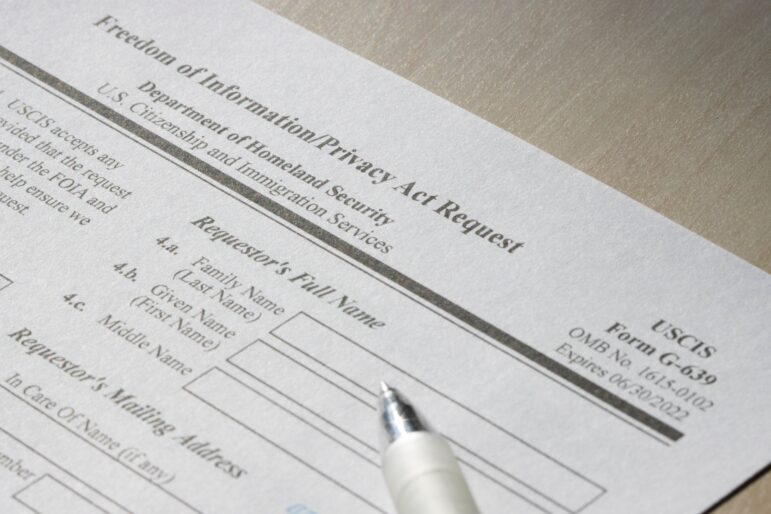
5 Tips for Slashing FOIA Costs (Including How One Reporter Lowered a Records Request Fee from $2,800 to Just $29)
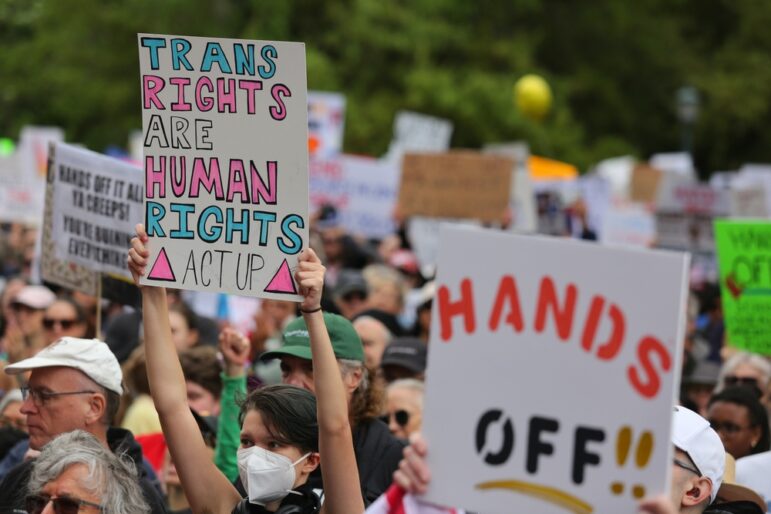
Using FOIA to Track Trans Rights in Trump’s America

Tips for Better FOIA Requests: Taking Right-to-Information Access to the Next Level
60 GB of Data, 27 Years of Hidden Payments: How Brazil’s Journalists Used FOIA to Reveal Pension Payments

This work is licensed under a Creative Commons Attribution-NoDerivatives 4.0 International License
Republish our articles for free, online or in print, under a Creative Commons license.
Republish this article
This work is licensed under a Creative Commons Attribution-NoDerivatives 4.0 International License
Read Next
Reporting Tools & Tips
5 Tips for Slashing FOIA Costs (Including How One Reporter Lowered a Records Request Fee from $2,800 to Just $29)
With a little research and negotiation, reporters can slash the cost of obtaining records bundles and speed up the government’s response in the process.
News & Analysis
Using FOIA to Track Trans Rights in Trump’s America
To track how executive orders affecting transgender people are being enforced, reporters filed hundreds of public records requests with federal, state, and local agencies.
GIJC23 Reporting Tools & Tips
Tips for Better FOIA Requests: Taking Right-to-Information Access to the Next Level
Many reporters rely on FOIA requests and RTI legislation for their investigations. But how do you take these requests to the next level?
Reporting Tools & Tips
60 GB of Data, 27 Years of Hidden Payments: How Brazil’s Journalists Used FOIA to Reveal Pension Payments
Seventy stories and still counting. This is the main result of an ongoing struggle waged since 2017 for the disclosure of all pension and retirement payments by the Brazilian government. On the front line is GIJN member Fiquem Sabendo, a journalism agency specializing in that country’s Freedom of Information Act.