

Illustration: GIJN
Lethal Firing Orders at Protests, Besieged Bawm Community, an Island Habitat in Peril: 2025’s Top Investigative Stories from Bangladesh
Read this article in
How Investigative Site Netra News, Banned in Bangladesh, Is Reporting on the Country from the Outside

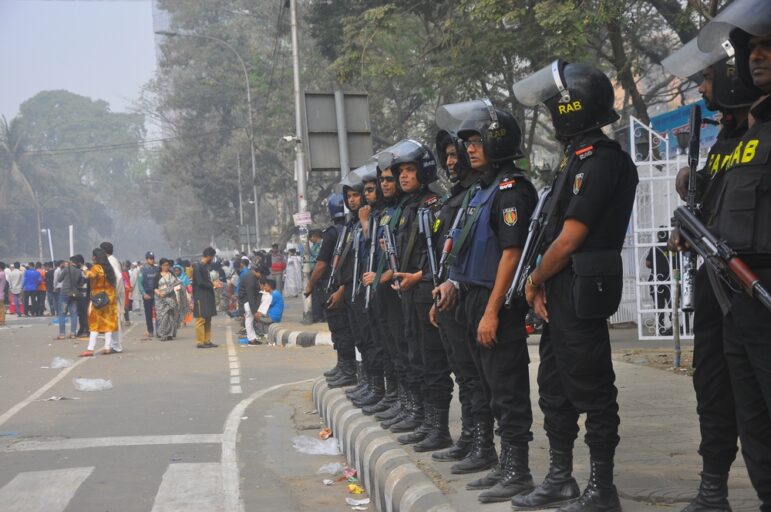
Mining Social Media and Visiting Morgues to Document Police Violence in Bangladesh
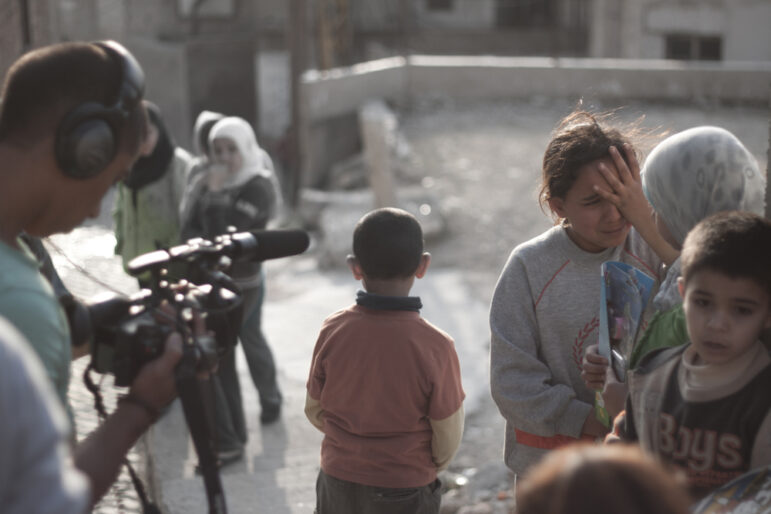
Tips for Investigating and Reporting on Ethno-Religious Conflicts Responsibly and Ethically
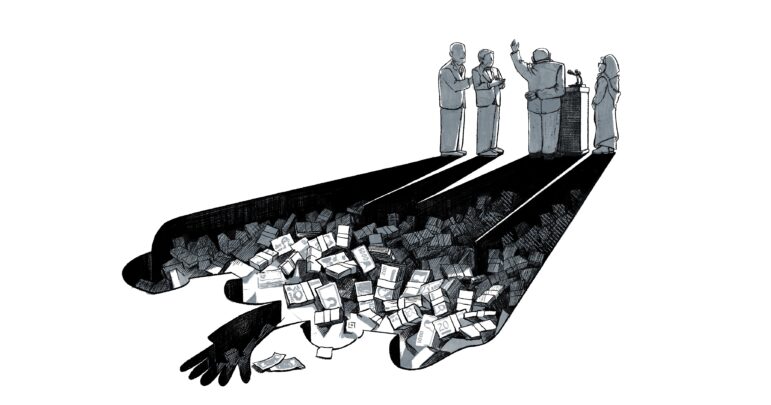
State-Connected Oligarchs and Looted Public Funds: Tracking Illicit Money Across Asia
Following the 2024 uprising and the fall of the Sheikh Hasina government, an interim administration assumed power in Bangladesh. Nevertheless, attacks on the press continued, as two of the country’s journalists were killed in 2025, and at least 297 journalists were charged with crimes such as murder, attempted murder, conspiracy, and terrorism. Additionally, at least 24 journalists have been jailed, with five still detained.
In the final month of 2025, in a brazen assault, the head offices of Prothom Alo and Daily Star, two of Bangladesh’s most influential media outlets, were vandalized and set on fire. As a result of the damage, the two newspapers were unable to publish on December 19. This marked the first time in the history of the two newspapers that they failed to publish a daily edition.
A Transparency International Bangladesh (TIB) report stated that influential government and political figures have pressured at least 20 senior media professionals, including editors and news leaders, to change roles, resign, or face dismissal. Several outlets have also experienced layoffs.
Despite these ongoing pressures, no media institutions have been closed during this period. In fact, several outlets that shut down under the previous government are now awaiting approval to resume operations.
As of 2025, Bangladesh ranked 149th out of 180 countries in the Reporters Without Borders (RSF) World Free Press Index, a slight improvement from 165th in 2024.
However, media ownership in Bangladesh remains concentrated among pro-government business groups, who often limit investigative journalism. Public trust in mainstream media has decreased. According to RSF, internet-based media are playing an increasingly significant role in news dissemination.
To address these challenges, the interim government established a Media Reform Commission to bolster press freedom, but its recommendations have yet to be implemented.
Amid these developments, international media have published several high-quality investigative reports on Bangladesh, holding the government and powerful actors accountable. Meanwhile, Bangladeshi journalists have made notable efforts to challenge authority, reporting on corruption, human rights violations, trafficking, and irregularities in agriculture, the environment, and the energy sector.
Lethal Killings Ordered Against Protesters
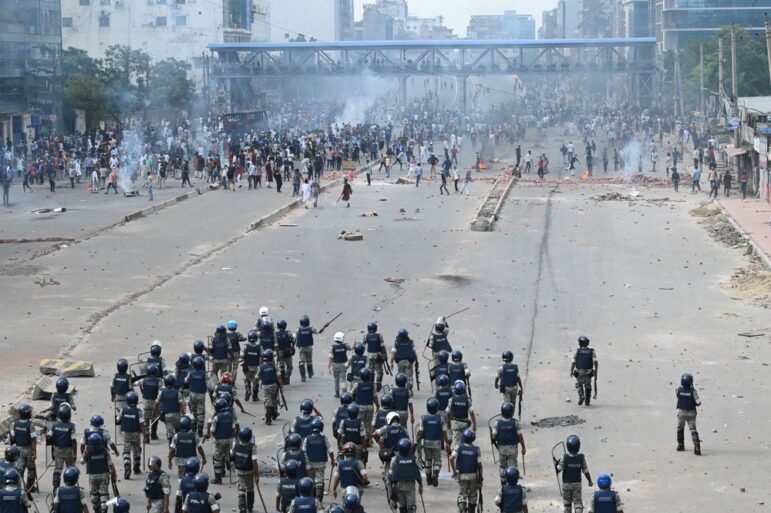
A student-led protest against the Bangladeshi government in the summer of 2024. At several demonstrations throughout the summer, students were gunned down by police. Image: Shutterstock
A joint BBC and BBC Bangla investigation revealed that Prime Minister Sheikh Hasina personally authorized lethal force to suppress anti-government demonstrations last year. The BBC, after reviewing a leaked audio recording, reported that Hasina ordered security forces to “shoot protesters wherever they find them.”
According to a UN investigation, at least 1,400 people lost their lives in the protests and violence during July and August 2024. The international tribunal set up to try crimes against humanity in Bangladesh has already sentenced the former prime minister and home minister for the July-August 2024 killings.
In their defense, the prime minister’s party leaders stated that the leaked audio recording “does not reflect any illegal intentions on the part of Sheikh Hasina.”
The BBC report stated the leaked audio was recorded on July 18 at the then-prime minister’s official residence. BBC audio forensic experts verified its authenticity, found no evidence of editing, and concluded that fabrication was highly unlikely.
Surveillance State

Image: Screenshot, The Daily Star
According to an investigation by The Daily Star, between 2016 and early 2025, the Bangladesh government acquired systems capable of tapping phones, tracking locations, and monitoring thousands of communications from a central command center.
The newspaper reported that the police, Rapid Action Battalion (RAB), and the National Telecommunications Monitoring Centre (NTMC) jointly purchased surveillance equipment to develop a nationwide platform that monitors, analyzes, and stores large volumes of internet and telecommunications data from all citizens, creating a real-time central surveillance system for multiple agencies.
In addition, RAB and the police acquired devices for targeted eavesdropping, mobile phone and vehicle jammers, and GPS trackers.
While The Daily Star report noted that this equipment can help prevent crime, gather intelligence, and address national security threats, it found experts who warned that, without transparency, it could also be used to suppress political opponents and monitor ordinary citizens.
Besieged Bawm Community
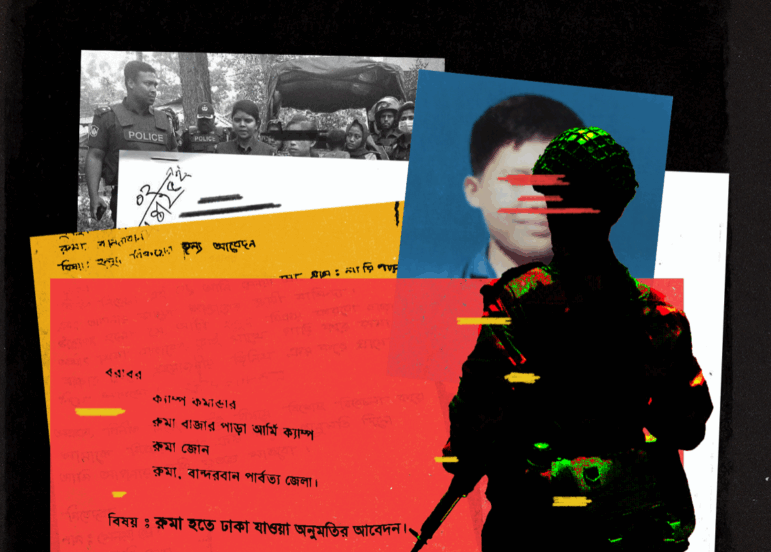
Image: Screenshot, Netra News
Netra News recently reported on ongoing military operations against the Bawm community in the Bandarban District. Since 2022, 19 members of this ethnic community in the Chittagong Hill Tracts have been killed and 59 detained without trial, drawing attention from human rights organizations and raising concerns about civil rights violations. The report highlighted security force actions and deprivation of rights inflicted upon the Bawm people.
Netra News also found that 11 Bawm women have been imprisoned for more than a year as of 2025 and cited an Amnesty International report that identified at least 30 Bawm women and children who had been arrested during military operations from April 2024 to May 2025, including an eight-month pregnant woman.
The report documented how the movement and livelihood of the Bawm people have been restricted under the banner of conducting operations against a designated terrorist group founded by a member of the Bawm community. Residents now require army permission to visit markets, and six Bawm neighbourhoods are deserted.
Generation of Disappearances

Image: Screenshot, Star News, YouTube
Numerous allegations of abductions and disappearances have been made against various law enforcement agencies in Bangladesh. From 2009 to 2024, nearly 1,900 people have been reported missing, and the fate of approximately 350 of these individuals remains unknown.
The Star News TV channel investigated the fate of these missing individuals, and its reporting alleged that many victims were killed, and their bodies disposed of in the Bay of Bengal to avoid detection.
Star News’ investigation included accounts from eyewitnesses, trawler drivers, survivors, and sources within the Rapid Action Battalion (RAB). These sources identified some officials involved in disposing of bodies after killings, reporting that between one and nine people were killed at a time and that approximately 200 bodies have disappeared in this area.
Climate Change’s Impact on Sandwip Island

Image: Screenshot, Prothom Alo
Just 20 years ago, the island of Sandwip’s sweet potatoes were in high demand across the country. However, sweet potatoes are no longer able to be cultivated on Sandwip. In addition, crops like sesame, chilli, potato, watermelon, and winter vegetables have disappeared from this fertile alluvial island — and rice is now only grown four months of the year.
An investigation by Prothom Alo identified seven main reasons for Sandwip’s agricultural decline: extreme heat, increased soil and water salinity, lack of freshwater for irrigation, irregular rainfall, prolonged drought, frequent storms and floods, and emerging diseases and pests. Each factor is linked to climate change.
Prothom Alo also surveyed local farmers and consulted agricultural, climate, and government experts. The team found that farming has declined by 20% over the past 20 years, forcing many farmers to change professions.
Digital Monitors Pressure Garment Workers
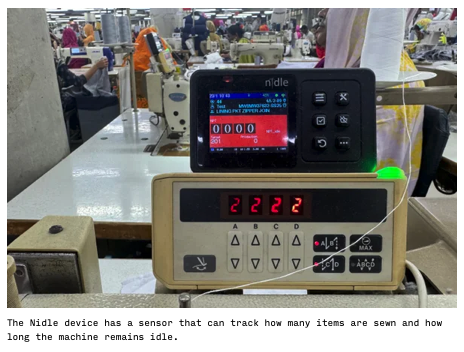
Image: Screenshot, Rest of World
Smart monitoring and automation are rapidly expanding in Bangladesh’s ready-made garment industry, leading Dhaka factories to deploy devices to digitally monitor sewing speeds for targets and productivity gains.
This report by the Rest of the World dug into the negative effects of digitalization and automation in the Bangladeshi garment sector. The new tracking technology has increased stress and anxiety, particularly among female workers, and has led to job losses. Workers report that failing to keep pace with machines puts their jobs at risk, and the pressure is so intense that many cannot take breaks.
Although factories have adopted these technologies to boost production, workers’ incomes have not increased proportionally; any wage gains have resulted mainly from labor organizing.
Brazen Riverside Land Grab
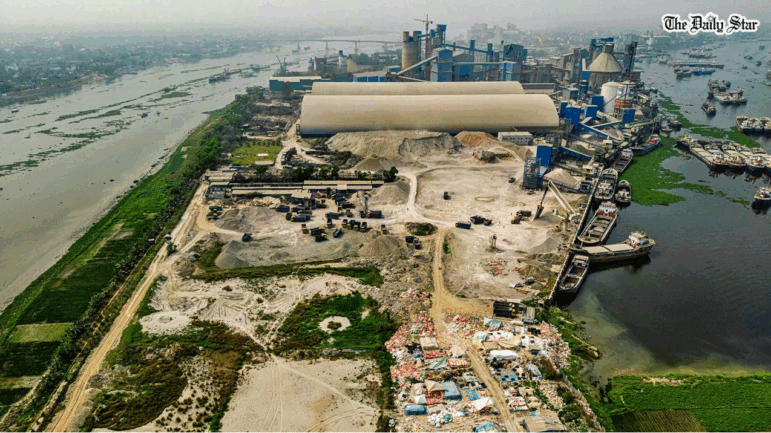
Image: Screenshot, The Daily Star
A cement production complex at the Dhaleswari and Shitalakshya estuaries in Munshiganj has occupied parts of both rivers, significantly disrupting natural flow and the ecosystem, according to four government reports revealed by The Daily Star. While the cement company has denied any illegal encroachment, it declined to provide proof of land ownership on either side of the rivers.
The report highlighted that, before the cement factory was established two decades ago, Dhaleshwari was a vibrant river that supported local livelihoods. Since its founding on a small plot around 2005, the complex has slowly expanded each dry season as more sand has been dumped into the river.
Stealing Government Gas
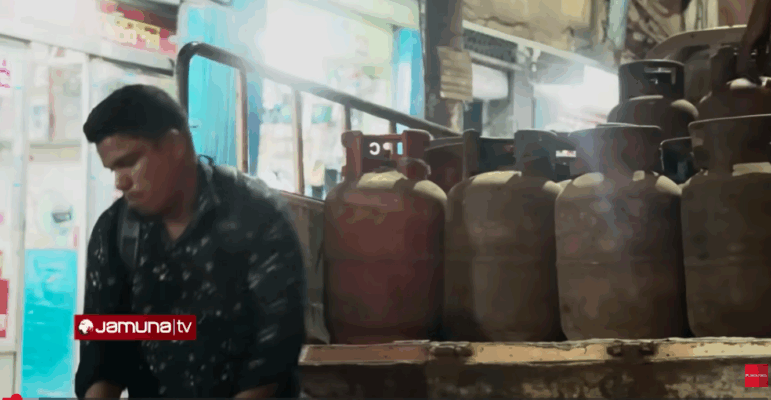
Image: Screenshot, Jamuna TV, YouTube
In Bangladesh, the government sells LP gas cylinders for less than half of what private companies charge for the same fuel. However, most people struggle to find locations where they can purchase government gas at this price. Jamuna TV’s Investigation 360 exposé revealed widespread corruption, with government officials at various levels involved in a four-decade-long scheme to divert subsidized gas onto the open market.
Jamuna TV published its initial report in April, followed by a December update. After the first story, the Ministry of Energy launched its own investigation that made nine recommendations for action to curb these illegal sales. Despite these measures, the illegal practice continues, with government-subsidized gas still being sold via private vendors at higher prices.
 SK Tanvir Mahmud is the Bangla editor for GIJN. He previously worked as a deputy chief reporter for Prothom Alo and CNE for Independent Television Digital. He has also led multimedia and social media strategy initiatives within major newsrooms and shared his expertise as an adjunct faculty member at two public universities.
How Investigative Site Netra News, Banned in Bangladesh, Is Reporting on the Country from the Outside
Mining Social Media and Visiting Morgues to Document Police Violence in Bangladesh
Tips for Investigating and Reporting on Ethno-Religious Conflicts Responsibly and Ethically
State-Connected Oligarchs and Looted Public Funds: Tracking Illicit Money Across Asia
Investigative Journalism in Asia: Resistance, Transformation, and Solidarity Amidst Mounting Press Challenges
Data Journalism in Asia: Rethinking the Relationships Between Newsrooms, Communities, and Evidence

Deadly Protests, Rising Seas, and Investigating Corruption: 2024’s Best Investigations from Bangladesh
How Newsrooms are Uncovering Asia’s Climate and Environmental Crises, from Illegal Sand Mining to Sinking Cities

This work is licensed under a Creative Commons Attribution-NoDerivatives 4.0 International License
Republish our articles for free, online or in print, under a Creative Commons license.
Republish this article
This work is licensed under a Creative Commons Attribution-NoDerivatives 4.0 International License
Read Next
Asia Focus
Investigative Journalism in Asia: Resistance, Transformation, and Solidarity Amidst Mounting Press Challenges
Asia serves as a unique laboratory in the global media landscape but journalists here face multiple challenges: censorship, threats, surveillance, and financial pressures.
Asia Focus
Data Journalism in Asia: Rethinking the Relationships Between Newsrooms, Communities, and Evidence
Data storytelling newsrooms have found innovative approaches to navigate closed data regimes, political pressures, and resource gaps.
Editor's Picks News & Analysis
Deadly Protests, Rising Seas, and Investigating Corruption: 2024’s Best Investigations from Bangladesh
Also featuring investigations into UN peacekeepers, population data fudging, and the inadequate academic qualifications of a powerful police chief.
Asia Focus
How Newsrooms are Uncovering Asia’s Climate and Environmental Crises, from Illegal Sand Mining to Sinking Cities
Outlets across the region are collaborating to investigate the environmental harms that cross borders.