

Image: Courtesy of Double Exposure Festival
2026 Double Exposure Festival: Investigating Killers, Land Grabs, and Inspirational Courage in an Age of Doubt

How Many Journalists Does It Take to Fill an Olympic Swimming Pool? GIJN’s Guide to Size and Number Comparisons
Investigative Journalism Week 2026 Resources
International Research Guide: How to Find Experts and Hidden Documents on Any Topic

Guide to Investigating Tech and AI in Modern Warfare
Films that dig into Europe’s outsourcing of migration controls; toxic contamination of communities; corporate exploitation of protected forests; the identity of mass killers; and the legal muzzling of employees are among the outstanding investigative documentaries selected for the 2026 Double Exposure Festival & Symposium, which starts in Washington, DC, tomorrow.
Presented for its 12th season by 100Reporters, the theme of this year’s DX — “On The Record: Evidence in an Age of Doubt” — reflects the event’s focus on “what happens to a democracy when the record itself is under assault,” and on the determination of filmmakers, investigative journalists, and community members to reveal obscured truths about harm.
Paired with two days of panels featuring documentarians, whistleblowers, and journalism leaders — including Nobel laureate Maria Ressa — the festival will premiere 25 films in various formats.
Below, we highlight just 10 of these 25 short and feature-length films, covering topics ranging from the world of secret wealth and a forgotten Syrian massacre to the legacy of colonial land seizures in Africa and brutality in immigration enforcement. Several documentaries will likely cause audiences to look at goods in their own homes — the tea in their cupboard, or the chair in their dining room — and pause to consider whether exploitation was behind their production.
Remarkably, the list also includes one film that uses animation and rap to showcase investigative revelations about rights abuses at sea.
Check out the full DX Festival film slate.
Kikuyu Land
This emotionally compelling project unfolds like a crime thriller, and highlights a broader phenomenon in the Global South: how multinational companies have continued the same exploitation strategies once used by colonial powers.
The core of “Kikuyu Land” follows the decades-long battle of one Kenyan pastor to reclaim his family’s ancestral land. Moving from tea plantations in the Kenyan Highlands to corporate headquarters in London, the reporting — led by Nairobi-based investigative journalist Bea Wangondu — exposes systemic exploitation and land grabs by both international and local actors, both past and present. Interviews with key sources — including an intelligence officer — also point to state violence against critics of the scheme, and an atmosphere in plantation towns that evokes some of the worst periods of colonialism itself.
Killing Anna
One phenomenon that investigative reporters often exploit is that once-secretive killers sometimes cannot resist openly boasting about their social lives and hobbies on social media. This tense, longform film shows how one exiled Syrian academic, Annsar Shahhoud, takes on an undercover online identity, “Anna,” to befriend former militia members on Facebook who may have been responsible for the massacre of 41 civilians in Syria’s Tadamon neighborhood in 2013. Using one leaked video of the atrocity as a starting point, her patient catfishing — posing as a researcher sympathetic to Bashar al-Assad’s former henchmen — slowly extracts confessions, and new revelations about a massacre that much of the world had forgotten.
Wild East
In “Wild East,” a Romanian environmentalist navigates threats from the “timber mafia” while documenting illegal logging in some of the last ancient forests in Romania, which is also home to two-thirds of Europe’s primary forests. Indeed, the mere fact that the environmentalist, Gabi Paun, has to complete his investigation from a safe house in exile presents journalists with a flashing warning light about the level of violence gathering around this kind of environmental exploitation. More broadly, the film also exposes deforestation and violence within the global furniture supply chain, and directly challenges the gilded sustainability reputation of one of the world’s most recognizable brands. Illuminated by striking photography and dramatic scenes, the project also challenges viewers to think about personal responsibility, saying: “Through this film, we invite audiences to consider how a global corporation can implicate us all in the destruction of a place out of sight.”
My NDA
This timely project reveals how non-disclosure agreements (NDAs) have been expanded and weaponized against employees and accountability for discrimination and harm by corporations. Following three courageous individuals who dare to speak out despite being bound to silence, this film shows the legal threat machinery behind corporate secrecy. It also highlights how these contracts can be so unjust as to conceal ongoing crimes, and so absurd that signatories are sometimes barred even from acknowledging that they are barred from saying anything. Part legal thriller and part personal portrait, “My NDA” shows how a simple contract that some assume to be “boilerplate” can leave deep psychological scars while keeping first-hand knowledge of criminal wrongdoing strictly off the record.
The Oligarch and the Art Dealer
How do the ultra-wealthy move fortunes in secret, beyond the reach of tax inspectors, investigators, and law enforcement? This documentary offers rare, deep insights, with a deep-dive into how one Russian oligarch amassed a multi-billion-dollar private art collection. The film, by director Andreas Dalsgaard, focuses on the fraught relationship between Swiss art dealer Yves Bouvier and his Russian billionaire client, who later accused the dealer of a billion-dollar betrayal. It unearths the existence of masterpieces by Klimt, Gauguin, Van Gogh, Chagall, Da Vinci and other artists from mysterious “freeport” vaults, and reveals them as silent witnesses to a system built for the ultra-rich, where the ultimate value is secrecy.
Rescue
“Rescue” offers a dramatic and nuanced insight into the migration crisis in the Mediterranean: the suffering and random human fate that flows from outsourced anti-immigrant policies and the swirl of actors on the sea, from rescuers to smugglers and militias. Focusing on one Yemeni migrant family, and featuring jarring video scenes, the film opens with the attempted rescue of their sinking small boat flotilla, and their dramatic separation, when an armed Libyan militia intervenes. The narrative then follows two tracks: the vast policy and practical challenges facing NGOs attempting to rescue migrants on the sea, and the effort of one man to reunite with a wife and children held for ransom in a Libyan prison.
The Sludge War
This documentary follows a five-year investigation by filmmaker Galassia Grassetto into a secretive federal program that has allegedly dumped toxic material in communities across the US for decades, putting the health of millions at risk. Using dogged field reporting, never-before-seen depositions, undercover footage, and the testimony of a whistleblower, the project asserts that vast amounts of “sewage sludge” — a toxic combination of industrial, human, and hospital waste — has been marketed as “nutrient-rich fertilizer” and allowed to spread into residential communities without the knowledge of residents, often with dire consequences.
The Secret Reading Club of Kabul
Five years after the Taliban returned to power, Afghan women are barred from secondary school, university, and much of public life. In Kabul, a small group of young women meets anyway, in secret, to do something now forbidden to them: read together. Filmed from inside that circle, where discovery could cost them everything, this project by Adil and Elina Hirvonen captures careers and studies abruptly foreclosed, and the quiet defiance of turning a page.
In “The Diary of Anne Frank,” they find parallels to their own isolation and fear, and search the book for inspiration that might help them endure their own confinement. One secret book club member humbly suggests that Nazi victim Anne Frank “had it worse.” However, in a selfie clip in the film, another member also notes: “I am making this video in case the Taliban arrests or kills me.”
Rhapsody on the Outlaw Ocean
This film is both important and, well, cool. In what is surely a first for investigative documentaries, this project turns a decade of investigations into abuses where no governments exist — the high seas — into an animated musical documentary. Based on seven investigations done by the Pulitzer Prize-winning journalist Ian Urbina, the film is partly narrated in rap lyrics by the cast of the hit Broadway show “Hamilton.” It describes Urbina’s findings about enslaved workers, oil dumpers, mercenaries, poachers, vigilante conservationists, and stowaways cast adrift in the lawless environment of the oceans. Here is a sample of the rap: “How can you care so much about this? I don’t understand that question; my editor started suggestin’ that I let this story rest and I try to head on to the next one, and three months I struck out. But I still watch their murders every day, and replay and replay and replay them… Off to the maritime merry-go-round.”
A Month in Minnesota
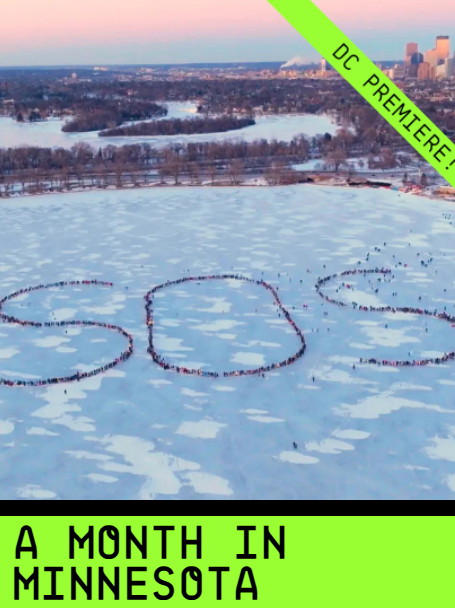
A Month in Minnesota. Image: Courtesy, DX Festival
“A Month in Minnesota” captures the violence, repression, and civic resistance that gripped the US city of Minnesota in 2025, during the Operation Metro Surge immigrant crackdown by the US Immigration and Customs Enforcement (ICE) agency. Directed by award-winning filmmaker Anne Sundberg, it explores the violent and sometimes lethal raids by masked agents, and digs deeply into the courageous response from citizens: activists and ordinary residents who track ICE vehicles, protest the injustice, provide aid to victims, and stand up for their neighbors.
 Rowan Philp is GIJN’s global reporter and impact editor. Rowan was formerly chief reporter for South Africa’s Sunday Times. As a foreign correspondent, he has reported on news, politics, corruption, and conflict from more than two dozen countries around the world, and has also served as an assignments editor for newsrooms in the UK, US, and Africa.
How Many Journalists Does It Take to Fill an Olympic Swimming Pool? GIJN’s Guide to Size and Number Comparisons
Investigative Journalism Week 2026 Resources
International Research Guide: How to Find Experts and Hidden Documents on Any Topic
Guide to Investigating Tech and AI in Modern Warfare
2025 Double Exposure Festival: Interrogating New Fault Lines on Lethal Inequity, Human Resilience, and the Limits of Journalism
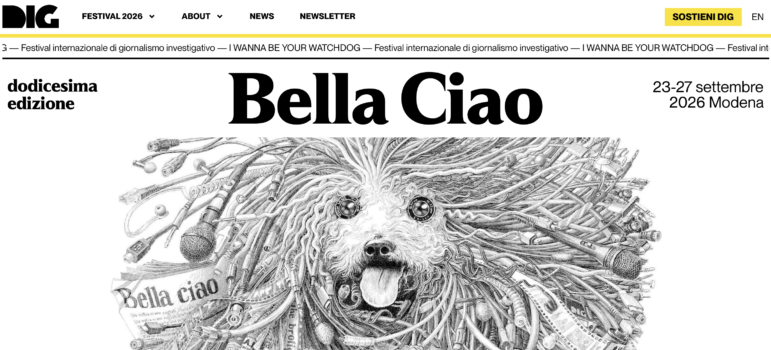
Russian War Recruitment in Africa, Hidden West Bank Settlement Funding, Scams in Southeast Asia, and More: 2026 DIG Awards Shortlist

2024 Double Exposure Festival: Digging into Undercovered Topics, Overlooked Injustices

From Investigating Syrian Drugs to Scandals Involving Children: The 2024 DIG Festival Awards Shortlist

This work is licensed under a Creative Commons Attribution-NoDerivatives 4.0 International License
Republish our articles for free, online or in print, under a Creative Commons license.
Republish this article
This work is licensed under a Creative Commons Attribution-NoDerivatives 4.0 International License
Read Next
News & Analysis
2025 Double Exposure Festival: Interrogating New Fault Lines on Lethal Inequity, Human Resilience, and the Limits of Journalism
The four-day event will showcase 25 feature-length and short-form documentaries that shine new narrative light on urgent topics in North America and far beyond.
Russian War Recruitment in Africa, Hidden West Bank Settlement Funding, Scams in Southeast Asia, and More: 2026 DIG Awards Shortlist
The screening of 25 new investigative films — chosen from 300 entries — will be evaluated by an international jury across five video categories for the annual DIG Awards.
News & Analysis
2024 Double Exposure Festival: Digging into Undercovered Topics, Overlooked Injustices
Investigative documentaries on AI, political polarization, social injustice, private armies, and the tragic fallout of climate change in Africa.
News & Analysis
From Investigating Syrian Drugs to Scandals Involving Children: The 2024 DIG Festival Awards Shortlist
Celebrating filmmakers who use original sources and investigative techniques to tell hidden stories, here are the shortlisted documentaries for the DIG Awards this year.