Accessibility Settings

color options

monochrome muted color dark

reading tools

isolation ruler

Posts

300 posts

News & Analysis

How The New York Times Visualized Global Trends in White Extremist Attacks

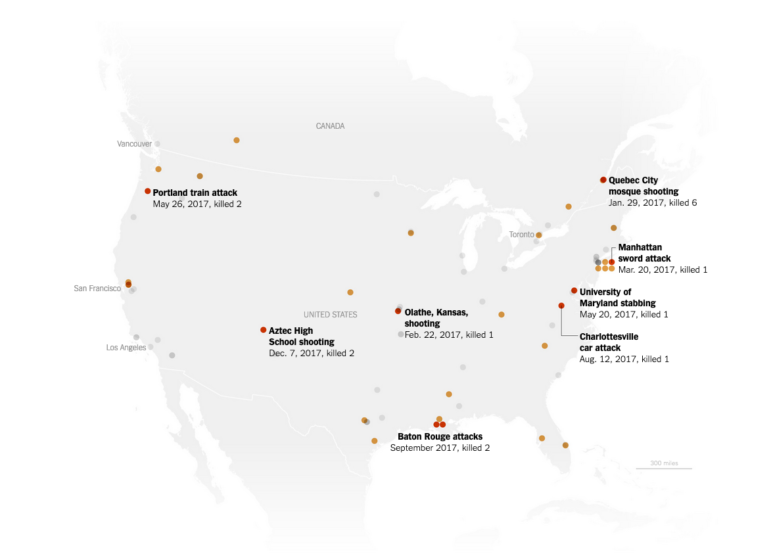
Last year The New York Times published an interactive article on white extremist killings from New Zealand to Norway to the United States. Using maps and a timeline to plot the data, the project revealed the troubling frequency and, in some cases, strange connections between the events. Here graphic designer Weiyi Cai explains how they obtained the data for project and the decisions they made about visualizing it.

News & Analysis

How Forensic Architecture Supports Journalists with Complex Investigative Techniques

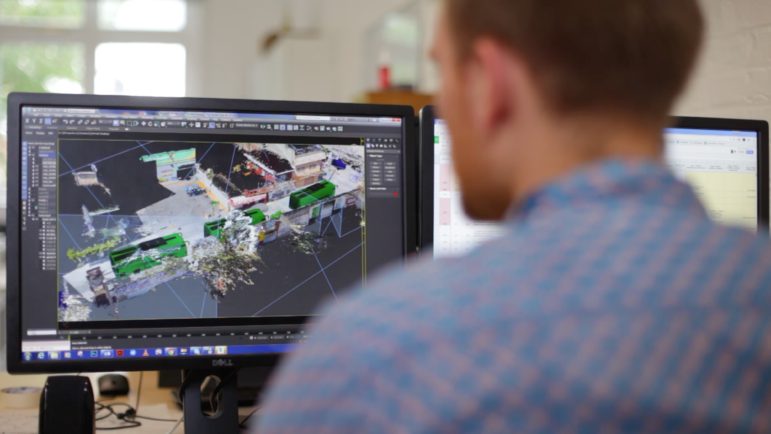
Since it was founded in 2010, Forensic Architecture has “hacked into the source code” of architecture to produce innovative and ground-breaking investigations that use 3D modelling, data mining, machine learning, and audio analysis. Working like a lab for the development of new tools, the outfit uses many of the forensic methods of investigation that have historically been the preserve of law enforcement to investigate social and political topics and injustices.

News & Analysis

Investigation Keeps Work of Silenced Journalists Alive

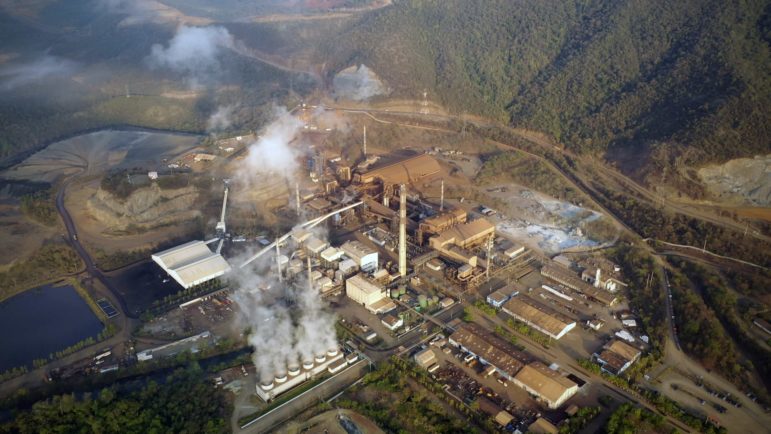
When journalists are killed or threatened for investigating environmental crimes, the story can go cold. But the Paris-based Forbidden Stories nonprofit brought together 40 journalists in 15 countries with the aim of completing the work local reporters could no longer pursue. The result is the Green Blood project.

News & Analysis

A Ukrainian Investigative News Team Fights for Media Freedom

The Ukrainian investigative group Bihus.info has built a name for itself investigating corruption. It formed in the aftermath of the Ukrainian Revolution, as journalists tried to piece together some of the documents destroyed and damaged by the former regime. Today, they are battling a tough media freedom environment and investigations into their own staff and reporters which slow them down and which they see as an effort to pressure them in relation to their reporting.

How They Did It News & Analysis

How They Did It: Feminist Investigators Go Undercover to Expose Abortion Misinformation

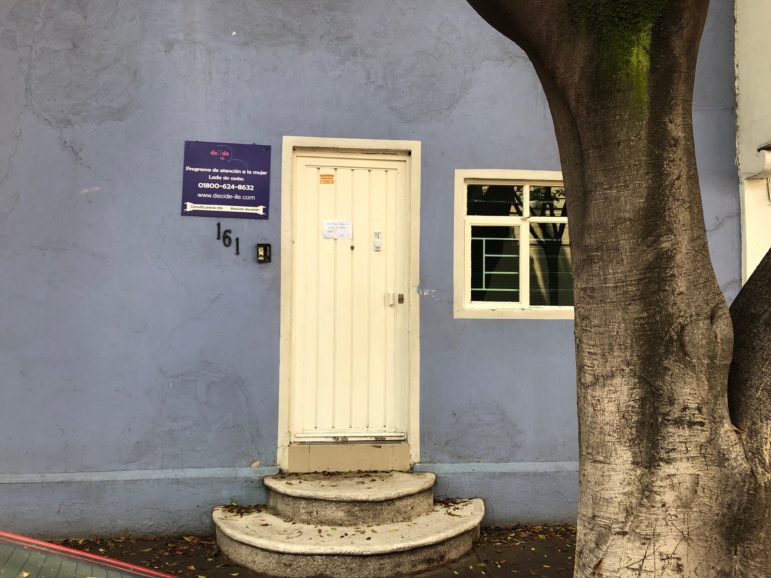
A network of female journalists went undercover in order to investigate what women and girls around the world are told when they approach a crisis pregnancy organization. Some were told they could be killing the next president, others than abortions cause cancer. The investigation revealed the highly sophisticated tactics some centers use to break a woman’s resolve, and how the messaging can be traced back to a Christian charity based in Columbus, Ohio.

News & Analysis

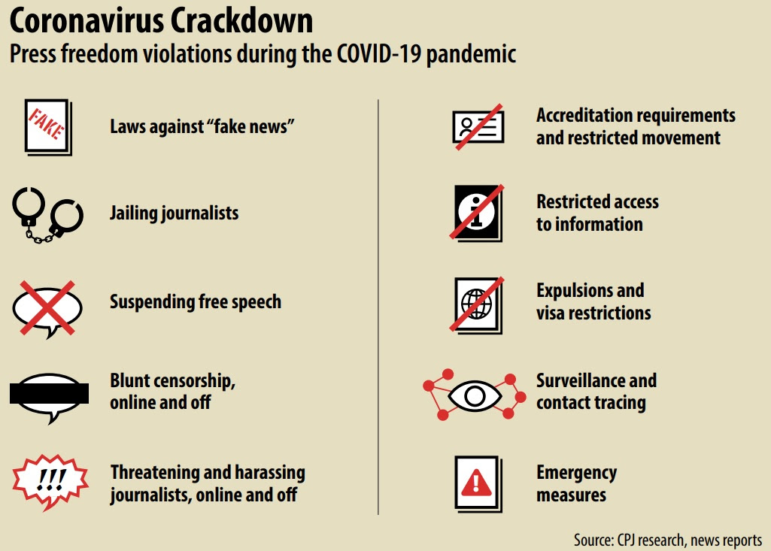
Document of the Day: 10 Ways to Track Press Freedom during the Pandemic

The COVID-19 pandemic has reshaped the way journalists work, not least because many authorities have cited the contagion as a reason to crack down on the news media. Certain dangers will subside with time but some of the measures put into place that restrict press freedom – whether intended or not — could continue well into the future.

News & Analysis

Crisis and Opportunity: How Independent Media Can Learn from the Pandemic

It’s still hard to fathom the impact of the COVID-19 crisis on journalism, even two months into most countries’ lockdowns. On the one hand, sustained and unprecedented demand from audiences for trustworthy information presents an incredible opportunity for independent media; a chance to showcase the value of good journalism and hopefully build lasting relationships with millions of new viewers, listeners and readers.

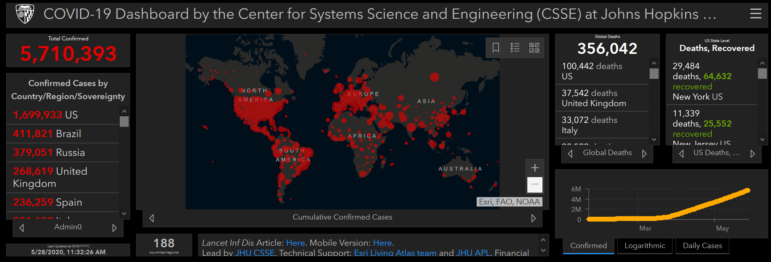
Investigating the Pandemic: A Guide to Sources of Data

GIJN has created a multi-part guide on where to obtain data about the spread of COVID-19 and its consequences. The document links to official and unofficial international sources on health and economic data, links to information on government policy responses, and more than a dozen sites working on pandemic projection modelling.

Reporting Tools & Tips

Using Geospatial Technology during a Pandemic

Geospatial technologies and data can be used to contain and respond to the spread of a disease, but can also help in pre-empting and preventing them. Looking at outbreaks of malaria, SARS, H1N1 and Zika, among other viruses, Avneep Dhingra explores how maps and geospatial technology have helped during different outbreaks.