
With less than seven weeks left until IJ WEEK begins, the program’s full schedule is now complete. More than 130 speakers from 65 countries, including esteemed journalists, data gurus, and experts will lead the sessions at IJ WEEK, which will feature more than 50 panels, workshops, and networking sessions across 13 thematic areas.
The full program also includes multiple Editor’s Clinics, providing participants the opportunity to speak one-on-one with a veteran editor to pitch or workshop a story, or just get career advice. Confirmed editors include: Daniel Howden (Lighthouse Reports), Wahyu Dhyatmika (TEMPO), Rana Sabbagh (ARIJ), Ides Debruyne (Journalismfund Europe), Débora Votquenne (VVOJ), Emmanuel Dogbevi (News Bridge Africa), Paul Radu (OCCRP), Martha Mendoza (AP/Frontline), and more.
Participants will also get the opportunity to meet with like-minded journalists at networking sessions that either focus on a particular reporting topic or a specific geographic area, in the regional networking sessions.
View IJ WEEK’s full program. Below are selected sessions from some of the event’s specialty tracks.
Data Track
From the Sigmas
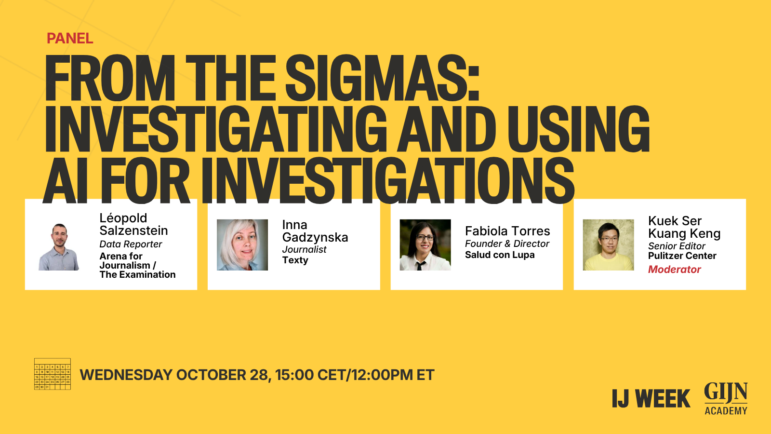
Data helps not only analyze stories but also visualize and explain them to an audience, at times making them easier to understand. At IJ WEEK, we will offer multiple sessions with winners of the Sigma Awards, who will talk about using AI effectively for investigations, uncovering human rights abuses, and deploying satellite and trade data to investigate supply chains and environmental degradation.
These panels will feature speakers like Fernanda Aguirre, from The Examination, who exposed how old car batteries exported by the US automotive industry for recycling in Africa are contributing to exposure to lead in nearby communities. Another panel features Munir Al Khatib of ARIJ, whose team examined how organized criminal gangs abuse vulnerable migrants along the Sudan-Egypt border. Inna Gadzynska, head of investigations atTexty, will also discuss using AI, among other techniques, to trace how Ukrainian children in Russia’s voluntary relocation were forced into adoption.
Tech Track
Investigating Tech

Code for Africa’s Athandiwe Saba, Agência Pública’s Natalia Viana, and Gabriel Geiger of Lighthouse Reports join Francisca Skoknic to explore how journalists can explore and expose the corporate behavior of the world’s largest tech companies. Join this discussion into what is the human and environmental cost of tech and how can we increase cross-border collaborations to continue holding tech companies accountable.
Human Rights Track
Investigating Migration and People on the Move
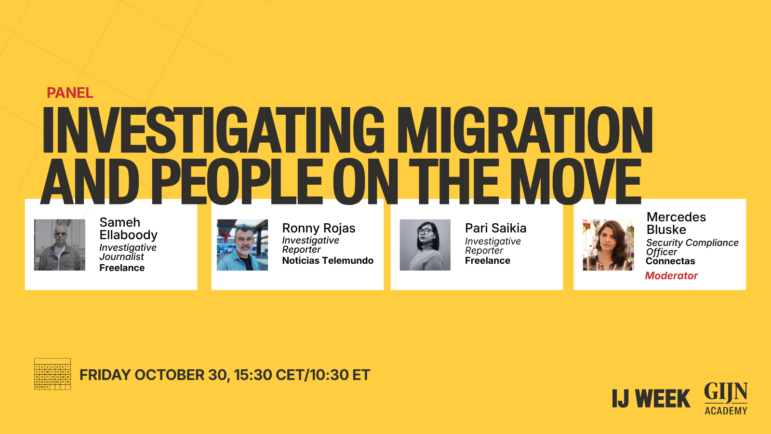
Massive movements of people and restrictive immigration policies create urgent stories requiring specialized reporting approaches. Session attendees will learn techniques for investigating migrant trafficking, border enforcement, detention facilities, and immigration policy. This panel features speakers from Egypt, India, Costa Rica, and Bolivia, giving participants a chane to learn from reporters across three continents how to safely and ethically work with migrants as sources, establish secure communication protocols, and maintain appropriate journalist-source boundaries when covering displacement, asylum processes, and human trafficking networks.
Hear from Egyptian journalist Sameh Ellaboody, who has won multiple awards for his reporting on migration, corruption, and organ trafficking. Ronny Rojas, currently working with Noticias Telemundo, is another panelist and has led complex cross-border collaborative projects with newsrooms in the US and Latin America. Pari Saikia a freelance journalist from India has been reporting on human trafficking, forced migration, refugees, slavery, labor rights, and more from India, Bangladesh, Myanmar, Nepal, Italy, Germany, and Portugal.
Nonprofit & New Models
Funding Investigative Journalism: What’s Working Now

The funding landscape for media has changed drastically in the last few years. Amid this radical change, journalists continue to learn what works and what doesn’t when it comes to fundraising and generating revenue from and for investigative journalism. This session of expert speakers will be moderated by Mila Milosevic of Global Forum from Media Development (GFMD). She will lead a discussion with Bridget Gallagher, who has more than 20 years of fundraising experience . Gina Chua, executive director of the Tow-Knight Center where she focuses on the intersection of journalism and AI, and Sue Valentine, an independent media consultant with extensive experience in international philanthropy, media development, and press freedom.
General Track
In Conversation with Garance Burke

Few reporters have done more to define what accountability journalism looks like in the age of artificial intelligence than Garance Burke. A global investigative reporter with the Associated Press based in San Francisco, Burke has spent her career pushing at the intersection of technology and power, work recognized with the 2026 Pulitzer Prize in International Reporting and a documentary Emmy Award for her AP/FRONTLINE and PBS collaboration. This discussion with Burke will explore how to investigate opaque, fast-moving technologies and what it takes to hold both governments and tech companies accountable.
Environment Track
Investigating Extreme Heat
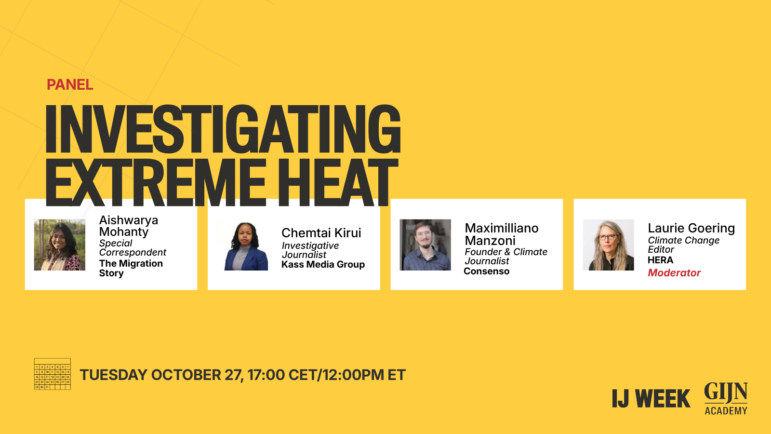
Close to half a million people die worldwide each year as a result of extreme heat — and that number is expected to soar as climate change brings stronger and longer heatwaves. In this panel, journalists will discover key areas to investigate heat, including medical consequences, the impact on vulnerable populations, economic and agricultural effects, impacts on sports and culture, infrastructure challenges with increasing demand for power and water, and gender differences in heat vulnerability.
The panel’s speakers include Aishwarya Mohanty, an award-winning journalist from India who has spent her career reporting on the impact climate change has had on people’s lives in the country’s heartland; Maximilliano Manzoni, editor of the weekly newsletter Consenso, whose work focuses on climate justice and misinformation; and Chemtai Kirui, head of the environment desk at Kenya’s Kass Media Group. The session will be moderated by Laurie Goering, extreme heat editor for the nonprofit organization HERA.
Regional Panels (held across different time zones)
- Tools and Techniques to Conduct Environmental Investigations, Lessons Learned from Latin America
- Investigating War Crimes (experiences from different regions)
- From Africa to the World: Investigating Africa’s Critical Mineral Exploitation and Export
- Regional Look: Azerbaijan, Belarus, and Kyrgyzstan – Challenges and Journalistic Investigations
- Investigating Human Trafficking – Asia and its Global Links
IJ WEEK will also include dozens of other hands-on, practical sessions on key data and reporting topics.
- The Coding Mindset: How to Reorient your Thinking for Success
- Introduction to AI for Data-Driven Investigations
- Conducting Investigations as a Freelancer
- Don’t Outsource Your Instincts: Traditional Research Skills Essential in the AI Era
- Listening to the Evidence: How Sound Is Reshaping Investigative Journalism
- Mapping Analysis Using QGIS
- Open Source Research: Tools and Methods for Investigative Journalists

Guide to Investigating Tech and AI in Modern Warfare
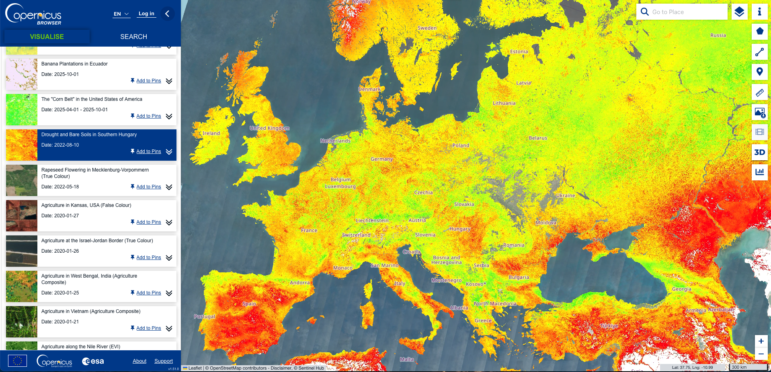
Turning Copernicus Satellite Data Into Public-Interest Climate Stories
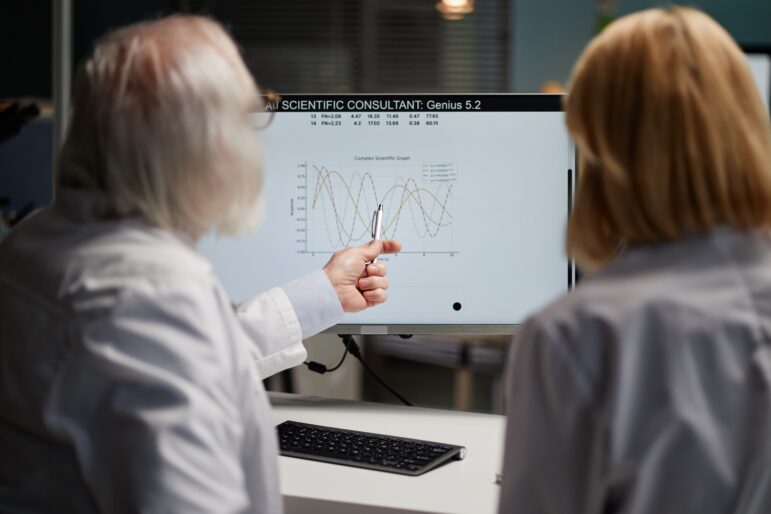
10 Practical Tips for Verifying Scientific Claims

Reporter’s Guide to Investigating Cryptocurrency
TICKETS ON SALE: Online IJ WEEK Offers More than 100 Speakers Dedicated to Investigative Journalism Around the World
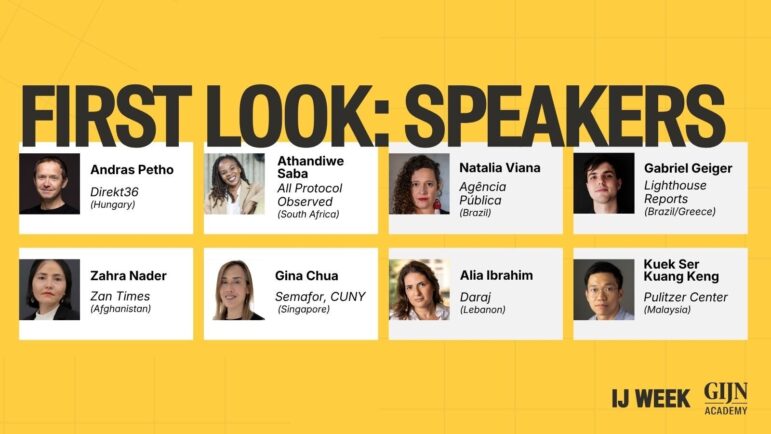
First Look: IJ WEEK World-Class Speakers and Cutting-Edge Sessions
‘Denies Her the Justice She Deserves’: A Shocking Verdict in the Trial Over Daphne Caruana Galizia’s Murder
Under Pressure, but Undeterred: How the Investigative Press Corps Perseveres in Argentina

This work is licensed under a Creative Commons Attribution-NoDerivatives 4.0 International License
Republish our articles for free, online or in print, under a Creative Commons license.
Republish this article
This work is licensed under a Creative Commons Attribution-NoDerivatives 4.0 International License
Read Next
Upcoming event
TICKETS ON SALE: Online IJ WEEK Offers More than 100 Speakers Dedicated to Investigative Journalism Around the World
26–30 October 2026
IJ WEEK
First Look: IJ WEEK World-Class Speakers and Cutting-Edge Sessions
With just 12 weeks left until IJ WEEK, GIJN is offering a sneak preview of some of the event’s more than 100 speakers as well as the expert panels and networking sessions.
Press Freedom
‘Denies Her the Justice She Deserves’: A Shocking Verdict in the Trial Over Daphne Caruana Galizia’s Murder
Nine years after her assassinaton, the businessman who was charged with conspiring in Daphne Caruana Galizia’s killing has been acquitted after a lengthy trial.
News & Analysis
Under Pressure, but Undeterred: How the Investigative Press Corps Perseveres in Argentina
In Argentina, investigative reporters are grappling with personal attacks, deteriorating press freedom, and roadblocks when trying to access information, but they refuse to bend or stop their coverage.