

“Newsrooms need journalists who can collaborate cross-border, therefore stimulating collaborative journalism in the protective framework of journalism education is a logical development," says Brigitte Alfter, the director of Arena for Journalism in Europe, seen standing here with a group of students. Image: Crossborder Journalism Campus
Teaching Cross-Border Collaborations: 7 Tips for Journalism Educators
To grasp the achievement of the Crossborder Journalism Campus (CJC), an Erasmus+-funded project, picture 75 master’s level students and budding investigative journalists leaving their different university campuses in the Swedish city of Gothenburg, the German university city of Leipzig, and the French capital Paris to travel by bus or by train to Brussels, Belgium. The students had already met online before but this was their first in person meeting — and their goal was to work together on a crossborder project investigating labor and migration.
For five days, between a pitching round with comments from an editor and a lecture by a senior journalist in the field, they were split into transnational groups to work on stories such as staff shortages in healthcare and the race to recruit migrant doctors, and the alleged abuse and harassment of cleaning staff working in the EU Parliament. After leaving Brussels, each Franco-German-Swedish team kept working remotely for months on their specific story before adapting it to their national audiences and publishing it in media outlet partners such as Le Monde in France, the German public broadcaster MDR, The EU Observer, Göteborgs-Posten, and elsewhere.
“In 25 years of teaching, it is the most rewarding thing I have done,” says Ulla Sätereie, head of the Swedish Association for Investigative Journalists (FGJ). Together with Brigitte Alfter, the director of Arena for Journalism in Europe — which supported the CJC project — Sätereie initiated and managed the CJC pilot project that ran for two academic years. “It was a lot of work but also a lot of fun,” recalls Alfter, who, like her colleague, was until recently a journalism lecturer at the University of Gothenburg.
Former student participant Valentine Daléas is now a journalist for ARTE’s digital investigative magazine Data Sources, which airs in French, German, English, and Polish. Daléas says that her CJC experience helped train her way of working: “It was a multi-month investigative project on a fairly technical topic and one that had to appeal to several different audiences,” she recalls. “Which is very similar to the constraints we face with the program.”
To inspire similar projects across Europe and beyond, Alfter and Sätereie have written a Crossborder Journalism Campus guidebook, which they presented at the Dataharvest conference in Belgium in May 2025. “Newsrooms need journalists who can collaborate cross-border, therefore stimulating collaborative journalism in the protective framework of journalism education is a logical development,” says Alfter.
Sätereie and Alfter shared with GIJN some tips for journalism educators around the world who might also want to train their student journalists to operate across borders — and “see their confidence growing” along the way.
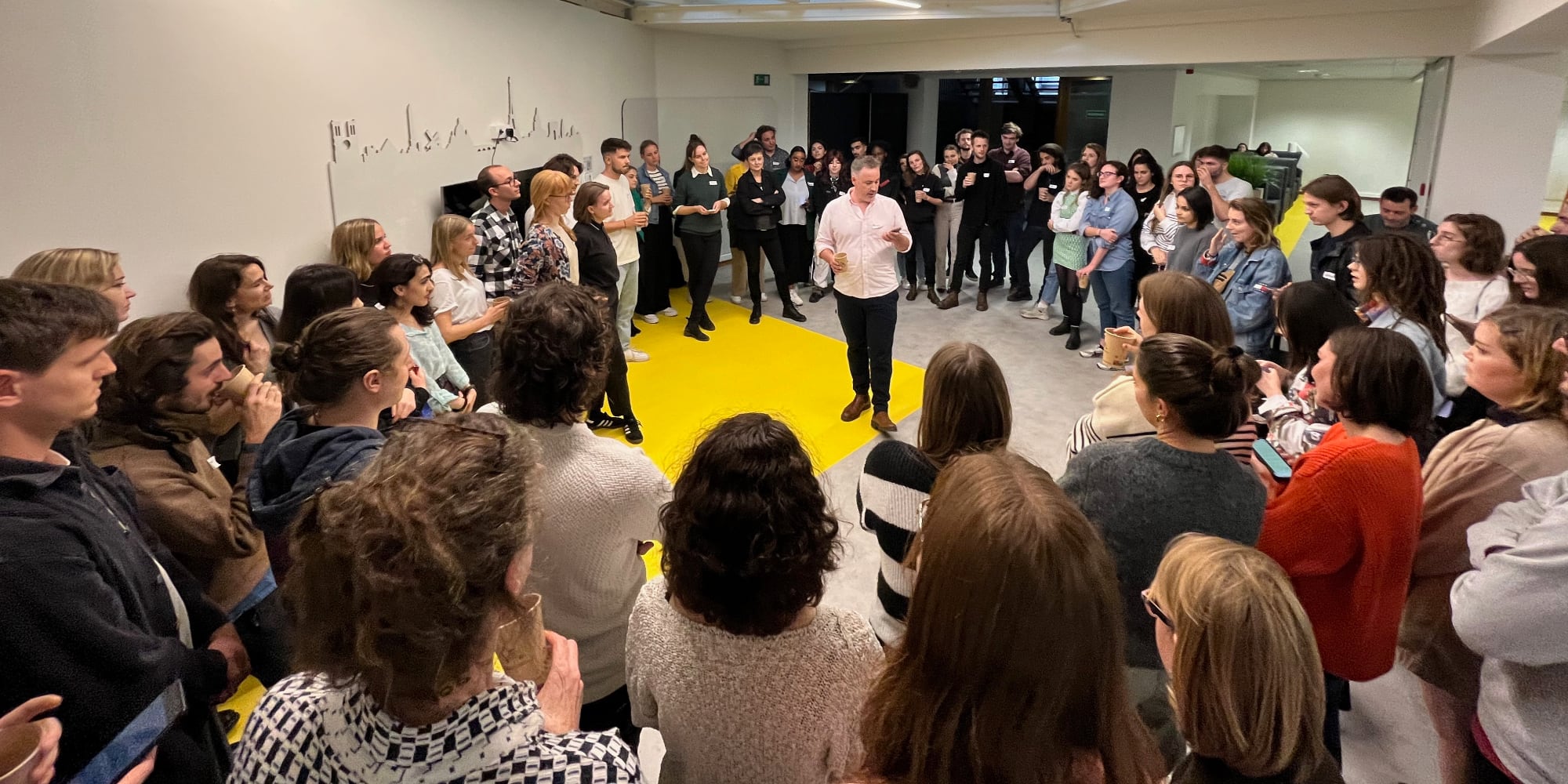
Image: In person meet-ups help foster personal relationships and allows students to think outside the box. Image: Courtesy of the Crossborder Journalism Campus
Don’t Be Afraid… and Don’t Take ‘No’ For An Answer
Sätereie is fully aware that the CJC can be daunting to replicate, especially outside Europe. “Don’t be afraid! Don’t try to do exactly what we did, but find a way of doing what suits your organization or network best,” she says.
Alfter notes that the guidebook is designed to “inspire the simulation of a cross-border investigation for the students in the protected framework of the journalism education at university guided by experienced lecturers.” She saw that students learned a lot simply by opening their view to go beyond the local and national in a collaborative project. “The vision is here,” she says. “As a lecturer, you adapt it to the context you are in, and do what is possible.”
Sätereie’s advice for journalism educators is: “Don’t take ‘no’ for an answer, be creative, learn how to bend academic corners.”
Getting Started: Topic, Scale, Numbers
Just like starting anything in journalism, a cross-border project designed for students begins with various decisions that need to be taken. To secure Erasmus+ funding, the Crossborder Journalism Campus (CJC) had to involve a minimum of three campuses in three different European countries.
“You have to adapt our model to whatever suits you in your setting. A smaller scale and a smaller cohort is possible,” explains Sätereie. “I think it is possible to do a good collaboration between two countries… but it could also be five if that is needed.”
However, she does not recommend having too large a group: “I don’t think you should aim for as many students as you can. For the CJC, we had 75 students each year, and that was a lot.”
Alfter offers a practical guideline for journalism educators: “If you have students in your class who want to investigate climate or trafficking or whatever, you build your network of lecturers with practice-oriented education — there are university lecturers networks in many parts of the world. Then you can say: ‘Hey! I have this team and they want to look into question X. Do you have students who would be interested?’ Then you bring them together and you do it in a very low-key, superfocused way.”
Get Creative With Course Models, Donors, and Funding
In any journalism project, there comes a point when you need to discuss funding. The cost of bringing 75 students to Brussels was the main issue in this case, because the costs could not be covered by the universities. “Being inside the European Union, for us the natural way to go was to do an Erasmus+ project,” recalls Sätereie.
The program allows for a maximum of €400,000 (US$460,000) for a project duration between 12 and 36 months. “If you are in Europe, try to get Erasmus+ funding. If you are not in Europe, maybe you can get other funding. It’s context-dependent,” she adds.
But how do you integrate a cross-border project in three different universities at the same time? In the guidebook, the authors recommend integrating the work into existing courses: “Creating a joint course would be too complicated, and take too much time,” notes Sätereie. “With the plug-in model, each university takes responsibility with their students, the credits and all that. It’s much less administration.”
Set a Time Frame and Parameters
Should students choose the topic of the investigation themselves? And should students decide which group they’re going to work with? Alfter shares her own experience with their CJC cohort: “If you have an ocean of time and an ocean of resources, you can spend a lot of time on navigating freedom,” she says. “But we had neither, because students had a limited time to study, and our resources allowed us to bring them together for only four nights in Brussels. That is not much time to get inputs, meet your new mates, make a work plan, etc. It can be very confusing.”
The shared topic was decided from the start for both cohorts — the first worked on the EU’s Green Deal programme, the second on labor and migration. The student groups were pre-selected for the second cohort, which simplified things, says Alfter.
“The boundaries we gave them the second year were more helpful. It was easier to preselect the group with students from all schools, and then they could focus on how to work together. It was not stopping them from having their own ideas,” she adds.
Meet In-Person, If Possible
For the CJC project, the model was clear from the start: “Bringing all the students together to give them a retreat, but also a lot of time and space to meet each other and craft their workplans,” explains Alfter. Meeting in person after a few online meetings is the model adopted by many organizations doing crossborder investigations, such as the International Consortium of Investigative Journalists (ICIJ).
“The start meeting with everyone in the same room is a good thing, because it is so much easier to overcome cultural differences and stuff like that if you meet in person. It is also much easier for young students to dare asking what they think are stupid questions when they can approach a lecturer, maybe in private,” says Sätereie. The CJC platform includes a template program to organize and replicate an in-person meeting.
What if you don’t have the capacity to organize the in-person meeting because of visa issues, or money issues, for instance? “All student feedback was the same — meeting on-site together was super important for them. It is the preferred way… but we are journalists and we know that sometimes we have to be creative,” says Sätereie.
During preparation for the CJC project, lecturers also met in Paris and Leipzig. “It was super productive,” she adds. “But if the lecturers already know each other, it can happen online.”
Require ‘Bad’ English — or Find a Common Language
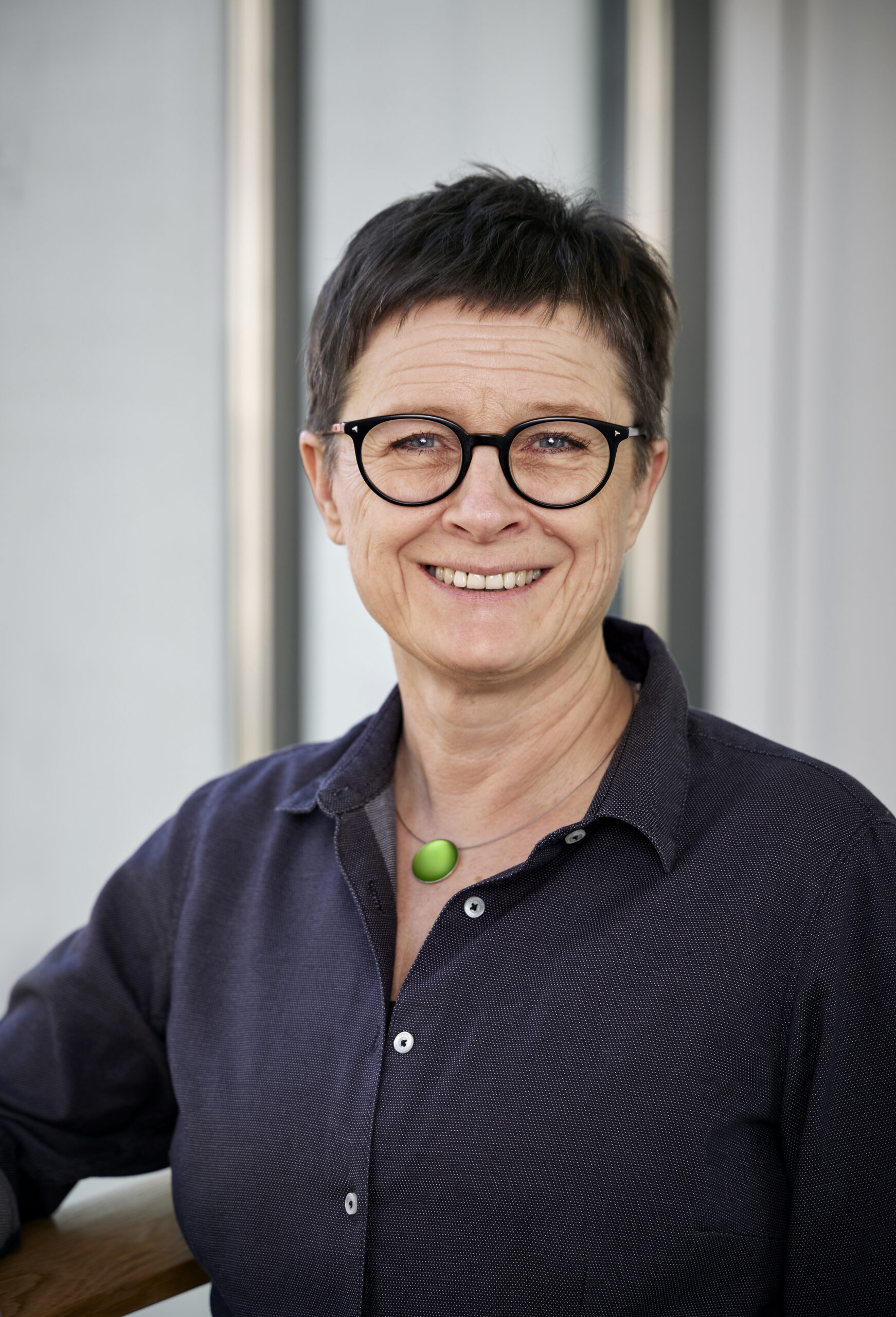
Ulla Sätereie. Image: Anna von Brömssen
It can be a challenge for students in their 20s to speak a foreign language in public. But when they were welcomed to the CJC project, the students were told: “Bad English is required!” to stress that communicating with their team was more important than speaking perfectly.
“They laughed, and quite a few came to say that it was such a relief when we said that, because they weren’t used to speaking English in public,” recalls Sätereie, stressing that it should be part of the opening a cross-border collaboration that almost no one is working in their native language.
“Speaking a common language without focusing on grammar or perfection is important,” agrees Alfter, noting that while in northern Europe English is often the shared foreign language, in others it may be French or Spanish. “For day-to-day collaboration, don’t worry about your pronunciation; you can dive deeper when the time comes for translation or publication,” she advises.
Approach the Media Early in the Process
For a regular cross-border investigation project, publication is the goal. Is it the same when the journalists are still students? “All journalists want to be published by big media houses, it is sort of the gold [standard],” says Sätereie. “As students, it is good for their portfolio and job-seeking,” adds Alfter.
Alfter and Sätereie advise participants to contact media partners as early as possible. Some universities already had established media partnerships, some did not. They also share in the guide that, once the media shows an interest, it’s important to clarify the process involved — the timeline, naturally, but also payment. In some countries, students are paid like any other freelancer.
Whether for Der Spiegel, Die Zeit, The EU Observer, Le Monde, Mediapart, both cohorts of students “did superb stories,” says Alfter.
You can read the students’ stories here.
Alcyone Wemaëre  is GIJN’s French editor and a freelance journalist based in Paris. She is a former staff reporter for Europe1 and France24 in Paris, and her work has appeared in Le Monde, Slate, Infomigrants, La Chronique, L’Obs, and Le Temps. She is also an associate professor at Sciences Po Lyon, where she is co-responsible for the Data and Investigation specialty for the Master’s degree in journalism. Wemaëre graduated from Celsa and received the François Chalais Prize.
How a Le Monde Team Uncovered 300 Contaminants in France’s Groundwater

Forbidden Stories Goes to the Theater
Seeking the Truth, in the Midst of a Country in Crisis: Haiti’s AyiboPost
5 Journalism Tips from Edwy Plenel

Exposing Industrial Pollution and Creating the ‘Forever Chemicals’ Beat

Running Into Open Secrets: How to Investigate Using the Strava Fitness App
Investigating Gaza, Personal Mobile Data for Sale, and Compromised Supply Chains: 2025’s Best Investigative Stories in French

6 Tips for Launching an Investigative Podcast

This work is licensed under a Creative Commons Attribution-NoDerivatives 4.0 International License
Republish our articles for free, online or in print, under a Creative Commons license.
Republish this article
This work is licensed under a Creative Commons Attribution-NoDerivatives 4.0 International License
Read Next
10 Questions
Exposing Industrial Pollution and Creating the ‘Forever Chemicals’ Beat
In a career spanning more than 20 years, Le Monde reporter Stéphane Horel has brought a creative and, at times, humorous approach to groundbreaking environmental investigations.
How They Did It Reporting Tools & Tips
Running Into Open Secrets: How to Investigate Using the Strava Fitness App
Journalists around the world have mined the Strava fitness app to pinpoint secret military bases and track the movements of world leaders.
Editor's Picks News & Analysis
Investigating Gaza, Personal Mobile Data for Sale, and Compromised Supply Chains: 2025’s Best Investigative Stories in French
Featuring stories from France to Tunisia, Canada to DR Congo, touching on allegations of abuses in the labour chain, corruption, and investigations into gold mining.
Getting the Story Out
6 Tips for Launching an Investigative Podcast
A Dataharvest session with podcast veterans from Poland and Portugal offered advice for journalists considering audio storytelling — from narrative tricks to business models.