
Photo: Kvalifik on Unsplash
Managing the Collaboration: The Growing Importance of the Investigative Coordinator
Read this article in
Mediator, manager, and motivator: The emerging role of investigative coordinator defies a singular job specification, but is frequently described as a lynchpin in investigations — and the more moving parts, partners, and countries, the more vital the role.
An investigative coordinator is often tasked with overseeing an investigation involving multiple journalists, either from within one newsroom or across partners. They take a bird’s eye view of the project, from angles pursued to potential publication dates, and establish the workflows required to get the investigation and its team from start point to publication and beyond.
Managing reporters across borders, setting deadlines, organizing research and evidence, establishing legal and publication agreements between media partners: the coordinator can be responsible for all these tasks. It’s a role significantly shaped by the investigation itself and the resources available, says Hazel Sheffield, an investigative journalist and academy coordinator for Arena for Journalism in Europe, whose research into the role of coordinators in cross-border collaborations was published in April 2025.
“Our understanding of how to support these individuals is evolving,” says Sheffield, who has acted as coordinator on multiple cross-border investigations, including 2020’s Money to Burn (which had 16 reporters in 11 newsrooms across eight countries) and 2025’s Green to Grey (which led to the publication of 51 stories in 11 languages.) “Not everybody wants to do this job because it requires a sort of systems brain and a lot of organizational ability.”
The tasks and challenges of this role shift with the phases of an investigation too. For María Ramírez, deputy managing editor of Spanish newsroom elDiario.es, her work as coordinator on a project looking into accusations of sexual assault against a famous singer began as the investigation, which started as a two-year solo reporting project, sought a publishing partner. Her experience and strong network of connections helped secure American Spanish-language newsroom Univision, initially as a publishing partner. Negotiating and agreeing on partnership and publishing terms between newsrooms is time-consuming but crucial, and coordinators are often heavily involved in this process.
For elDiario.es, it became clear during negotiations that this wasn’t just a republication deal; further reporting could expand the story and get it over the line. Involving Univision journalists in reporting complicated legal agreements further — agreeing access to existing sources, for example — and much of Ramírez’s initial coordinating work involved meetings to hammer out the details before a new phase of core reporting could begin. [Although prosecutors in Spain opened an investigation following the publication of the story they later dropped the case, saying Spanish courts did not have jurisdiction to investigate crimes alleged to have been committed abroad.]
At cross-border investigative newsroom Investigate Europe, every project has a coordinator — maybe more than one if the investigation is big enough, says investigations editor Chris Matthews. The coordinator will steer the project from initial hypothesis through production to publication. “What are we focusing on? What’s going to be the angle? How are we going to coordinate the publication date so it’s the best possible fit for everyone involved, their demands and their schedules,” he explains.
An investigation into sanctions against Russia, published in 2025, on which Matthews served as coordinator, began with a data leak, the primary angle of which couldn’t be substantiated. It was the coordinator’s job to ask questions to help pivot the investigation and map out the time, skills, and staff needed to realize a different line of inquiry that eventually encompassed Russia, India, and France. “It was about bringing together all these different strands into a cohesive narrative and story,” he says.
Building a Timeline
In 2023, Nelly Kalu, the editorial project and product manager at the Center for Collaborative Investigative Journalism (CCIJ) began coordinating a collaboration that later became Democracy Deferred, an investigation into the legitimacy of the 2023 Nigerian presidential election. After brainstorming angles and multimedia approaches with CCIJ editors, including its Africa editor, who had initially pitched the idea, Kalu focused on building a timeline.
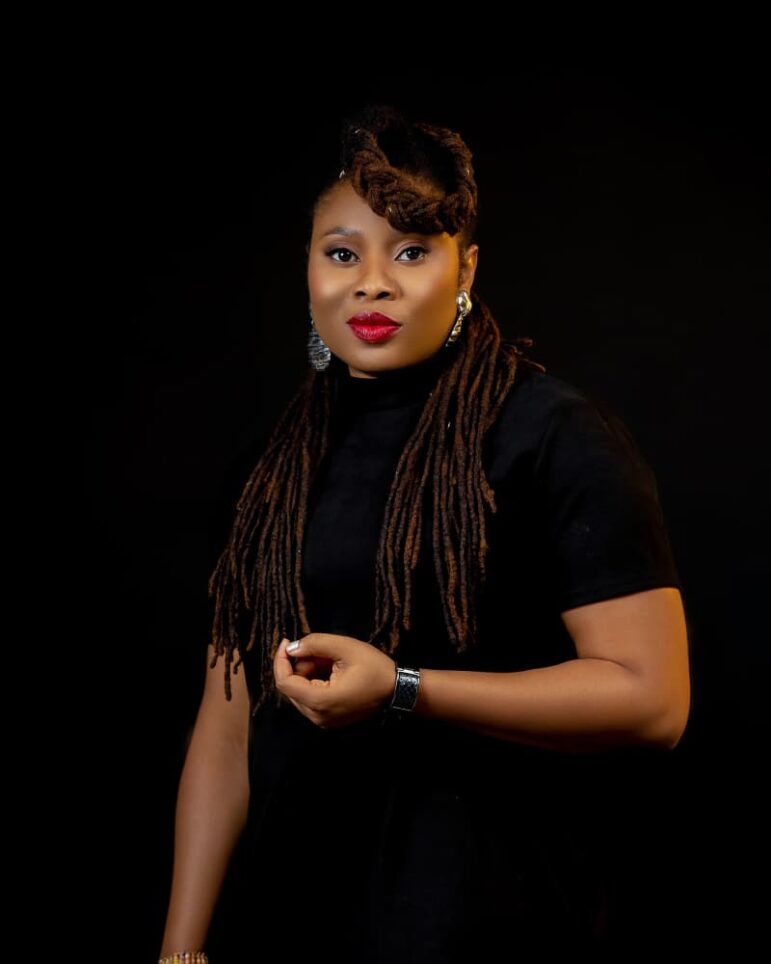
CCIJ editorial project and product manager Nelly Kalu. Image: Courtesy of Kalu
She broke down the investigation into chapters, such as misinformation and voter suppression, and planned to hire journalists with relevant specialisms for each. At first, there were four chapters, requiring three to four months of work each. Kalu and the team worked out where each topic was related or independent from the others so reporting teams did not have to wait for each other to get started.
At this early stage, Kalu coordinated with other members of the CCIJ team, such as the communications manager, to define the audience for the investigation and devise a high-impact publishing strategy. Kalu had two public holidays — Nigeria’s Independence Day and Democracy Day — in mind as publishing dates and mapped out how long the investigation would take, how many journalists and editors were needed, what the visual editor would require, and budgetary items, such as what saving and scraping data would cost.
With as many as 25 reporters working on the investigation at one point, her role also involved regular check-ins to offer support and help — and ultimately to ensure the investigation was still on track and the project timelines would hold. She used project management software Basecamp to manage the investigation, reducing every step to a task that could be logged and tracked, from a single interview being completed to a report being filed. Marking tasks as completed helped show journalists and editors the progress being made.
Regular weekly or fortnightly meetings Kalu organized allowed for brainstorming ahead of field reporting — useful for reporters, but also crucial for coordination, she says: “I can’t send you back to the field twice. There’s only so much budget for each chapter.”
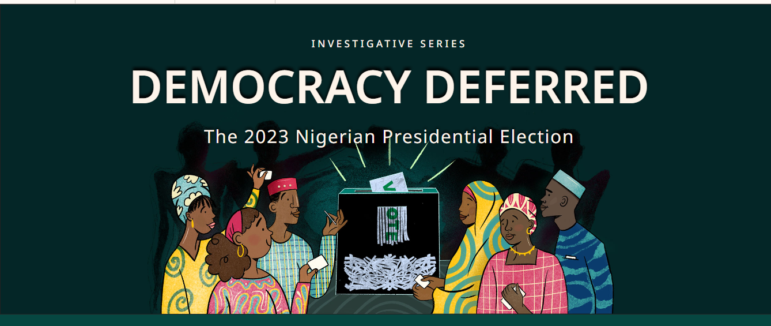
Image: Screenshot, CCIJ and Veza News
The project had a clear timeline for when fact checks and legal clearances needed to be completed on each chapter. “We were able to have pockets of journalists working and strengthening their loopholes and weaknesses, because I had an overarching view,” she says.
These final stages before publication are especially busy for investigative coordinators, particularly in cross-border, multi-partner investigations. They are likely to oversee the coordination of publication schedules across newsroom partners and throughout work with legal teams internally and externally, taking into account differing newsroom standards and national legislative differences.
Coordination Challenges
In the middle of an investigation, says Sheffield, a huge part of the coordinator’s role can be “maintaining enthusiasm.” “Often people aren’t communicating well because they’re burrowing in their own tunnels,” she says. “You have to try and bring them together.”
For Ramírez from elDiario.es, coordinating output for both digital and TV — partner Univision had separate teams for both — and differences in language and journalistic standards between Spain and the US were challenges. Managing both partners’ access to sensitive sources and planning joint reporting trips for interviews helped unite reporters from two different newsrooms and build trust in the team.
“It was helpful for both reporters to be together, to talk beforehand about how to listen to these women,” says Ramírez. In the days before publication, with new departments and colleagues brought into the process, there was tension, she adds: “I remember saying: ‘We’re one team. Don’t forget that.’”
In such a multifaceted and pivotal position, investigative coordinators risk burnout themselves. “I didn’t do a good job separating myself,” says Kalu. “Investigations are hard on everyone working, but people often never see the burden it takes on the person who’s the overseer. The reason you can pause your writing and take a weekend is because that person exists.”
From experience, she recommends investigative coordinators plan regular breaks from the investigation for the whole team.
What Makes a Great Investigative Coordinator?
All our interviewees said investigative coordinators need strong organizational and communication skills — perhaps above and beyond that of a typical journalist. “An investigative journalist is often very alone, but the coordinator needs to want to work with people,” says Sheffield. “They need to be available as a kind of confidant and support and mentor. There’s a human side [of the role] which is underestimated, as well as this systems brain.”
CCIJ’s Kalu says she trained as an engineer before becoming a journalist. This education and her cultural upbringing have both contributed to her success in this role, she says: “I’m an Igbo Nigerian and the first[-born] daughter — for us, we are born managers.”
Ramírez from elDiario.es had previously worked in the US, including for Univision. Knowing the cultures and journalism of both organizations and countries helped her manage communication and collaboration during the investigation and brought her into the role of coordinator. “Try to see things from the other’s perspective and be a bridge, even if you belong to one news organization,” she says, adding that there’s always going to be friction on big projects at some point. “Out of the friction comes something better, especially when the reporters are good, but you have to be a mediator and try to understand both sides.”
Investigative coordinators need to be flexible but focused. They will have to react and adapt plans as investigations develop and angles change, while keeping everyone working towards the end goal, says Investigate Europe’s Matthews. CCIJ’s Kalu says she made it clear to reporters during their onboarding for Democracy Deferred what challenges they might face and to come to her for support if blocked.
Whether an investigative coordinator needs to have experience as an investigative journalist is a hot topic, says Arena’s Sheffield. “I know project managers from the corporate world who are trying to sell themselves into journalism, because they see the need for their skills, but then others think you have to know that [journalism] world, that way of communicating and processing information.”
Both Ramírez and Kalu agree it would be difficult for someone who isn’t a journalist or who hasn’t worked on an investigation to be an investigative coordinator. Without this experience and multiple skills it would be extremely challenging to anticipate, understand, and manage the fact-checking processes required, the energy levels of the team, and to coordinate the potentially mutable direction of the investigation, says Kalu.
Support for Investigative Coordinators
While there are many variables determining what an investigative coordinator does and who fulfills that role, Matthews says organizations like Investigate Europe are increasingly aware of its importance. Recognition of coordination as a specialist role, its challenges, and the need to support investigative coordinators is growing, agrees Sheffield. One way to encourage the industry to take this role seriously is for funders to allow teams to specify money for a coordinator in a grant or funding application, she says.
In addition to furthering the understanding and development of the role through its research, Arena runs Coordinators Without Borders, a network for cross-border investigative coordinators. It’s working with this group to build a manifesto for coordinators, as well as resources and templates that coordinators can use, for example, a memorandum of understanding for newsroom or project partners.
It’s a field that warrants attention and support, says Sheffield, not least because it attracts open-minded problem-solvers: “It’s nice to be in an environment with these people. Not only are they doing incredibly cool investigations, but they want to help with yours and learn from you. It’s just a lovely group of people.”
 Laura Oliver is a freelance journalist based in the UK. She has written for the Guardian, BBC, Euronews, and others. She is a regular journalism trainer for the Thomson Foundation and Thomson Reuters Foundation and works as an audience strategy consultant for newsrooms.

Project Management: Collaborative Journalism

Project Management: Team Dynamics and Collaboration

Project Management: Planning and Timelines

Introduction to Investigative Journalism: Collaborations

The Power of Collaboration: El CLIP and the Plan to Transform Latin America’s Investigative Ecosystem
Tips for Better Collaborations: Smaller Newsrooms, More Vetting, and Less Ego
How Indigenous Journalists Are Powering Investigations Through International Collaboration

How a Canadian Reporting Lab Is Pioneering Academic-Journalist Collaboration

This work is licensed under a Creative Commons Attribution-NoDerivatives 4.0 International License
Republish our articles for free, online or in print, under a Creative Commons license.
Republish this article
This work is licensed under a Creative Commons Attribution-NoDerivatives 4.0 International License
Read Next
LATAM Focus Member Profiles News & Analysis
The Power of Collaboration: El CLIP and the Plan to Transform Latin America’s Investigative Ecosystem
CLIP was founded by three leading journalists who shared the conviction that to mirror the transnational challenges journalists face in Latin America, the stories had to be cross-border too.
GIJC23 Methodology
Tips for Better Collaborations: Smaller Newsrooms, More Vetting, and Less Ego
Collaboration has emerged as the killer app for investigative journalism in the past decade, and a panel of editors at GIJC23 shared key insights into how watchdog partnerships can thrive.
GIJC23
How Indigenous Journalists Are Powering Investigations Through International Collaboration
From the impact of green energy projects to the mis- and disinformation campaigns that target marginalized communities, there are a number of investigative topics that unite Indigenous reporters.
Case Studies
How a Canadian Reporting Lab Is Pioneering Academic-Journalist Collaboration
Fundamentally, journalists and scholars do similar work – diving into documents, crunching numbers, conducting interviews. But their timeframes, and their measures of success, can be quite different. The Global Reporting Centre tries to bridge that gap, both by funding such collaborations and serving as an ambassador between two very different cultures.