
Illustration: GIJN
Investigating Gaza, Personal Mobile Data for Sale, and Compromised Supply Chains: 2025’s Best Investigative Stories in French
Read this article in
The stories selected for our editors’ pick this year span cocoa trafficking in the Democratic Republic of Congo, the sale of personal mobile data in Europe by secretive but powerful data brokers, and investigations into opaque sporting institutions in Tunisia. Then, there is also an investigation into alleged supply chain exploitation by a big name retailer in France.
We selected eight notable French-language investigations published last year, with a focus on showcasing a variety of topics and investigative techniques while also reflecting the diversity of regions and media outlets. Some of the outlets featured on our list are GIJN members, but our list is not exclusively for member publications.
What is striking is that even in environments where investigative reporting is hugely challenging — for reasons of war, conflict, and security — and when it broaches topics that are challenging and complex, there are many brave journalists who continue to do their work and dig deep.
One thing we have observed this year — there seems to be a trend away from one-off stories, with more and more investigative series, which offer the advantage of addressing different facets and regional angles of complex stories. Bonne lecture! We hope you enjoy reading.
France/European Union — The Data Brokers File
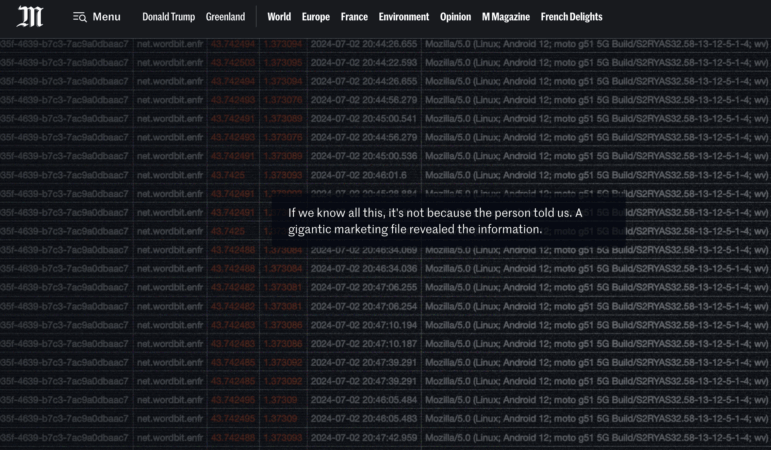
Image: Screenshot, Le Monde
The mobile phone location data of millions of users in the European Union is easily accessible – despite few users realizing their information is up for sale — according to this series of investigations by Le Monde and eight media partners including L’Echo in Belgium and RTS in Switzerland. Through access to a commercial sample of a database supposedly collected only for advertising purposes and sold by a US data broker, journalists were able to geolocate ordinary citizens, some in just a few minutes, French spies, police, and military personnel, alongside staff in high-security prisons, nuclear power plants, and military bases in Belgium. Even the locations of top EU officials in Brussels working for the Commission or NATO have been exposed.
EU data protection laws such as the General Data Protection Regulation (GDPR) and the Digital Services Act (DSA) are often labeled as the most protective in the world. But the investigation showed how data brokers operate within the “blind spots” of the legislation. The threat to personal privacy but also national and European security is so real that the European Commission expressed its concern following the publication of this investigation, and members of the EU Parliament called for action.
Tunisia — Alleged Abuses, Opacity, and Pressure at Sporting Institutions
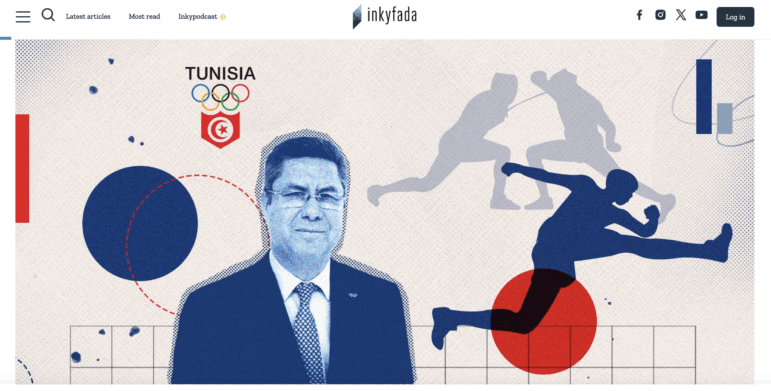
Image: Screenshot, Inkyfada
Between April and May 2025, Tunisian investigative media outlet Inkyfada, a GIJN member, published a series of investigations into the Tunisian sports sector. From an investigation into allegations of “empty promises, opaque decisions, and disappointing results” at the National Olympic Committee to a report on power-grabbing at the Tunisian Tennis Federation, “where the rules of the game have been constantly changed to ensure absolute control,” and into “years of troubled murky management, conflicts of interest, and political pressure” at the Tunisian Football Federation, the outlet reviewed the leadership of these various bodies, sourced original testimony, and cross-referenced material to investigate governance issues with repercussions on sporting performance.
Continuing its series this month in January 2026, in the midst of the African Cup of Nations (AFCON), the continent’s biggest sporting competition, Inkyfada released a new investigation. Published hot on the heels of Tunisia’s elimination in the round of 16, the report suggested that “Tunisia’s debacle at the AFCON is symptomatic of a system where athletes are gradually subordinated to the logic of influence, lobbying, and networks.”
France — Human and Environmental ‘Exploitation’ by a Giant Sports Retailer
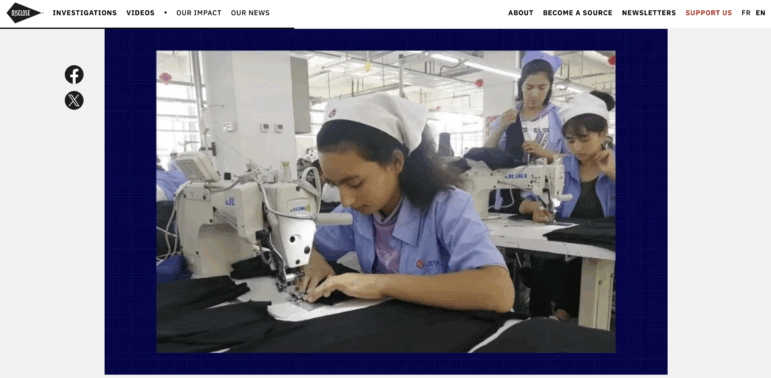
Image: Screenshot, Disclose
Suppliers that may be linked to deforestation in Brazil, “clandestine” textile factories in Bangladesh, and an operation that allegedly exploits the Uyghur minority in China in a form of modern slavery… In February 2025, after a year-long investigation, Disclose published a three-part series that uncovered evidence of these serious issues in the supply chain of one of the most popular sporting goods retailers in France. Among the revelations was video footage of a 12-year-old girl working in a factory in China captured with a hidden camera.
The investigation — which was produced in partnership with French Investigative TV show Cash Investigation — began after an internal source shared with Disclose a list of subcontractors around the world. The reporting team then analyzed dozens of internal documents, collected exclusive testimonies from former members of staff, and went undercover in two Chinese factories to film. The revelations came as a shock for consumers, even though the image of this much-loved brand was tarnished when Disclose revealed, in 2023, that its products were still being sold in Russia. After the release of the investigation, two of the journalists were targeted by a wave of pro-Chinese cyber attacks. In response to the findings, the firm said it has a “commitment to responsible procurement” and that it “strongly condemns all forms of forced labor and child labor.”
The Gaza Project
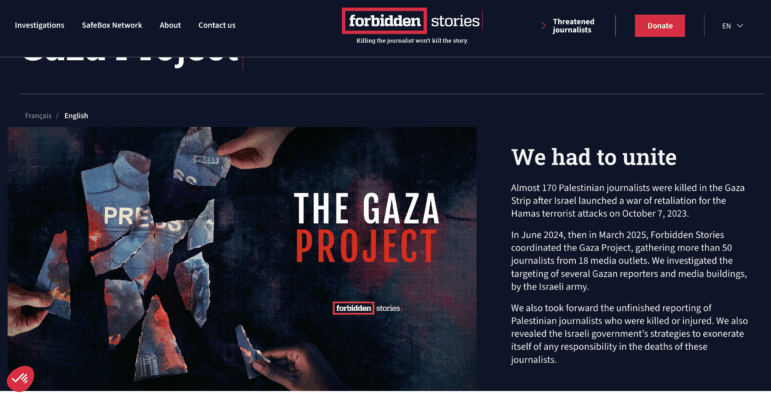
Image: Screenshot, Forbidden Stories
More than 230 journalists and media workers have lost their lives during the war in Gaza, launched after the Hamas attack on Israel on October 7, 2023. Paris-based organization Forbidden Stories — whose motto is “’killing the journalist won’t kill the story” — united more than 50 journalists from 18 media outlets, including ARIJ, Le Monde, France 24, and RFI, to investigate the deadliest conflict for the press in recent times. The project found evidence that some reporters had been targeted by the Israeli army, while others were killed alongside other civilian victims. In 2025, during the second tranche of the investigation, the team continued the unfinished reporting of Palestinian journalists who were killed or injured covering the conflict, and unpacked what had happened in individual cases, such as that of Fadi Al-Wahidi, who was shot in the neck while wearing a press vest near Jabalia, in the Gaza Strip, in October 2024 and is now paralyzed.
Using a combination of forensic evidence, satellite imagery, video footage, social media posts and interviews of witnesses and experts, the team managed to document how Al-Wahidi was shot — geolocating his position at the time of the attack to an area not designated as an “evacuation” zone. Reporters also delved into how legal investigations into the Israeli military’s role in these cases have been obstructed. The Gaza Project was a finalist for the 2025 Global Shining Light Award. While the Israeli Army has said it rejects “outright the allegation of a systemic attack on journalists,” international organizations like Reporters Without Borders have filed numerous complaints with the International Criminal Court, seeking justice for these journalists and [to] end impunity for the crimes against them.
Democratic Republic of the Congo — Corruption, Theft, Murder… Where Cocoa Trafficking Breeds Chaos
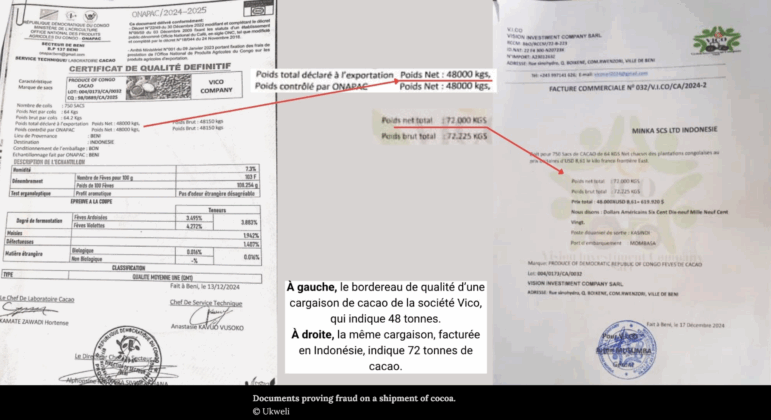
Image: Screenshot, Ukweli Coalition Media Hub
The eastern Democratic Republic of Congo is famously fertile, and the soil is conducive to the production of internationally sought-after products such as cocoa. In this investigation, Ukweli Coalition Media Hub, an investigative platform specializing in the African Great Lakes region, and its media partners Afrique XXI and Africa Uncensored, have documented the existence of “a vast network of cocoa bean trafficking between eastern DR Congo and Uganda,” involving, according to the report, the Congolese and Ugandan armies, civil servants, and armed groups.
Despite the constant risks in this region — which is teeming with state and non-state armed groups and where there is a high level of insecurity for journalists — unnamed local reporters managed to document this trafficking by combining traditional investigative methods with undercover techniques. According to the report, the trafficking tops several millions of euros every year, impacting small producers, fueling corruption, and exacerbating insecurity.
When contacted by the reporters, Uganda’s army spokesperson denied any direct involvement by his country’s soldiers in any illegal trading, saying that soldiers were focused on “fighting the terrorists who have made trade between our populations impossible.”
Côte d’Ivoire — Ivorian Gold: Between Mining Boom and Tax Abyss
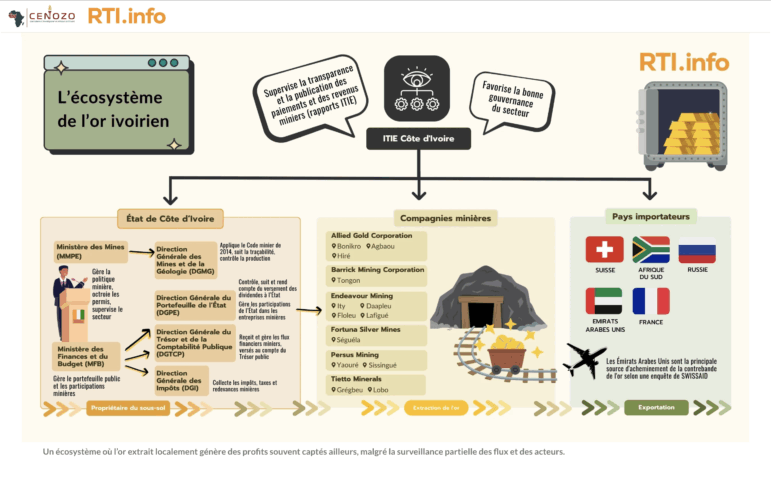
Image: Screenshot, RTI.Info
In a region of sub-Saharan Africa where it is extremely rare to see a public media outlet conduct an investigation into a nationally sensitive topic, this story stood out last year. For 12 months, award-winning reporter Marthe Akissi, who works for the public broadcaster in Côte d’Ivoire, delved into the intricacies of an extractive sector that has become highly strategic for a country hoping to become a giant in global gold production.
Using satellite images from Google Earth Pro, reports, and expert analyses, the reporter explored the inner workings of gold mining in Côte d’Ivoire. In this first chapter of the investigation, she revealed the “worrying” gray areas surrounding the traceability of gold, dives into production figures and exports, questions generous tax exemptions, and explores unexplained discrepancies in official figures. According to the report, these problems lead to billions of CFA francs (equivalent to millions of US dollars) escaping the state coffers every year.
This investigation is the result of a collaboration between a public television station, Radiotélévision Ivoirienne, the nonprofit investigative organization CENOZO (a GIJN member), and another nonprofit organization, HEI-DA, which specializes in data and tech journalism.
West Africa — In the Den of the Cybercriminals
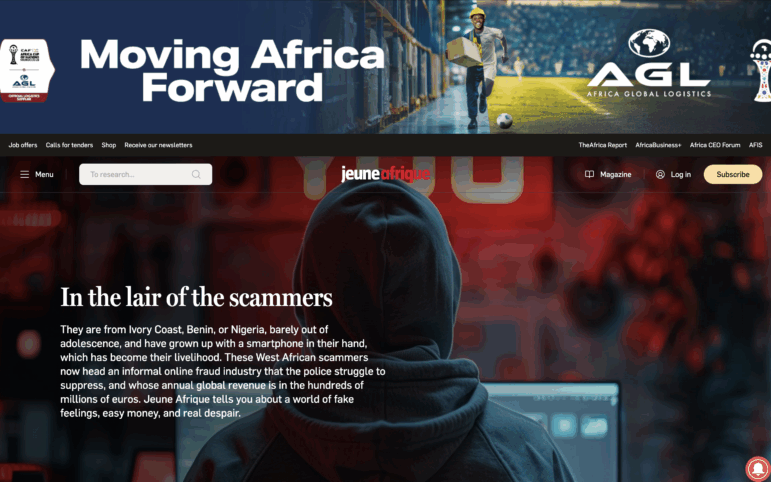
Image: Screenshot, Jeune Afrique
In West Africa, the cybercrime industry has grown significantly in recent years, with dramatic consequences that often extend far beyond the African continent. Jeune Afrique magazine devoted a seven-part series of investigations and analyses to the subject of hackers “barely out of adolescence, and [who] grew up with a smartphone in hand” who have made online crime their livelihood.
The reporting addressed various facets of this thriving criminal activity, ranging from romance scams to ransomware, and shows how it claims victims both in the region and thousands of miles away. Jeune Afrique’s reporting strategies involved classic investigation and research techniques, but the team also went undercover — pretending to be lured into a scammer’s game until the payment stage.
Canada — Appetite for Illegal Lobster
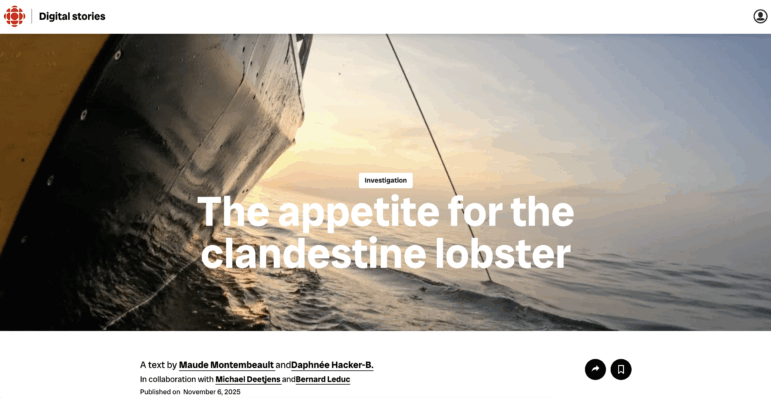
Image: Screenshot, Radio Canada
Lobster fishing in Canada is lucrative, and worth more than a billion dollars every year. But according to this report, up to a third of marine stock could be being fished illegally, out of season, and without the correct license, an “illicit trade” that reporters warn is even fueling organized crime. To understand the lobster black market, Radio Canada used an undercover reporter pretending to be a commercial seafood buyer, based in Montreal. “I’m not supposed to sell this lobster,” one illegal seller confesses to him.
The report quoted experts estimating that lone operators working outside of the system could be earning $4,000 to $5,000 per day in cash (equivalent to US$2,800-3,500). The investigation shows that illegal lobster fishing leads to a real loss of earnings for fishing communities, is a source of violence with threats to fishing agents and their families, and boats have reportedly been set on fire. What’s more, the plundering of resources has serious consequences for sustainability.
Alcyone Wemaëre  is GIJN’s French editor and a freelance journalist based in Lyon. She is a former staff reporter for Europe1 and France24 in Paris. She is also an associate professor at Sciences Po Lyon, where she is co-responsible for the Data and Investigation specialty for the Master’s degree in journalism, created with CFJ. Alcyone graduated from Celsa and received the François Chalais Prize. Her work has also appeared in Le Monde, Slate, Infomigrants, La Chronique, L’Obs, and Le Temps.
 Maxime Domegni is GIJN’s Francophone Africa editor and an award-winning journalist with years of experience in investigative journalism. He has worked, among others, as editor-in-chief of the Togolese investigative newspaper L’Alternative. He has also collaborated with different media organizations, notably with the Swiss-based Fondation Hirondelle as West African Correspondent for the justiceinfo.net website.
International Research Guide: How to Find Experts and Hidden Documents on Any Topic

Guide to Investigating Tech and AI in Modern Warfare
Turning Copernicus Satellite Data Into Public-Interest Climate Stories
10 Practical Tips for Verifying Scientific Claims
Clandestine Airstrips, a Mexican Mega Leak, and a Crisis of Unidentified Missing People: 2025’s Best Investigative Stories in Spanish
Digital Scam Trails, Deadly Hospital Infections, Harrowing Immigration Journeys: 2025’s Best Investigative Stories from India
Editor’s Pick: Best of Data Journalism from 2025

Switzerland’s Hidden Slave Trade, Migrants ‘Dumped’ in the Desert, and a Religious Sex Scandal: 2024’s Best Investigations in French

This work is licensed under a Creative Commons Attribution-NoDerivatives 4.0 International License
Republish our articles for free, online or in print, under a Creative Commons license.
Republish this article
This work is licensed under a Creative Commons Attribution-NoDerivatives 4.0 International License
Read Next
Editor's Picks News & Analysis
Clandestine Airstrips, a Mexican Mega Leak, and a Crisis of Unidentified Missing People: 2025’s Best Investigative Stories in Spanish
The investigative stories produced in the Spanish-speaking world this year show a vibrant journalistic landscape, despite the many challenges reporters now face in many places.
Editor's Picks News & Analysis
Digital Scam Trails, Deadly Hospital Infections, Harrowing Immigration Journeys: 2025’s Best Investigative Stories from India
Also featuring deep dives into rampant worker injuries in automobile factories, health hazards from imported scrap tires, and the politicization of the national archaeological survey.
Data Journalism Top 10 Editor's Picks
Editor’s Pick: Best of Data Journalism from 2025
Our roundup of standout data journalism from the past year highlights projects that delve into conflicts in the Middle East, Ukraine, and Africa, that explore the rise of AI, and interrogate global trade wars.
Editor's Picks News & Analysis
Switzerland’s Hidden Slave Trade, Migrants ‘Dumped’ in the Desert, and a Religious Sex Scandal: 2024’s Best Investigations in French
Featuring stories from France to the Ivory Coast, Switzerland to Senegal, here are eight of the best investigations published in French this year.