

Climate GIJC25
Overcoming Four Big Challenges to Investigating the Water Crisis
Journalists reporting on water scarcity often face a lack of transparency, limited access to sites and sources, unwieldy data, and a resistant media environment.
Journalists reporting on water scarcity often face a lack of transparency, limited access to sites and sources, unwieldy data, and a resistant media environment.
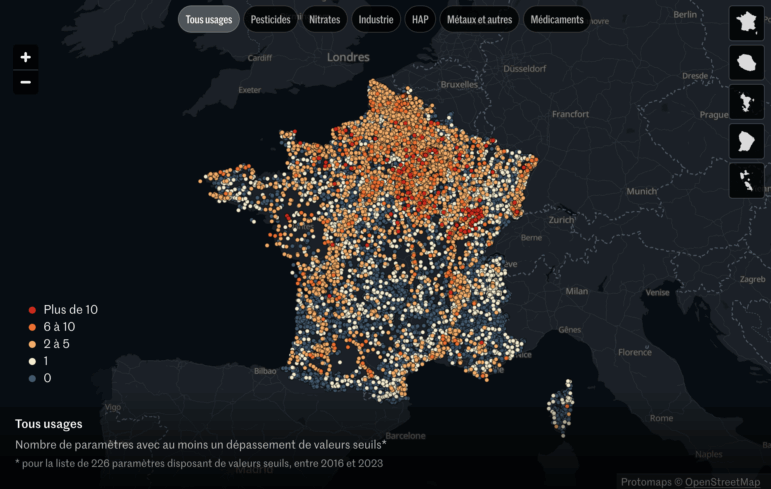
The French investigative reporter and data journalist shares the methods behind her team’s major investigation into Europe’s polluted groundwater crisis.
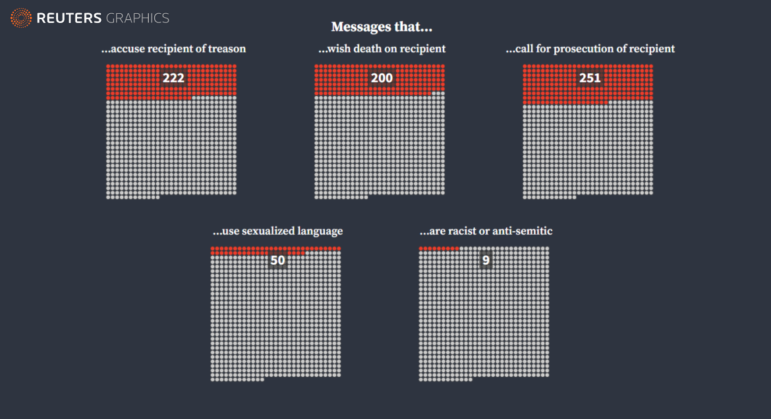
We have rolled into the third calendar year of the pandemic, but the debate about how journalists present data on the coronavirus continues to rage. Just six days into 2022, a spiral chart divided the data journalism community into two camps. Our weekly NodeXL analysis and curation of the most popular data journalism stories on Twitter also features an investigation into the prenatal testing industry, a visualization of death threats received by election staff, and an interactive map of Russian military bases near the Ukraine border.

Our NodeXL #ddj mapping from June 7 to 13, which tracks the most popular data journalism stories on Twitter each week, focused in on this major investigation by ProPublica, which offers an unprecedented look inside the financial lives of US billionaires. In this edition, we also feature a detailed look at India’s faltering vaccination campaign, a data project exploring Argentina’s news deserts, and an investigation of The Gambia’s water paradox.
In 2001 GIJN was born, as investigative journalists from around the globe met for the very first time to share ideas, tips, and best practices to strengthen their reporting in a world where journalism was increasingly under threat.
Today the threat has multiplied, and at GIJN we find ourselves under the same pressures as our member organizations. Most urgently: available funding for investigative journalism has been impacted as some longtime funders who supported journalism in the past are no longer doing so or have closed. Yet our work continues, more important than ever before.
GIJN serves as the global hub for the world’s investigative reporters. Our core mission is to support and strengthen investigative journalism—with special attention to those from repressive regimes and marginalized communities.
We are embarking on our first-ever campaign initiative to help us expand our revenue by the end of the year through individual donors. If you have ever joined one of our free webinars, used one of our free resources, learned a new skill thanks to a GIJN training, or simply believe that press freedom is essential to civil society, we ask you to show your support for GIJN’s work with a donation of your choosing. Called “Friends of GIJN,” this campaign includes a more personalized experience, starting in 2027, for individuals who answer the call to join with us during this unprecedented time.
Truth and democracy are under attack around the world. You can fight back by helping GIJN support investigative journalists with free access to the latest tools and techniques — so they can foster justice and hold accountable those who abuse the public trust.
With a staff based in 24 countries, GIJN works in a dozen languages each day, linking together the world’s most enterprising journalists, offering state-of-the-art training, webinars, tip sheets, and a Help Desk that responds to 2,000+ requests for assistance each year. More than 84% of GIJN’s operating budget goes directly to our program work.
Please make a gift today to support journalists on the front lines of the fight for accountability and human rights.