

GIJC23 Reporting Tools & Tips
Waste, Fraud, Abuse: Covering the Environmental Crime Beat
Journalists share stories and tips from their investigations into environmental crimes, from deforestation in the Congo to the Beirut port blast.
Journalists share stories and tips from their investigations into environmental crimes, from deforestation in the Congo to the Beirut port blast.

The little-known but powerful Investor-State Dispute Settlement (ISDS) system considers high stakes cases between companies and national governments, which often take years to resolve.
The group has built an international network of more than 100 trained investigative journalists and environmental experts probing the activities impacting the natural world.
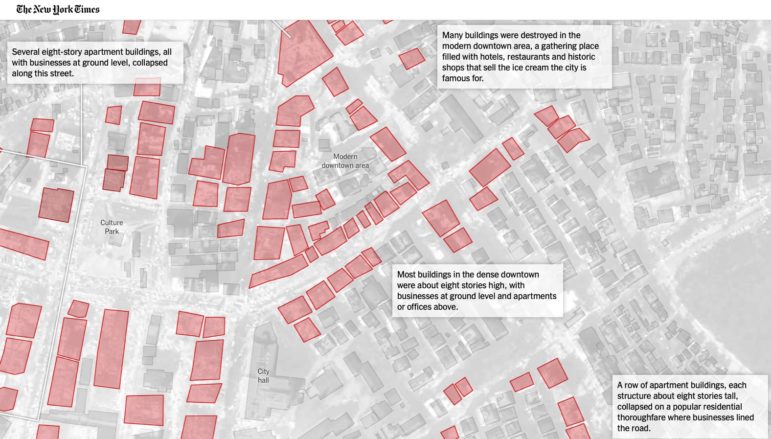
Our weekly round-up of the most popular data journalism stories on Twitter looks at mapping of the destruction in the Turkey-Syria earthquake, insight into Russia’s digital censorship apparatus, an alarming lack of snow on Swiss ski slopes, and a tool to help you save energy.
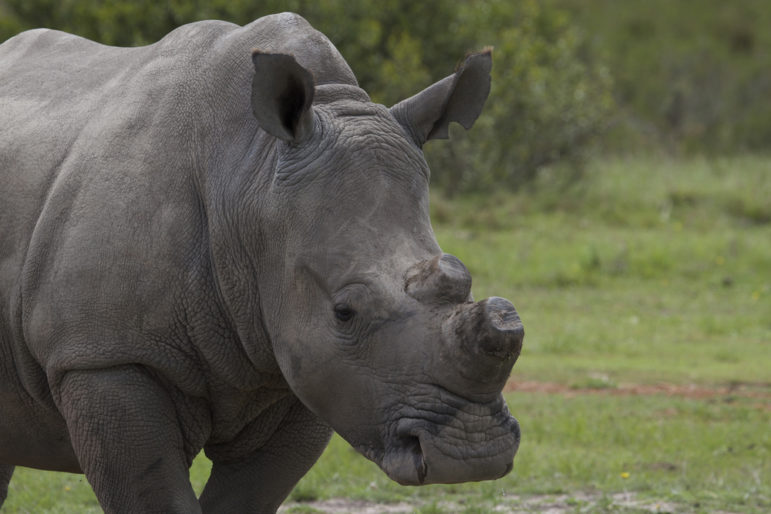
Investigative journalism of environmental issues has grown substantially in recent years in Africa, thanks to a number of new initiatives and reporting projects.
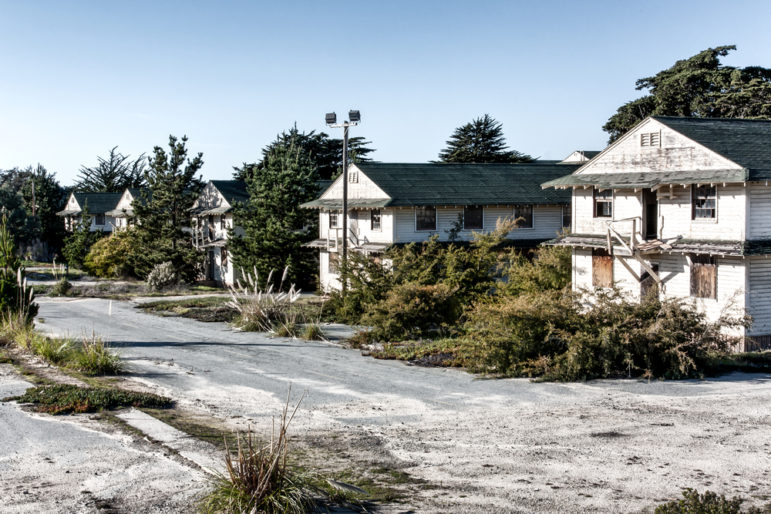
Rare cancers among military veterans are increasingly linked to earlier chemical dumping and burn pits at old bases. In this piece, three Associated Press reporters share tips on exposing these links, based on their year-long investigation into a former US military base.
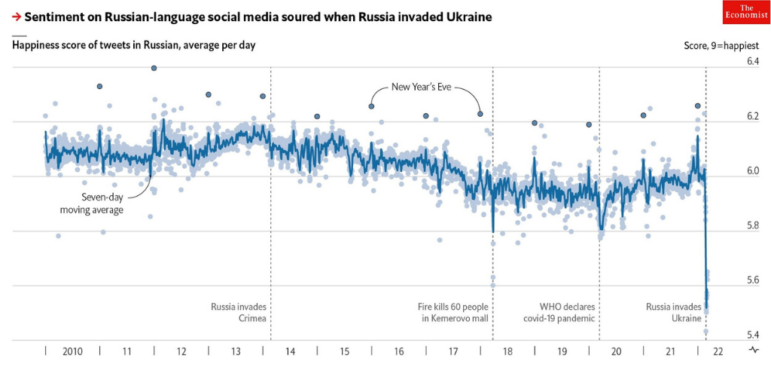
In this week’s GIJN round-up of the Top 10 in Data Journalism, we look at the declining public mood inside Russia, EU spending on Russian fossil fuels, costly US police misconduct, and South Korean election graphics.
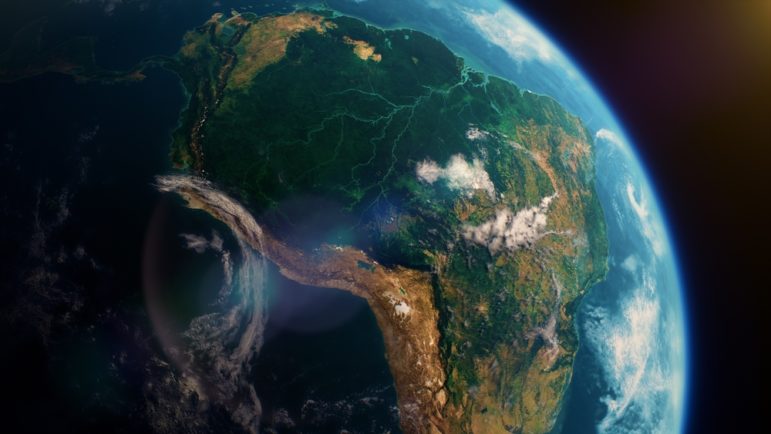
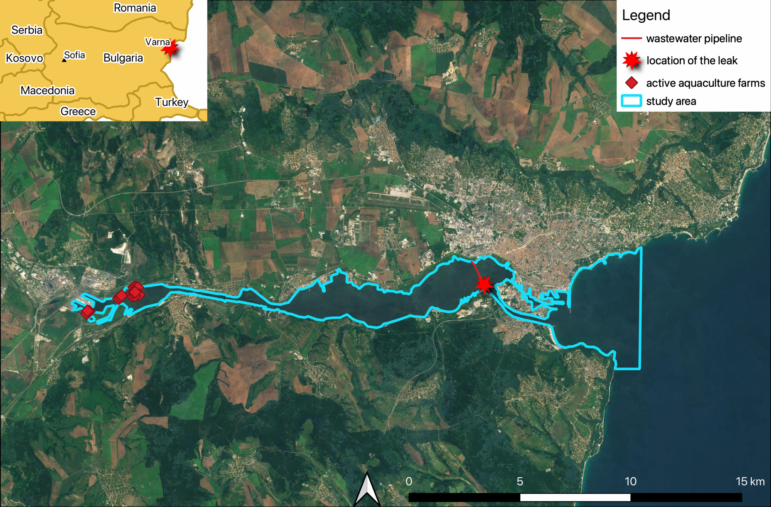
Satellite imagery provides information that can enhance the ability to write compelling narratives about the state of our planet, cutting across multiple beats. But such a tool tends to be complex and out of the reach for many journalists, so this guide offers a process that reporters interested in covering the climate crisis can use for story projects.
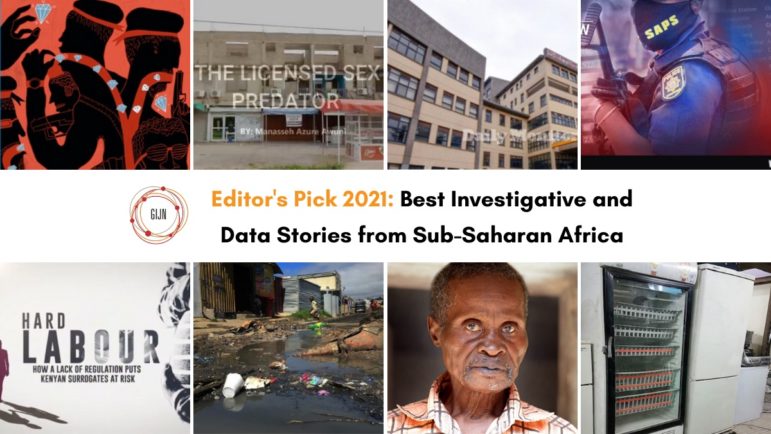
At a time when newsrooms in Africa are increasingly struggling with shortages of cash and threats to press freedom, the level of investigative journalism that emerged from sub-Saharan Africa in 2021 was remarkable. Here, we share 10 outstanding examples from the region.
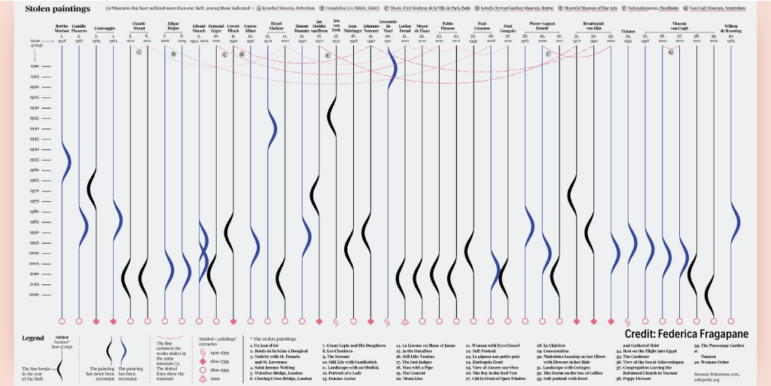
Hawaii’s scenery can be breathtaking, with cliff-rimmed white-sand beaches and surf-worthy waves. But our NodeXL #ddj mapping (Dec. 28-Jan. 3) found ProPublica highlighting dramatic erosion of the island state’s beaches over the past century. Also in this edition, we feature an interactive graphic to calculate the time to achieve COVID-19 herd immunity based on the US vaccination rate, a global vaccine distribution tracker, Federica Fragapane’s visualization of stolen paintings, and a compilation of 2020’s best data visualization lists.
In 2001 GIJN was born, as investigative journalists from around the globe met for the very first time to share ideas, tips, and best practices to strengthen their reporting in a world where journalism was increasingly under threat.
Today the threat has multiplied, and at GIJN we find ourselves under the same pressures as our member organizations. Most urgently: available funding for investigative journalism has been impacted as some longtime funders who supported journalism in the past are no longer doing so or have closed. Yet our work continues, more important than ever before.
GIJN serves as the global hub for the world’s investigative reporters. Our core mission is to support and strengthen investigative journalism—with special attention to those from repressive regimes and marginalized communities.
We are embarking on our first-ever campaign initiative to help us expand our revenue by the end of the year through individual donors. If you have ever joined one of our free webinars, used one of our free resources, learned a new skill thanks to a GIJN training, or simply believe that press freedom is essential to civil society, we ask you to show your support for GIJN’s work with a donation of your choosing. Called “Friends of GIJN,” this campaign includes a more personalized experience, starting in 2027, for individuals who answer the call to join with us during this unprecedented time.
Truth and democracy are under attack around the world. You can fight back by helping GIJN support investigative journalists with free access to the latest tools and techniques — so they can foster justice and hold accountable those who abuse the public trust.
With a staff based in 24 countries, GIJN works in a dozen languages each day, linking together the world’s most enterprising journalists, offering state-of-the-art training, webinars, tip sheets, and a Help Desk that responds to 2,000+ requests for assistance each year. More than 84% of GIJN’s operating budget goes directly to our program work.
Please make a gift today to support journalists on the front lines of the fight for accountability and human rights.