
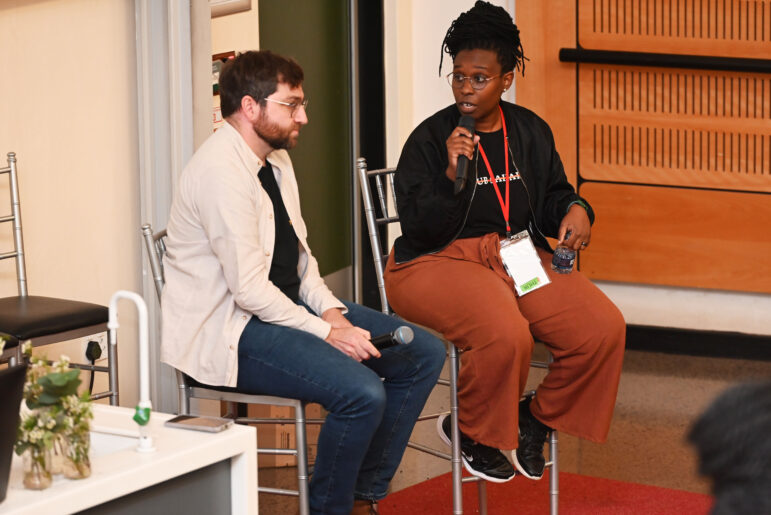
Simon Allison and Christine Mungai (right) of The Continent, speaking at an AIJC25 panel on covering investigations with a personal connection. Image: Courtesy of AIJC
‘Too Close to Home’: Handling the Challenges of Investigations with a Personal Connection
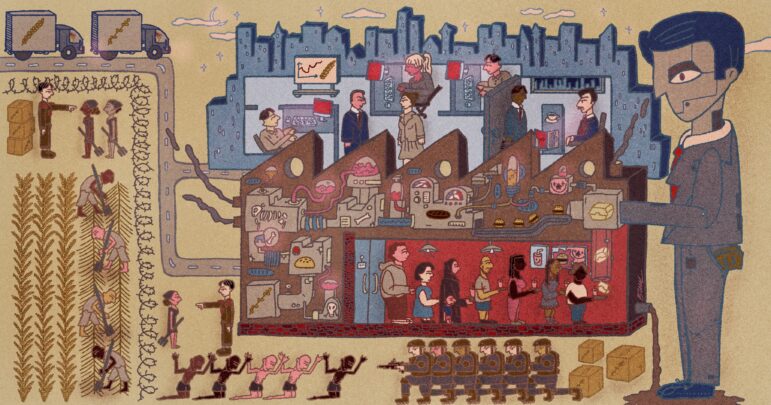
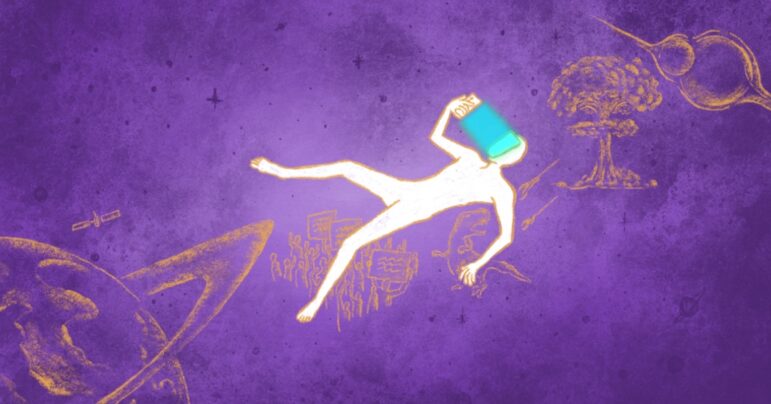
Journalists regularly take on governments, big corporations, powerful elites, shadowy networks, crooks, and scammers in the pursuit of the truth. However, when it comes to taking on their friends and colleagues, they are not always quite so fearless, according to Simon Allison, the co-founder of pan-African newspaper The Continent.
There are reasons why many journalists quietly dread reporting and investigating places and people too close to them, Allison explained. “Such stories are difficult and complex, naughty, messy, very personal, and require a different kind of bravery.”
Allison was speaking at the 21st African Investigative Journalism Conference (AIJC) in November at a session titled, “‘The Call is Coming from Inside the House’: Reporting Too Close to Home,” alongside his colleague Christine Mungai, The Continent’s news editor.
The session was designed to help journalists who have felt too close to a story to pursue it — or those who have doubts about whether they are the right individuals to execute a story because of their personal connections.
Mungai and Allison explored the emotional, ethical, and professional challenges of reporting on topics too close to home, drawing on examples of investigations they had edited, supported, reported on, as well as those that they had dropped.
Assign Yourself the Story
In July 2025, Mungai published a two-part investigative series with Africa Uncensored centering on one of her former teachers.
In The Teacher and the System, Mungai explains that the teacher was once a spiritual authority in her life and a person she had placed on a pedestal. He preached the Bible and led Christian Union meetings at her school, the Alliance Girls High School, one of Kenya’s top girls’ secondary schools.
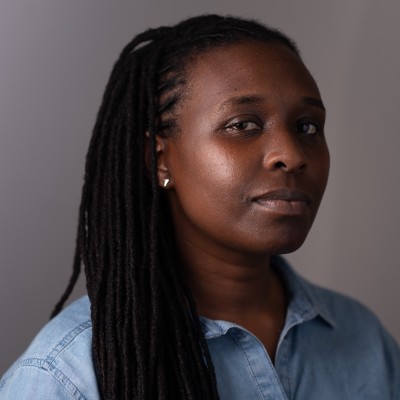
Christine Mungai, news editor at The Continent. Image: Screenshot, LinkedIn
Mungai had left the school but was still in contact with her former teacher when, at age 19, she experienced “a physical, sexual encounter” with the then-31-year-old school staffer at his house. She was shocked, but as she wrote in her story, “didn’t have the language then to understand what had happened.”
For 12 years, she kept what happened to herself, until in 2018 she learned she was not the only one. “That changed everything,” she wrote in the piece. “The moment I heard their story, mine became real.” That moment of reckoning led her to start investigating her former teacher.
It is often assumed that when a journalist is close to a story, their personal connection to the individual or institution can introduce bias and distort objectivity. However, Mungai’s perspective differed. She assigned herself the story even though, typically, journalists are assigned stories by their editors. While her experience was central to the story, Mungai explained that she approached it as a journalist determined to undo silence.
Her proximity to the story also gave her access that outsiders couldn’t have.
For years, whispers of sexual misconduct swelled in corridors of their alumni meet-ups and on social media. Yet, accountability kept failing, Mungai explained.
“All I wanted was to set the record straight,” she told the AIJC audience. “I wanted to take that story out of the realm of rumors and innuendo and put it down for history.”
Grueling Process
Allison asked Mungai how it felt psychologically working on a story that was a part of her own past. “It was a form of spiritual anguish. It felt like torture,” she replied.
For four years, Mungai reached out to friends, colleagues, and former students in her effort to record testimonies and reconstruct evidence for her investigation.
Her connection to the school did add a layer of emotional difficulty, she said: “I was and I still am part of that community. This is a school that I was proud to attend. I was one of those proud alumni.” She attended reunions without fail, participated in WhatsApp groups, and lived every inch of the school spirit. And then she found herself coming to a different realization. “I think many of us needed to become adults and to kind of acquire the language and the framing to actually put words into some of the things that we had witnessed,” she said.
What To Do When You Lack Hard Evidence
One of the biggest challenges Mungai faced was corroborating the stories of other students from the school who said they had experienced inappropriate behavior. Initially, she lacked documentary, physical, or digital evidence, and all she had was memories of a number of ex-students who were prepared to talk about what had happened to them.
Two former students told her about non-consensual physical contact with the same man while they were still in school, another of a non-consensual kiss initiated by the teacher weeks after graduating. Two others described relationships with their former professor that later turned physical or sexual.
Mungai credits one of her mentors for advising her to corroborate each and every account with someone else’s testimony. For part two of the story, Mungai stated she met a source who kept meticulous records.
Prepare for a Backlash
Legal threats and censorship are risks both Allison and Mungai have encountered while conducting their investigative stories. Before she could publish this piece, Mungai was hit with a Strategic Lawsuit Against Public Participation (SLAPP), lawsuits that are sometimes used to silence journalists. “I thought, I’ll lose my mind,” Mungai recalled, about how she felt after she was served with the lawsuit.
Mungai received the SLAPP after she sent a right-of-reply request to the teacher. Instead of responding to her reporting, he rushed to court and blocked the story from being published. However, months later, the injunction was lifted. In the court ruling, the magistrate found the story credible and supported its publication in the public interest. The story — which accused the teacher of sexual misconduct, grooming, and harassment stretching back more than two decades — was ready to publish.
Mungai expected a backlash after publishing, she said, but instead was overwhelmed by the widespread support she received from her alumni circle and the general public. She attributed this to her long and comprehensive investigation. Part one was 17,000 words while the follow-up was 8,000 words.
For his part, the teacher denied ever interacting with students in a way that was intimate, suggestive, or emotionally entangling, or from ever initiating physical or sexual relationships with former students. Still, the school board expressed shock and outrage at the allegations in the piece, and promised “strong, decisive, and immediate” action. Following public pressure after publication, the teacher resigned, citing cyberbullying linked to the “false” accusations.
Trust is Vital
Sometimes, the person we need to investigate is one of our own. Allison detailed a different, complex case of a reporter who had falsely presented as a cancer patient, shaving their head and soliciting sympathy from their employer and the public for more than a year. The journalist was slated to speak at the AIJC. The topic? Ethics in investigative journalism.
“I did not want to do this story. It felt very personal. It involved journalists that I knew and respected who were sort of in the orbit of the story,” Allison told the AIJC audience.
But his then-editor Beauregard Tromp, who is now the convenor of AIJC, sat him down. “He said: ‘You have to learn how to do these kinds of stories because sometimes holding power to account means holding the power that you can see in your own life to account.”
On this occasion, Allison said, the story needed to be told.
Allison reported having received intimidating calls from the journalist’s father — a prominent journalist in his own right — but the unconditional support from his editor and newsroom made a difference. Eventually, the reporter admitted they had faked the illness, and the AIJC removed the journalist from their speaking role.
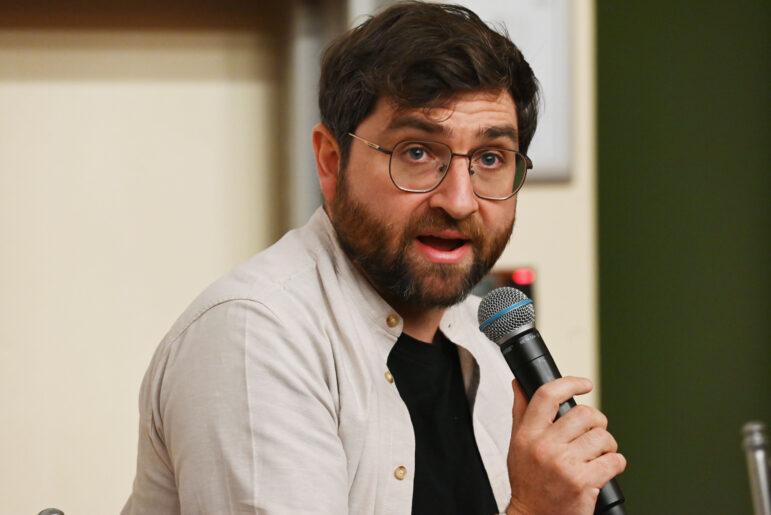
Simon Allison, co-founder of The Continent, speaking at AIJC25. Image: Courtesy of AIJC
Both panelists agreed that no one carries such a story alone. Support, they underscored, is a form of survival. Allison emphasized the need for colleagues and editors who can hold emotional weight with journalists.
For members of the audience who raised concerns that they felt abandoned by their newsrooms, writer and political activist Nanjala Nyabola added a practical warning, noting that “solidarity among journalists is safety.” In stories that are this personal, emotional safety is not a luxury. It becomes part of the reporting structure.
Alisson then grounded the room in journalism’s most valuable currency. “Trust is required to do journalism,” Allison plainly told the room. “If people don’t trust you, you can’t do this job.”
Sometimes that means reporting in places you’d rather leave alone.
Naipanoi Lepapa is an award-winning freelance investigative journalist based in Nairobi, Kenya. A specialist in open source intelligence and collaborative transboundary investigations, she mainly focuses her storytelling on human rights, gender, health, technology, the environment, and climate change. In 2022, she was named Kenya’s Investigative Journalist of the Year by the Media Council of Kenya at their Annual Journalism Excellence Awards (AJEA). She was also a 2023 Pulitzer Center AI accountability fellow.

This work is licensed under a Creative Commons Attribution-NoDerivatives 4.0 International License
Republish our articles for free, online or in print, under a Creative Commons license.
Republish this article
This work is licensed under a Creative Commons Attribution-NoDerivatives 4.0 International License
Read Next

Methodology Reporting Tools & Tips
Going Undercover in Africa: Tips from Recent Investigations
Investigative journalists who have gone undercover in Nigeria, Ghana, Liberia, Cameroon, and Kenya share advice and practical tips.
GIJC23 Reporting Tools & Tips
Working With Hackers: Where — and How — Journalists Should Use These Sources
The use of hacked data is an ethical challenge for investigative journalists. But responsible use of this information can lead to public interest revelations that would otherwise stay hidden.
News & Analysis Reporting Tools & Tips
Lessons from a Retracted Investigation in India: How to Avoid Fabricated Evidence
A recent Reuters Institute webinar dug into a highly embarrassing, retracted investigation by India’s The Wire and also laid out best practices for investigative newsrooms to avoid both deliberate and unintentional source errors.