
Illustration: GIJN
GIJN’s Top Investigative Tools of 2025
Read this article in

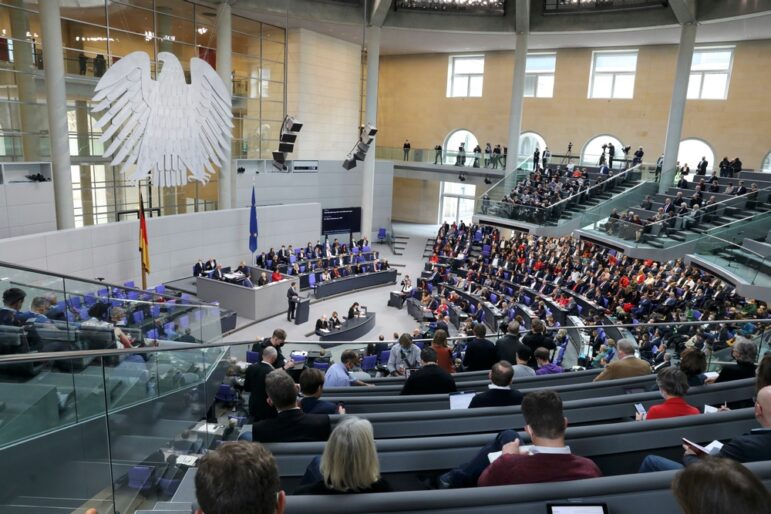


Reflecting a year in which both kleptocracy and attacks on independent media have increased worldwide, investigative reporters harnessed collaboration, courage, traditional reporting, and a mix of new and established digital tools to hold bad actors accountable.
Many complex investigations gather leads and data through a blend of custom and open source tools. One example from the International Consortium of Investigative Journalists (ICIJ) this year was how their team partnered with experts to create a machine learning-based detection tool, and used this with its open source Datashare platform to automatically identify passport information from millions of leaked records.
But GIJN’s annual Top Tools lists seek to highlight innovative, individual tools that don’t require advanced computer science skills and address topical needs.
Last year, the list featured a master toolkit from Bellingcat that updates reporters on the status of open source tools; a remarkable new portal that reveals munition types from fragments found near bomb craters; and a tool that can spare reporters from having to trawl through bigoted far-right content by automatically pulling data from fringe social media platforms.
For 2025, we highlight some new or underused tools that aren’t necessarily the most powerful in their sector, but that focus on real-world problems investigative reporters encounter on their beats. For instance: one tool solves a time problem facing under-staffed newsrooms that otherwise lack the bandwidth to manually trawl through recorded hours of public meetings or other media. Another allows reporters to dig into a specific environmental blind spot: the harms associated with digging up minerals in the Global South to equip the green energy products that Western consumers and shareholders might imagine to be wholly good. And a third unearths the regulatory fines quietly accumulated by big corporations around the world — including those caused by misconduct by their subsidiaries.
IDI Follow The Money Toolkit
Investigative journalists have made huge progress in exposing labor and environmental abuses by the fossil fuel and palm oil industries. But far less scrutiny has been given to the extractive industries providing the resources for the West’s alternative energy sector — including solar panels, electric car batteries, and other green components. Bloomberg’s supply chain investigation that linked much of the aluminium in a major US electric vehicle model to illness and land grabs in the Amazon is a great example.
At the Investigative Reporters and Editors (IRE) conference in the US this year, investigative journalists revealed that some of the most powerful — and least used — tools for digging into these contracts, supply chains, and local harms are resources developed and used by civil society groups.
Chief among these is the IDI Follow The Money Toolkit: a treasure trove of free tools and databases from the human rights NGO Inclusive Development International, which lets reporters dig into every aspect of corporate harm in the Global South, and features open source research tools, corporate registries, and even pension fund disclosures. Databases range from Land Matrix — a dataset of global land deals — to the Chinese Loans to Africa Database as well as the GIJN Resource Center.
- Other key tools on this topic include Just Transition Litigation Tracking Tool — a database of lawsuits against companies undertaking renewable energy-related extraction projects; the Dodgy Deals Database on the financing of projects deemed to be harmful to society or the environment; and the Development Bank Investment Tracker, which includes records for almost 300,000 project investments by 17 development finance institutions.
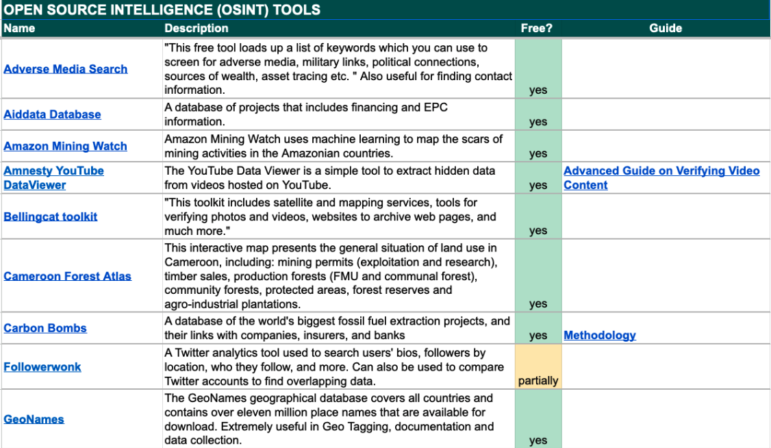
Snapshot of the resources listed in the Inclusive Development International’s Follow the Money Toolkit. Image: Screenshot
Summarize.Tech
A wealth of leads, potential investigative sources, and newsworthy remarks can be found within the hours-long public events —parliamentary hearings, regulatory agency meetings, podcasts, or live events — that are now routinely uploaded to YouTube and government websites. But few newsrooms have the staff resources to listen to or analyze this long-form material.
Veteran journalists at the NICAR25 data journalism summit in the US this year revealed that one free, AI-powered tool — summarize.tech — offers a remarkably simple time-saving coverage solution. Reporters can simply paste the video URL into its search bar, hit “submit,” and wait a few seconds to find a detailed and fairly reliable summary of the discussion, broken into five-minute increments. But the tool also enables journalism-level reliability by embedding timeline links, so reporters can click on those links to directly hear the newsworthy discussion moment highlighted in the summary. You can also view transcriptions of meetings already created by other users. Two caveats: The service only allows five free uploads per month, and is less accurate in foreign languages.
“I uploaded a video of a school board meeting of about an hour-and-a-half, and it took about 10 seconds to generate this great summary of what happened,” explained Cynthia Tu, a data reporter at Sahan Journal. “The downside of this tool is that summaries for videos that are not in English are not as reliable. But I think it’s a great tool.”
Image Whisperer and GIJN’s Reporter’s Guide to Detecting AI-Generated Content
Powerful digital tools are required to detect AI-generated content because traditional fact-checking simply takes much more time than the minutes required to create new AI misinformation.
Meanwhile, digital search expert Henk van Ess warns that, thanks to dramatic improvements in generative AI models, “a journalist trained on 2023 detection methods might develop false confidence, declaring obvious AI content as authentic simply because it passes outdated tests.” The “arms race” between AI tool creators and AI detectors remains tilted in favor of the creators, which means a combination of trustworthy tools, vigilance, updated verification techniques, and traditional reporting is required to identify the deepfakes and track the actors behind them.
This year, Van Ess produced a timely GIJN guide on how to quickly identify AI-generated material, featuring seven categories of detection for deepfakes. These include techniques for recognizing “too good to be true” red flags; geometric violations; pixel analysis; audio artifacts; context failures; and behavior pattern problems.
There are many useful detection tools and techniques available to reporters, and GIJN described many of those that dig into audio deepfakes in a popular 2024 feature. But many of the major tools suffer from overconfidence. In response, Van Ess developed an innovative open source tool, called Image Whisperer, released this year. Notably, the tool utilizes Google Vision processing and large language model analysis in parallel and is designed not to guess, instead alerting reporters and researchers when it doesn’t find a good result. “It’s not trying to be the best system out there — it’s trying to be the most honest,” noted Van Ess.
Violation Tracker Global
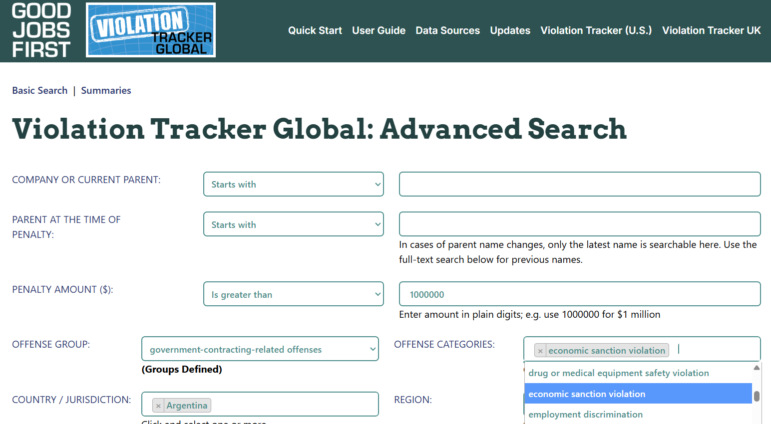
Image: Screenshot, Violation Tracker Global
Corporations routinely, and quietly, pay regulatory fines for environmental, financial, or labor abuses without the public noticing, or have patterns of misconduct that can be hard to quantify. Sometimes, multinational or billionaire-controlled companies will claim virtuous records, while, in fact, they should be held accountable for systemic wrongdoing by their little-known subsidiaries.
Fortunately, several free tools now track and aggregate penalties for corporate misconduct in an ever-growing total of 60 countries around the world, offering investigative reporters both authoritative details and abuse patterns at a glance, and easy ways to poke holes in greenwashing or public relations-polished claims about good governance.
Developed by the Corporate Research Project at the US-based NGO Good Jobs First, the flagship Violation Tracker database now includes 684,000 penalties and settlements involving 450 federal and state regulatory agencies in the United States, going back to 2000. These range from wage theft to anti-competitive practices and illegal polluting activities, and are often relevant to both domestic and international investigations due to the large number of multinational firms operating in the US. The project also features an almost-as-detailed database for the United Kingdom — Violation Tracker UK — featuring 117,000 cases resolved by 80 agencies since 2010.
In an exciting additional resource for global journalists, the same project has just launched a much broader Violation Tracker Global portal, which offers less comprehensive but nonetheless unique and valuable data on corporate misconduct from 58 additional countries and territories. Much of this data is painstakingly gathered from local agency press releases, and with the help of tools such as LexisNexis and Google Translate. Remarkably, the data is checked and entered manually by the project team.
Reporters can also search or cross-check corporate misconduct data on some countries via other resources, such as the Business and Human Rights Resource Centre and the Corporate Prosecution Registry.
Migration Monitor
In response to the absence of centralized data for rights abuses facing Africa’s 41 million migrants, an independent media organization, Diaspora Africa, has launched a small but innovative data platform that graphically displays the myriad violations these communities face.
The Migration Monitor includes interactive maps identifying major incidents of labor exploitation and human rights abuses within destination countries, and includes data going back to 2016. Gathered through painstaking manual research, its highlights include everything from lethal border guard attacks to systemic sexual abuse and corporate labor exploitation.
The included incidents are far from comprehensive, but its database is growing, and the dashboard offers useful geographic context for the exploitation trends between regions.
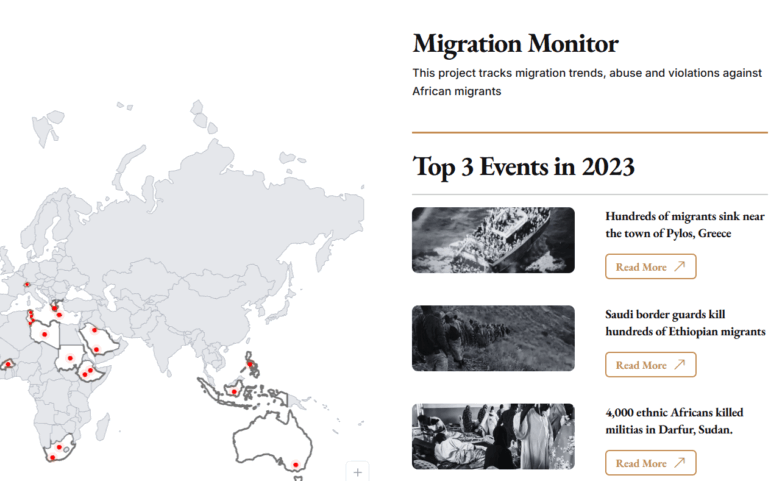
A screenshot of some major abuse events facing African diaspora communities in 2023. Image: Screenshot, Migration Monitor
Leaked Data Tools to Investigate New Oligarchs
At IRE this year, Maria Georgieva, an award-winning freelance investigative journalist and former Russia correspondent, shared a wide array of databases useful for digging into oligarchs and emerging kleptocrats in Russia and Europe.
Georgieva warned that new oligarchs are being created all the time, as authoritarianism grows around the world and new corrupt relationships with rich allies emerge. Their interests are also diversifying far beyond the traditional energy sector, and now range from media and transport to tech and public construction.
Georgieva said the following tools and databases are useful for tracking emerging oligarchs and their enablers.
-
- RuPEP Database: An extensive, searchable database of “politically exposed persons” in Russia, Belarus, and Kazakhstan, with 14,000 profiles that include family members and business partners of oligarchs, all available in English and Russian.
- SPARK-Interfax database: Considered the gold standard for Russian corporate data, this paid-for tool includes up-to-date data on beneficial ownership, financial statements, court cases, and connections between entities and individuals in the region.
- Opentender: A free database of public tender data from 28 EU countries, as well as Serbia, Georgia, and North Macedonia.
- Telegram bots: EyesOfGod, QuickOsintBot, GetContact, TrueCaller, and SmartSearch.
- LittleSis Public Accountability Database: A data set which includes detailed connections profiles. See this one for an example of how it can help reporters establish connections.
- Forbes Russian Rich List: Georgieva said the annual list of Russia’s wealthiest individuals published in the Russian-language edition of Forbes is a useful way to identify new and emerging oligarchs.
- RuAssets: A free tool from Ukraine-based YouControl that aggregates and analyzes databases from Russia, Belarus, Kazakhstan, Ukraine, and Europe, cross-checked against sanctions lists.
 Rowan Philp is GIJN’s global reporter and impact editor for GIJN. Rowan was formerly chief reporter for South Africa’s Sunday Times. As a foreign correspondent, he has reported on news, politics, corruption, and conflict from more than two dozen countries around the world.

This work is licensed under a Creative Commons Attribution-NoDerivatives 4.0 International License
Republish our articles for free, online or in print, under a Creative Commons license.
Republish this article
This work is licensed under a Creative Commons Attribution-NoDerivatives 4.0 International License
Read Next

Reporting Tools & Tips
New Tools to Reduce the Risks for Whistleblowers
Two new digital platforms seek to solve many of the problems and vulnerabilities that prevent whistleblowers from coming forward.

GIJC25 Reporting Tools & Tips
Chasing Oligarchs Across Borders
Journalists detailed how they build dossiers on oligarchs, mine corporate and sanctions databases, and use leaks – all while managing legal and security risks.
Reporting Tools & Tips
Tips to Investigate Climate Change Impacts in an Era of Science Denialism
As oligarchs and populist governments ratchet back the gathering and dissemination of climate-related information, journalists can use these techniques to find relevant sources and track impact.

Methodology Reporting Tools & Tips
Passports Are Key to Uncovering Offshore Secrecy — We Use Machine Learning to Find Them Efficiently
Passports can help unlock secret ownership of offshore companies, but finding them is often challenging. At ICIJ, we decided to build a new detection tool to speed up this process.