
Illustration: Joanna DeMarco
Deadly Gaza Aid Sites, Damascus Dossier, Exploiting Sudanese Refugees: 2025’s Best Investigative Stories from the Middle East and North Africa
Investigative journalism in the Arab world is in deep crisis. The survival of reporters focused on accountability is uncertain. The costs of this work are high. Freedoms are declining, and independent media face systematic attacks. Countries like Tunisia, once thought open to journalism, are now actively hostile to independent media. In Gaza, over 200 Palestinian journalists have been killed by Israel amid ongoing violence. This violence follows Hamas attacks two years ago and Israel’s subsequent war that spread to Lebanon, and then to attacks on Iran and Yemen.
The fall of the Assad regime opened a Pandora’s box for journalists in Syria. They must uncover hidden massacres by the former regime while also critically examining wrongdoing by the new government. Across the region, independent media outlets have been shut down or silenced. This includes platforms in Jordan, like Middle East Eye and Al-Araby Post. Journalists in Gulf states — such as Saudi Arabia, the UAE, and Bahrain — face constant repression and surveillance.
Adding to these challenges, cuts to USAID funding have severely impacted investigative journalism in the Middle East and North Africa. Taken together, the promise of accountability journalism is fading. Hope seems increasingly out of reach.
Nevertheless, the deterioration of the productive environment that enables accountability journalism has been met by the steadfastness, resilience, and determination of investigative journalists. In 2025, we witnessed major investigations into the war in Gaza, potential war crimes committed by the Assad regime, cross-border sex trafficking, abuses in public facilities in Egypt, and mass killings in el-Fasher, Sudan, among many others.
In this roundup, the GIJN Arabic team has compiled a curated list of the strongest investigative stories published in 2025. These investigations represent a sample of the broader body of work produced by the investigative journalism community across the Middle East and North Africa, demonstrating the continued power and relevance of accountability reporting despite increasingly hostile conditions.
Death in Dubai
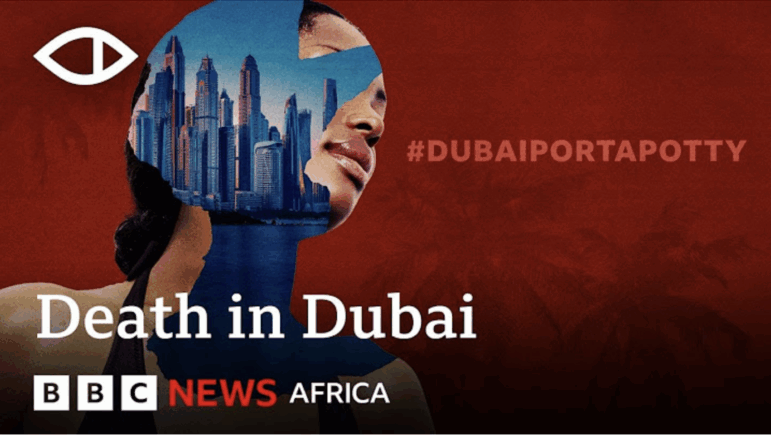
Image: Screenshot, BBC News, YouTube
This investigative film, produced by BBC Eye Investigations, revealed a hidden sex-trafficking operation that uses the city’s luxurious façade to conceal the exploitation of young women — primarily from Uganda — who are lured to the UAE with false job offers before being forced into the sex trade. The investigation centered on a man who operates under the name “Abbey,” and documented his role in running the exploitation network while presenting himself as a protector of the women.
The investigation uncovered evidence showing that the network relied on deception, coercion, and debt bondage to control victims, who were threatened and trapped against their will. It detailed the deaths of two women under suspicious circumstances linked to the network and identified multiple inconsistencies and unresolved questions in official police investigations. Authorities failed to provide clear information about missing forensic evidence, raising serious concerns about accountability and oversight.
The film also revealed how racial dynamics, social power imbalances, and immigration status create conditions that enable such abuses, while victims who sought help were often met with indifference from official bodies. BBC Eye placed survivor testimony at the center of the investigation, prioritizing their personal experiences over sensational online rumors. Methodologically, the team combined undercover reporting, open source research, interviews with survivors and insiders, and cross-border reporting between Uganda and the UAE to expose the network and its operations.
Unlicensed Addiction Treatment Centers in Egypt
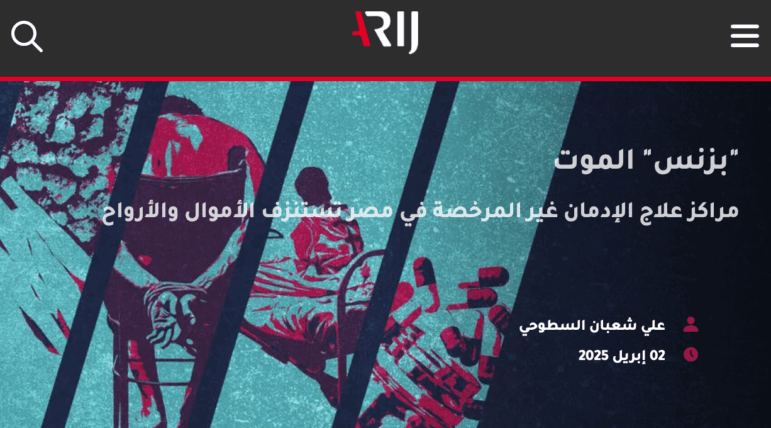
Image: Screenshot, ARIJ
This investigative story by ARIJ revealed that numerous unlicensed facilities across Egypt operate under the guise of being legitimate substance abuse rehabilitation centers, while using deception to target vulnerable patients and their desperate families. These facilities function without medical or legal oversight and are often run by former addicts and informal networks that rely on coercion and force to confine individuals, masking abusive practices behind false promises of recovery.
Combining survivor and family testimonies with interviews with former staff, as well as analysis of legal and regulatory frameworks, the investigation uncovered multiple cases of physical abuse, medical malpractice, coercive detention, and degrading treatment dating back to 2013, leading to patient deaths over more than a decade. The reporting demonstrated that these abuses are not isolated incidents, but are instead the result of a broader institutional failure, driven by weak enforcement of health regulations and legal loopholes within Egypt’s mental health and addiction treatment framework. By centering survivor testimonies and family accounts, the investigation brought long-ignored victims to the forefront and challenged official narratives that portray addiction treatment centers as regulated and safe.
Deadly Gaza Aid Sites
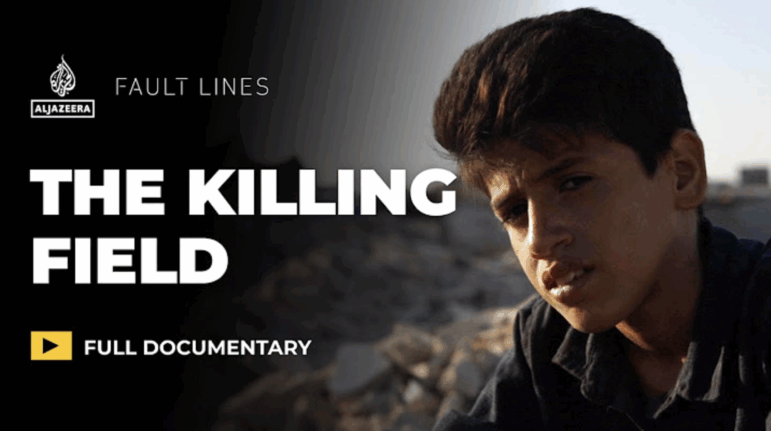
Image: Screenshot, Al Jazeera, YouTube
This film shows how the Gaza Humanitarian Foundation (GHF) relief agency, which is backed by the United States and Israel, has created perilous conditions for civilians as many of its aid distribution centers are situated in or adjacent to dangerous combat zones. This Al Jazeera Fault Lines documentary presented evidence from grieving families, a former GHF contractor, and human rights experts, which showed that thousands of Palestinians have died or received injuries while trying to obtain food. In a July 2025 briefing, GHF Executive Chairman Johnnie Moore denied that perilous conditions existed at his group’s aid centers and said: “no one has been shot in our distribution sites.”
The investigation showed that GHF operates as a humanitarian organization, but that it actually creates conditions for population displacement and extensive destruction of human life. The main question of the film focused on whether humanitarian assistance reached its intended recipients or if it served as a tool for military purposes.
The investigative methodology combined survivor and family accounts with former contractor testimony, human rights organization expertise, and field-based reporting to build an understanding of aid system operations and their effects. The filmmakers documented mass casualties through ethical methods that avoid sensationalized images while presenting authentic witness testimonies and confirmed reports. The reporting tackled how humanitarian frameworks can be exploited by warring parties, while it addressed the critical ethical dilemma that journalists face when they need to show mass suffering without causing additional trauma to survivors.
Russia’s Ghost Ships Haunt Libya
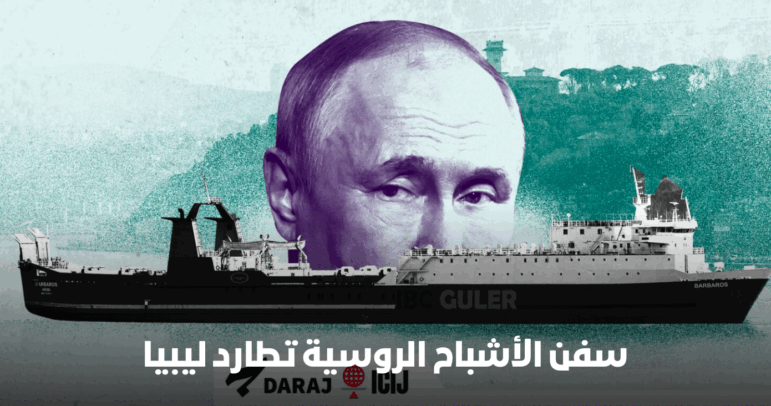
Image: Screenshot, Daraj
Led by the International Consortium of Investigative Journalists (ICIJ) reporter David Kenner, and republished in Arabic by Daraj, this cross-border project tracked how Russia’s “ghost fleet” of obscure commercial vessels is moving military equipment to Libyan commander Khalifa Haftar despite an international arms embargo.
The team worked with a cache of leaked documents from the EU naval mission Operation Irini and Interpol reports, and combined these with Automatic Identification System (AIS) maritime tracking data and expert analysis from Bosphorus ship-spotter Yoruk Isik. The journalists reconstructed the journeys of suspect vessels like the Barbaros by following their AIS patterns, flag changes, and ownership histories, and cross-referenced this with satellite imagery, internal EU briefings, and UN and Amnesty International reporting on abuses by Haftar-aligned forces. They also interviewed European and Ukrainian officials and Libyan analysts to understand how these shipments fit into Moscow’s broader strategy in the Mediterranean and the Sahel.
The investigation showed that Russia is using a shadow fleet of aging, re-flagged cargo ships — which routinely switch names, spoof their GPS locations, and turn off AIS near Syria’s Tartus port — to deliver Russian-made trucks and other equipment to Haftar-controlled eastern Libya. One EU boarding operation found 115 Russian trucks on the Barbaros, reinforcing internal European assessments that these shipments are accelerating the “militarization” of the region. The leaked documents also revealed that Wagner mercenaries have been replaced by a new Africa Corps under direct Russian military control, and that Libya is being used as a logistics hub for operations into the Sahel, posing what EU officials describe as an “immediate security issue for Europe.”
The Human Trap: Sudanese Refugees Caught Between War and Gangs at Egypt’s Border

Image: Screenshot, ARIJ
Produced by Arab Reporters for Investigative Journalism (ARIJ), this cross-border investigation documented how Sudanese fleeing war are subjected to sexual violence, kidnapping, and extortion as they cross into Egypt via irregular desert routes.
The reporters combined qualitative and quantitative tools: they conducted in-depth interviews with seven rape survivors (including male and female victims), three women who reported sexual harassment, and five additional victims of robbery, kidnapping, or ransom demands. They designed a survey of 324 Sudanese refugees in Egypt, most of whom had entered irregularly, to quantify the prevalence of abuses: from rape and harassment to theft, physical assault, kidnapping, and economic exploitation. They then cross-checked these accounts with medical reports, testimonies from volunteers and activists in Aswan, UN and WHO data on Sudanese displacement, and legal analysis from Egyptian lawyers and rights groups.
ARIJ’s data show that about 4% of Sudanese women surveyed reported rape after entering Egypt, around 10% reported sexual harassment, while roughly a third had been robbed, and significant proportions had faced kidnapping for ransom, beatings, and systematic financial exploitation. The story detailed how gangs operating around the “al-Kassara” area and routes into Aswan prey on refugees who are pushed into irregular crossings by Egypt’s tightened visa regime and high fees for security clearances. Fear of deportation and the lack of any UNHCR presence in Aswan mean most victims cannot file police complaints, leading to what lawyers describe as “crimes without punishment.” The piece also contrasted the absence of protection mechanisms for Sudanese with the “blue dot” centers set up by the UN for Ukrainian refugees on European borders.
Damascus Dossier
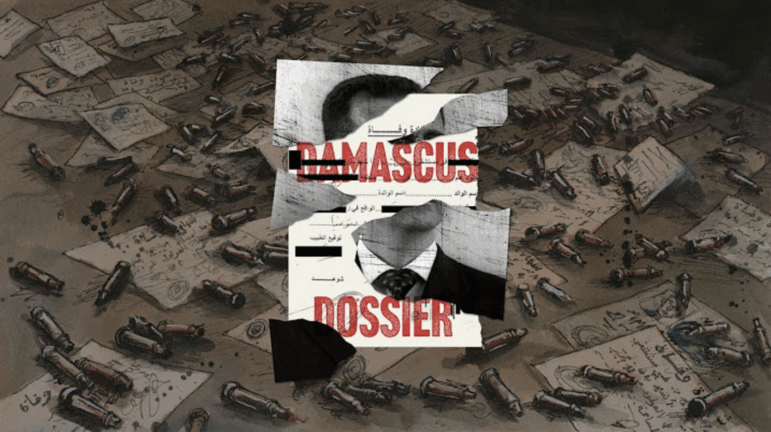
Image: Screenshot, ICIJ, YouTube
In one of the most consequential investigations of 2025, the International Consortium of Investigative Journalists (ICIJ), German broadcaster NDR, and a global network of 24 media partners spent more than eight months assembling and analyzing a vast trove of leaked intelligence files exposing the machinery of detention, torture, and murder under Syria’s now-ousted Assad regime. The Damascus Dossier offered not only harrowing evidence of systematic brutality but also a meticulous example of cross-border investigative journalism at scale.
At its core, this report was built on a cache of more than 134,000 files and photographs obtained by NDR from within Syrian intelligence archives, spanning from the mid-1990s to the final days of Bashar al-Assad’s rule in late 2024. Written primarily in Arabic, these materials — including internal memoranda, security service reports, and official communications — document how multiple branches of Syria’s security apparatus coordinated surveillance, mass arrests, torture, and extrajudicial killings across the country.
The investigation is the product of a large-scale collaborative effort, in which reporters and data specialists organized, translated, and analyzed hundreds of gigabytes of material. Teams built structured, searchable databases from the documents, while forensic and visual analysts examined more than 33,000 images documenting detainee deaths. The material was systematically cross-checked against survivor testimonies, family accounts, expert analysis, and official records, allowing journalists to verify patterns of abuse, link images to identities where possible, and transform a chaotic leak into legally and journalistically robust evidence. Taken together, the findings revealed how the Assad regime operated a vast, bureaucratized system of detention, torture, and killing — one that meticulously recorded death while concealing its causes. Their analysis concluded that at least 10,200 detainees died in custody or shortly after transfer to military hospitals between 2015 and 2024, many of whom were photographed emaciated and bearing clear signs of abuse, while internal records show how arrests were coordinated, death certificates falsified, and administrative language used to mask systematic violence.
Killing Fields of El-Fasher
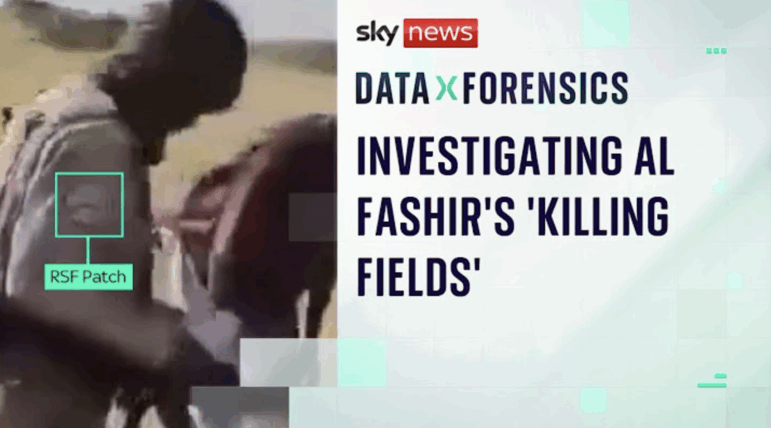
Image: Screenshot, Sky News, YouTube
This collaboration between Sky News, Sudan War Monitor, and Lighthouse Reports produced one of the most comprehensive reconstructions to date of the mass killings that followed the Rapid Support Forces’ capture of el-Fasher in Darfur. Working with Sudanese journalists and local networks, the team combined advanced, open source investigation techniques with survivor testimony to penetrate a conflict zone that journalists cannot safely access.
Using high-resolution satellite imagery from Maxar and Planet Labs, investigators documented expanding mass graves, burned districts associated with Masalit communities, and the destruction of medical facilities. Analysts verified and geolocated hundreds of videos and photos — many posted by RSF fighters themselves — to confirm executions, the separation and disappearance of young men, and the presence of identifiable RSF units at key massacre sites. These visual findings were cross-checked with remote interviews of survivors, medical workers, and local monitors, and supplemented by conflict-mapping expertise from Sudan War Monitor.
The investigation concluded that the violence in el-Fasher was not chaotic urban fighting but a coordinated, ethnically targeted campaign that likely killed thousands. It showed systematic attacks on Masalit civilians, the razing of neighborhoods, executions inside hospital compounds, and the looting and occupation of humanitarian sites. Together, the evidence provided one of the clearest records yet of potential war crimes and ethnic cleansing in Sudan’s current conflict.
Syria After Assad
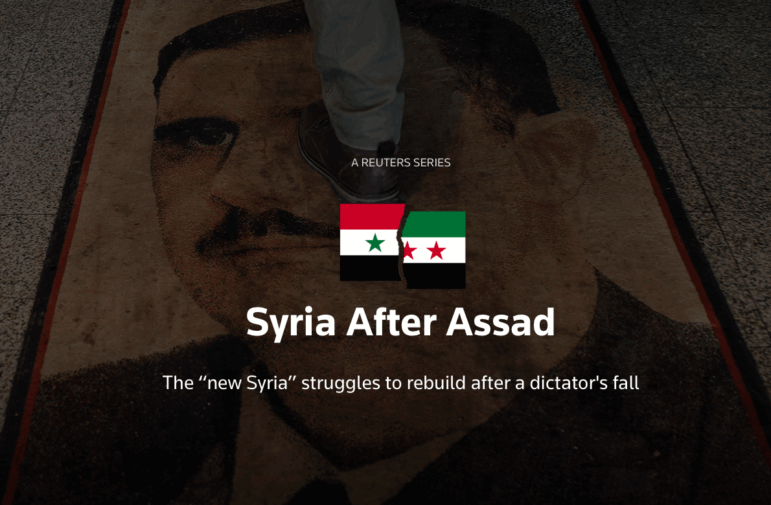
Image: Screenshot, Reuters
Reuters’ Investigations team examined Syria in the aftermath of the Assad family’s loss of power in a in-depth series. One of the installments documented mass burial sites created by the Assad regime during the civil war, exposing the scale of hidden atrocities. Following Assad’s fall, Reuters also investigated massacres carried out by members of the new Syrian armed forces, including the killing of approximately 1,500 Alawites. The reporting established that these crimes were not isolated acts, but were carried out through distinct chains of command reaching senior military and security officials in Damascus. In parallel, the series exposed how Syria’s economy is being quietly reshaped, revealing how the new president’s brother has consolidated control over key business sectors to preserve economic power among regime-linked elites despite political change.
The Reuters team employed a rigorous investigative methodology that combined satellite imagery analysis, extensive field reporting, a large cache of official documents, and intelligence gathered from publicly available sources. This approach enabled reporters to verify locations, timelines, and command responsibility with a high degree of accuracy. The findings demonstrate that investigative journalism retains its critical value in countries emerging from brutal authoritarian rule, such as Syria, particularly as new authorities, including President Ahmad al-Sharaa — consolidate power and must be held accountable. [Editor’s Note: GIJN Associate Arabic Editor Feras Dalatey was a contributor to some parts of this Reuters series.]
 Majdoleen Hasan is GIJN’s Arabic editor and a three-time award-winning journalist with more than a decade of experience. She has worked with local and international media organizations, including Global Integrity, 100Reporters, and the Arab Reporters for Investigative Journalism network. She was the director of an investigative journalism unit in Jordan and was the first Jordanian citizen to file a case against the Jordanian government for denying her the right to access public information according to an access to information law. Hasan has an MA in political science and a BA in journalism.
 Feras Dalatey is GIJN’s associate Arabic editor. He is a Syrian investigative journalist, based in Dubai, who focuses on OSINT reporting and digital investigations. He is also a long-form analyst and columnist writing about regional politics, media monitoring, internet culture, and intersections of technology with policy-making, especially in the Arab region. His work has appeared in Daraj Media, Al-Jumhuriya, Alpheratz Magazine (New Lines Arabic Edition), Ultra Sawt, Misbar, and others.
2025 Conference Resources
Guide to Investigating Food Insecurity
Open Source Guide to Investigating Chinese Companies

Reporter’s Guide to Detecting AI-Generated Content

Investigating Syria after Assad: A Black Box, Opened
What’s Next for a Devastated Gaza, TikTok’s Addictive Algorithm, Trump Food Aid Cuts Hit the Poor, Ukraine Strikes Russian Energy

Brave Investigations from Nigeria, Egypt, Peru, and Mexico Honored at GIJC25’s Global Shining Light Awards

Investigating Yemen’s War, Uncovering Famine in Sudan, and Telling the Story of Gaza: 2024’s Best Investigative Stories from the Middle East

This work is licensed under a Creative Commons Attribution-NoDerivatives 4.0 International License
Republish our articles for free, online or in print, under a Creative Commons license.
Republish this article
This work is licensed under a Creative Commons Attribution-NoDerivatives 4.0 International License
Read Next
Getting the Story Out MENA Focus Week
Investigating Syria after Assad: A Black Box, Opened
Feras Dalatey describes the surreal experience of reporting in his home country days after the fall of the Assad regime — and the challenges ahead for Syria’s investigative journalists.
Data Journalism Top 10
What’s Next for a Devastated Gaza, TikTok’s Addictive Algorithm, Trump Food Aid Cuts Hit the Poor, Ukraine Strikes Russian Energy
Our round-up of the best in recent data journalism also features stories on what happens next in Gaza, a wildfire in a Namibian nature reserve, and the rise of the bespoke tailoring market in India.
Awards, Grants, & Fellowships GIJC25
Brave Investigations from Nigeria, Egypt, Peru, and Mexico Honored at GIJC25’s Global Shining Light Awards
These three winners and recipient of a special citation represent outstanding journalism from developing or transitioning countries, carried out under threat or in perilous conditions.
Editor's Picks News & Analysis
Investigating Yemen’s War, Uncovering Famine in Sudan, and Telling the Story of Gaza: 2024’s Best Investigative Stories from the Middle East
Plus a deep dive into a powerful figure behind a vital border crossing, an investigation into mercenaries in Yemen, and exposing real estate ownership in Dubai.