

Image: GIJN
Confront Them With the Numbers: This Former Physicist’s Path to Investigative Data Journalism



Anna Behrend is a self-taught data journalist who has found in data-driven reporting and visualization a way to combine her academic background in science — in particular, a fascination with particle physics — with her creative interests, though she explains she has had scant formal education in the field. “I actually learned the craft of data journalism through further training, workshops, conferences, and my own projects that I did alongside my work,” says Behrend.
Since her traineeship at broadcaster Rundfunk Berlin-Brandenburg, she has held several roles in major German media, including science editor for ZEIT Online and data team lead at the Hamburg-based public TV and radio broadcaster NDR. Since March 2025, she has been data and visualizations editor for news magazine Der Spiegel. She is also on the board for GIJN’s German investigative partner, Netzwerk Recherche, where she is the data journalism lead, and conducts workshops and training in data reporting.
Behrend’s reporting topics are also diverse. In 2021, she was awarded the prestigious Georg von Holtzbrinck Prize for science journalism, in part for her work on the growing influence of “incel” culture online and the links between online misogyny and real-life violence. More recently, for Der Spiegel, she and the data team designed a highly creative visualization of each country’s Winter Olympics medals — in the form of a scarf pattern that readers can knit themselves at home.
Behrend spoke with GIJN about the biggest challenges she has faced as a data journalist, from the COVID-19 pandemic to access to information laws, and her favorite tools.

Anna Behrend created a scarf pattern to track the historical medals won by different countries. Image: Screenshot, Der Spiegel
GIJN: Of all the investigations you’ve worked on, which has been your favorite and why?
Anna Behrend: I can give two examples — one slightly older and one more recent. The older one is from when I was still working at public broadcaster NDR, together with other broadcasting stations and the newsroom CORRECTIV. We investigated Germany’s preparedness for the consequences of climate change. Together, we conducted a large survey, and were then able to distribute the results to other broadcasting stations and also share them with daily newspapers, and were able to make a big impact, so that on publication day many newspapers and radio and television stations were filled with the topic. And that was a very nice experience.
And the other newer investigation, which I think was a really nice example of data journalism, was the first investigation I did for Der Spiegel — about the German healthcare system. In Germany, you can be insured in two ways: state or private. And, for example, civil servants are privately insured. And there is a lot of debate about the fact that privately insured people have advantages. And exactly one advantage that many increasingly feel is that as a privately insured person, you get an appointment with a doctor much faster. But there was surprisingly little data on that. We scraped and analyzed data from an online platform where doctors can post appointments for privately and publicly insured patients, and we were able to clearly show that publicly insured patients have to wait much longer for a doctor’s appointment and are offered far fewer appointments. And that is exactly where I think data journalism was really able to play to its strengths.
GIJN: What are the biggest challenges in terms of investigative reporting in the region you report on?
AB: I believe that both in investigative journalism and in data journalism, the local and regional aspects are a special challenge, because, as in some regions, there are hardly any local newspapers at all, and where they do exist, they are under great economic pressure. Resources are scarce, and as far as I can tell, it can be particularly challenging to carry out investigative projects. That’s why I also volunteer with Netzwerk Recherche, and last year we set up a fellowship for local research in order to address this issue and to enable colleagues in local newsrooms to spend a few months on investigative research and also to seek advice if they need it.
GIJN: What’s been the greatest hurdle or challenge that you’ve faced in your time as an investigative journalist?
AB: That was probably the COVID-19 pandemic, because suddenly all eyes were on data journalism and everyone was very much pushing to get reliable numbers about this new virus. People wanted to know… [and] were incredibly preoccupied with those affected by COVID, because, for example, restrictions on going out were linked to them.
On the one hand, we somehow had to process and present these numbers, but on the other hand, we also had to repeatedly say that this is the best we have, but these numbers might also be problematic and not particularly reliable. And we really felt like as data journalists we spent years hardly touching any other topic. I believe I’m not the only one glad that this is over. Of course, personally, but also work-wise, that one could eventually turn to other topics again.
GIJN: What is your best tip or trick for interviewing?
AB: If it’s a more personal interview, my tip is to allow or endure silence, because I find that often the really interesting things come out after a moment of silence or pause. But I also often do more, let’s say, factual interviews. When I have done data analysis, I always find that a great starting point is to then approach experts or politicians and, so to speak, confront them with these results. And I think then you have the advantage that you have a good basis for discussion, that the other person can’t so easily avoid it, because you really come at them with facts, and of course, it signals that you have dealt extensively with the topic and maybe can earn a bit of respect through the expertise you bring.
GIJN: What is a favorite reporting tool, database, or app that you use in your investigations?
AB: I program quite a lot myself for data analysis or to scrape data from the web. I do this in the programming language R, but it works just as well in Python. So in our team, we are also divided on that. By now we also get a lot of support from AI, like GitHub Copilot. Of course, you really have to be careful and make sure you understand what is happening there. And ultimately we, the editors, are always responsible. But it is a help, and it makes a big difference for visualization. For example, Datawrapper is a powerful tool now. Regarding data sources, for me it always varies a lot due to the different topics, where the data comes from — whether it is official data or self-collected data.
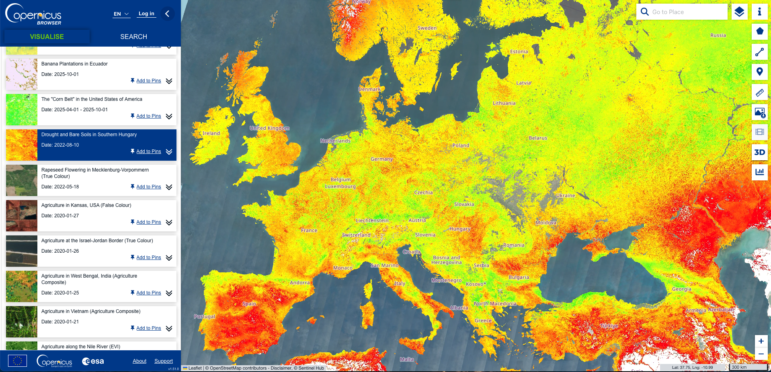
One tip I find quite helpful is that some companies also offer free access for journalists. So whether it’s satellite data, where they then make certain images available to journalists for free, or traffic data, or data on corporate networks. It’s often worth asking, or it might be stated on the website that, as a journalist, you can access what businesses usually have to pay for for free.
GIJN: What’s the best advice you have received thus far in your career, and what words of advice would you give an aspiring investigative journalist?
AB: The advice wasn’t given to me by any particular person, but I read or heard it somewhere, and somehow it stuck in my head. And the sentence is: “Work won’t love you back.” That might sound somewhat pessimistic, but I somehow find it a good sentence because I believe that almost all journalists are very strongly intrinsically motivated. I think otherwise, one wouldn’t do this job, because it often happens under difficult conditions. And exactly for that reason, people in this field have to be careful not to give too much and not to burn themselves out. And exactly for that reason, I think it’s quite good to remind yourself of it now and then.
GIJN: Who is a journalist you admire, and why?
AB: There are quite a few. Above all, many women come to mind who have accompanied me on my career path so far. For example, there is Christina Elmer, who at that time founded the first data team at Der Spiegel and was temporarily my boss. She is now a professor of data journalism. Or someone else I admire is Ulrike Köppen. She now heads, among other things, the AI and Automation Lab at BR (Bayerischer Rundfunk), as well as other female bosses I have had over the course of my career. What unites these women, I believe, is that they try to advance journalism and dare to do something new.
Another comes to my mind, a young journalist, Heba Alkadri. She was an intern with us some time ago, and I found her very impressive because she only came to Germany from Syria in 2016, and now, 10 years later, she is already a full-time journalist, a data journalist, has trained herself, has accomplished all of this in a foreign language, in a foreign country. That impressed me a lot.
GIJN: What is the greatest mistake you’ve made and what lessons did you learn?
AB: At the very beginning of my career, I went into a job interview quite unprepared. That was during my traineeship, and I thought, ‘Ah, if I just am completely authentic, as I am, then everything will work out.’ And it turned out to be a very unnatural situation, with seven people sitting opposite me, putting me through a cross-examination.
I was completely overwhelmed, and the interview didn’t go in my favor either. And what I took from that was that I always went into such interviews well-prepared afterward and really thought in advance about what questions might come up, and for example, typical questions like, ‘If you had all the resources you needed, which research would you like to do?’ Just being prepared for such questions.
GIJN: How do you avoid burnout in your line of work?
AB: I believe what helps is, first of all, that I have now found an environment that works, because I simply have supervisors who lead by example. They allow, and should allow, a life outside of work, and at the same time, everyone in our team is highly motivated and really steps up when it counts. But then there must also be phases when things are a bit quieter. For me personally, since I have a family my priorities have also shifted a bit. I love my job very much, but there is another pillar in life, and over the years, I have also noticed that if I constantly ignore my limits, eventually my body rebels, and that is not healthy. And so I was then forced to learn to better respect my limits.
GIJN: What about investigative journalism do you find frustrating, or do you hope will change in the future?
AB: For data journalism, topics like data availability and digitalization are perennial issues. Of course, quite a bit is happening there too, but sometimes we still get data in forms where I would prefer not to have it at all. What can also be frustrating is when, for example, government agencies do not want to release data, then you can request the data under the Freedom of Information Act, if there is one. But when such requests are denied, you have little recourse. It also simply takes too long journalistically to pursue it further. So you sometimes feel a bit powerless, and not all federal states in Germany even have a Freedom of Information Act under which you can request information.
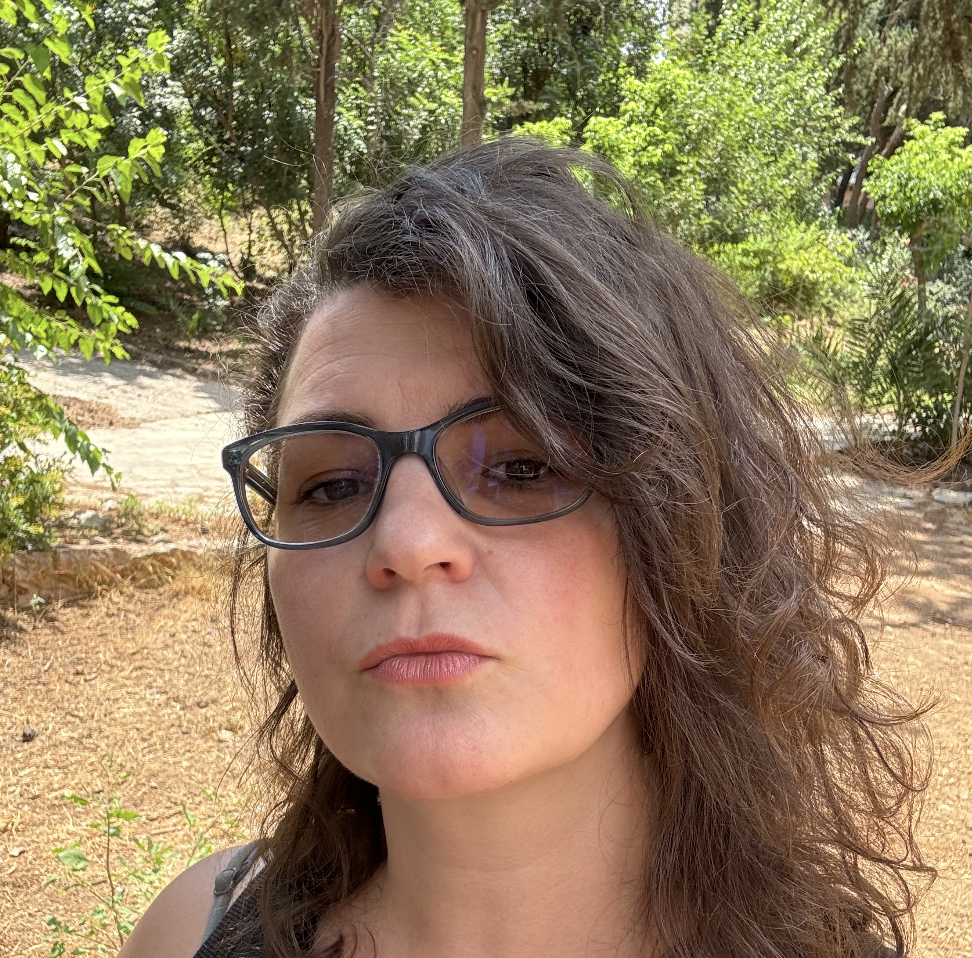 Alexa van Sickle is a journalist and editor with experience across digital and print journalism, publishing, and international think tanks and nonprofits. Before joining GIJN, she was senior editor and podcast producer for the award-winning foreign correspondence and travel magazine, Roads & Kingdoms.

This work is licensed under a Creative Commons Attribution-NoDerivatives 4.0 International License
Republish our articles for free, online or in print, under a Creative Commons license.
Republish this article
This work is licensed under a Creative Commons Attribution-NoDerivatives 4.0 International License
Read Next

10 Questions
Exposing Industrial Pollution and Creating the ‘Forever Chemicals’ Beat
In a career spanning more than 20 years, Le Monde reporter Stéphane Horel has brought a creative and, at times, humorous approach to groundbreaking environmental investigations.

10 Questions
‘As Long as There Is Journalism, There Is Hope, There Is Life’
Based in the Mexican border region of Chihuahua, a state where organized crime exerts a strong presence, means working “under constant threat,” but Gallegos refuses to be silenced.

10 Questions
‘Obsession Is What Investigative Journalism Is Really About’
The investigative journalist — who has covered topics from ISIS to troll armies — talks to GIJN about his novel reporting methods and keeping investigative journalism alive in Turkey.
Methodology Reporting Tools & Tips
5 Tips for Using Academic Research in Investigative Journalism
Academic research is a crucial tool for investigating societal problems and holding the powerful accountable. Pulitzer Prize-winning investigative journalist Neil Bedi, criminologist Rachel Lovell, and Denise-Marie Ordway of The Journalist’s Resource share practical advice on using academic research in investigative journalism.