
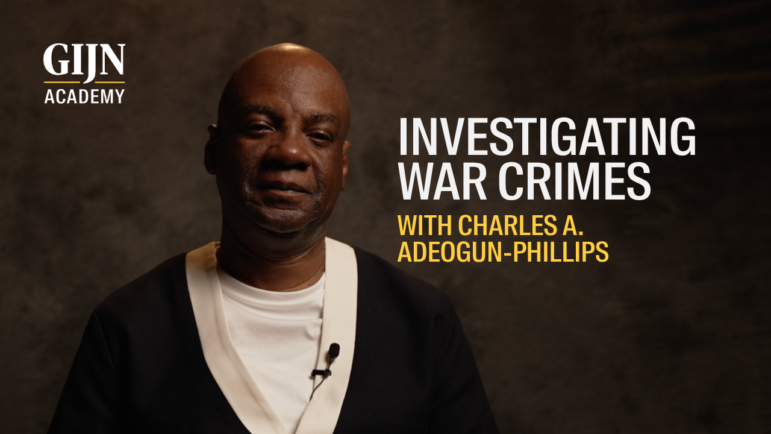
How to Investigate Atrocities • Charles Adeogun-Phillips
In this masterclass video, in conversation with Charles Adeogun-Phillips, former lead genocide prosecutor at the International Criminal Tribunal for Rwanda and founder of Charles Anthony Lawyers, shares practical insights on how journalists can investigate war crimes and genocide.
Adeogun-Phillips argues that the most powerful evidence comes from combining digital and human sources: verifying and archiving video material, then corroborating it with local communities who can provide context that electronic evidence alone cannot. He encourages reporters to look beyond first impressions (a mass grave is not automatically proof of a crime) to assess witness credibility carefully given cultural differences in how testimony is shared, to involve local investigators and specialists when documenting sexual violence, and to track patterns of hate speech and inciting language as early warning signs of genocidal intent.
Credits:
- Interview: Sarah Ulrich
- Video Editing: Quentin Egloff
- Music: Lionel Marçal
- Filming: Ron Lopez – Reynald Ramirez – Hashim Hakeem
- Supervision and Coordination: Sandrine Rigaud
- With the support of The Konrad-Adenauer-Stiftung